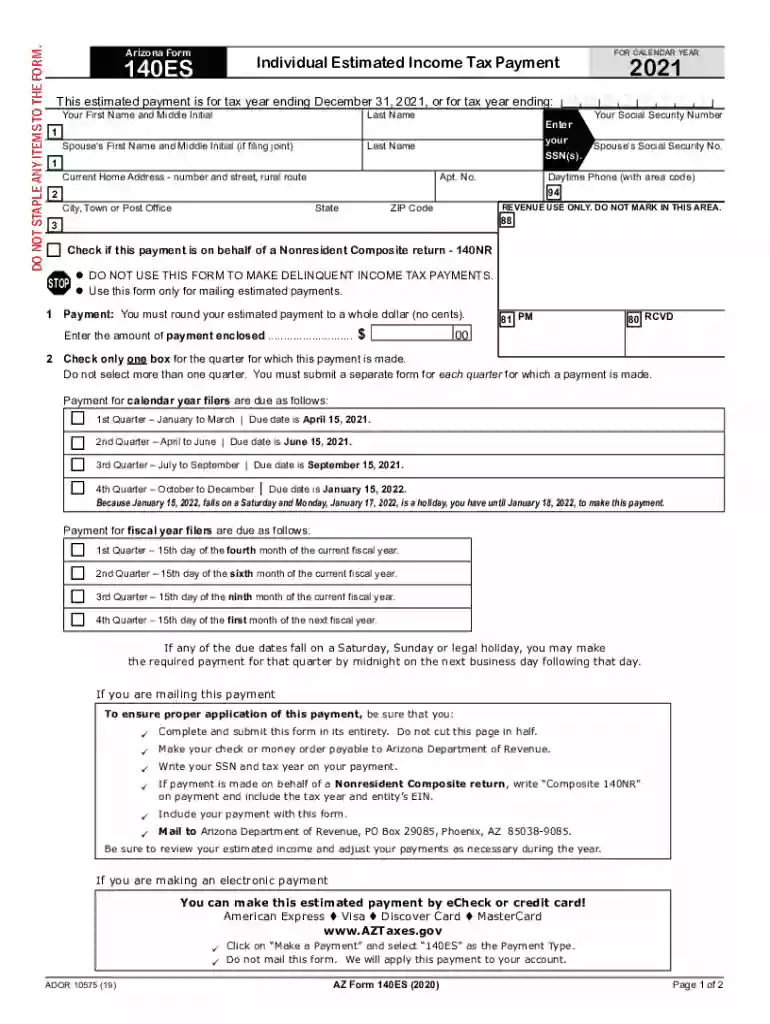
Definition and Purpose of Arizona Form 140ES
Arizona Form 140ES is used by taxpayers to make estimated income tax payments for the tax year. This form ensures that individuals are staying current with their tax liabilities as they earn income throughout the year. Estimated payments are typically required for those who do not have sufficient tax withheld from their wages or who receive income not subject to withholding, such as self-employment earnings.
Situations Requiring Form 140ES
- Self-Employed Individuals: Those who earn income from freelancing, consulting, or running a business need to use this form as they do not have taxes automatically withheld.
- Retirees with Investment Income: Individuals receiving income from dividends, interest, or capital gains may need to make estimated payments.
- Landlords: Property owners receiving rental income often need to account for additional taxes through this form.
Steps to Complete Arizona Form 140ES
Completing the Arizona Form 140ES involves a few straightforward steps:
- Determine Your Income: Start by calculating all sources of income expected for the year, including wages, self-employment income, and any investment earnings.
- Compute Taxable Income: After calculating your total income, subtract allowable deductions to arrive at your taxable income.
- Estimate Taxes Owed: Use Arizona tax tables to estimate your total tax liability for the year.
- Determine Payment Amounts: Divide your annual estimated tax by four to determine each quarterly payment amount.
- Fill Out the Form: Enter the relevant figures on the form, including personal information and payment details.
- Submit the Payment: Payments can be made online, by mail, or in person at designated locations.
How to Obtain the Arizona Form 140ES
Arizona Form 140ES can be obtained through several methods, ensuring ease of access for all taxpayers:
- Online: Visit the Arizona Department of Revenue website to download a printable PDF of the form.
- By Mail: Request a form via mail by contacting the Department of Revenue.
- In-Person: Forms are available at local tax offices or community centers during tax season.
Filing Deadlines and Important Dates
Timeliness is crucial when making estimated payments:
- Quarterly Payments: Estimated payments are due four times a year, on April 15, June 15, September 15, and January 15 of the following year.
- Year-End Adjustments: If your income fluctuates, you might need to adjust your final payment to ensure you meet your annual requirements.
Required Documents for Submission
To accurately fill out Form 140ES, gather the following documents:
- Previous Year’s Tax Return: Provides a baseline for current year estimates.
- Income Statements: Include all forms of income, such as 1099-MISC, 1099-DIV, and income ledgers.
- Deduction Records: Proof of deductions, such as mortgage interest or student loan payments, helps in estimating taxes owed.
Key Elements of Arizona Form 140ES
Understanding the structure of the form aids in preventing errors:
- Personal Information Section: Complete with your full name, address, and social security number.
- Income and Payment Calculations: Detailed fields for listing income sources, estimated taxes, and breakdowns of quarterly payments.
- Signature and Date: Ensure the form is signed and dated before submission to certify the accuracy of the information provided.
Legal Use of Arizona Form 140ES
Form 140ES is legally mandated for those required to make estimated payments, complying with state tax laws. Failure to use this form correctly can result in penalties.
Penalties for Non-Compliance
- Underpayment Penalty: If insufficient estimated payments are made by the due dates, penalties ranging from one to five percent of the underpaid amount might be applied.
- Late Payment Charges: Any delay in payments past the quarterly deadlines will incur interest and additional penalties.
Software Compatibility and Digital Submissions
For ease of submission and calculation, various tax software programs support Form 140ES:

- TurboTax and QuickBooks: Provide guided assistance in filling out the form based on user input.
- Direct E-Filing Options: The Arizona Department of Revenue accepts digital submissions through their online portal, ensuring secure and efficient processing.
Who Typically Uses the Arizona 140ES
- Freelancers and Contractors: Regular users due to their varied and often unpredictable incomes.
- Investors: Individuals with significant capital gains or dividend income suitable for estimated payments.
- High-Net-Worth Individuals: Crucial for those with numerous income streams and limited withholding.
State-Specific Rules for the Arizona 140ES
Arizona imposes specific rules that diverge from federal guidelines:
- Threshold Adjustments: Arizona may have different income thresholds for requiring estimated payments compared to federal regulations.
- State Deductions and Credits: Always consider differences in deductions allowed at the state level that may affect your estimated payment amounts.
Taxpayer Scenarios for Arizona Form 140ES
Understanding various scenarios can assist in better preparation:
- New Business Owners: Those recently transitioning to self-employment should anticipate their tax obligations carefully.
- Income Variations: Taxpayers expecting significant income changes throughout the year may need to adjust their estimated payments mid-year.
These blocks combined provide an in-depth understanding of Arizona Form 140ES, its significance, and the detailed procedures involved in ensuring compliance.