
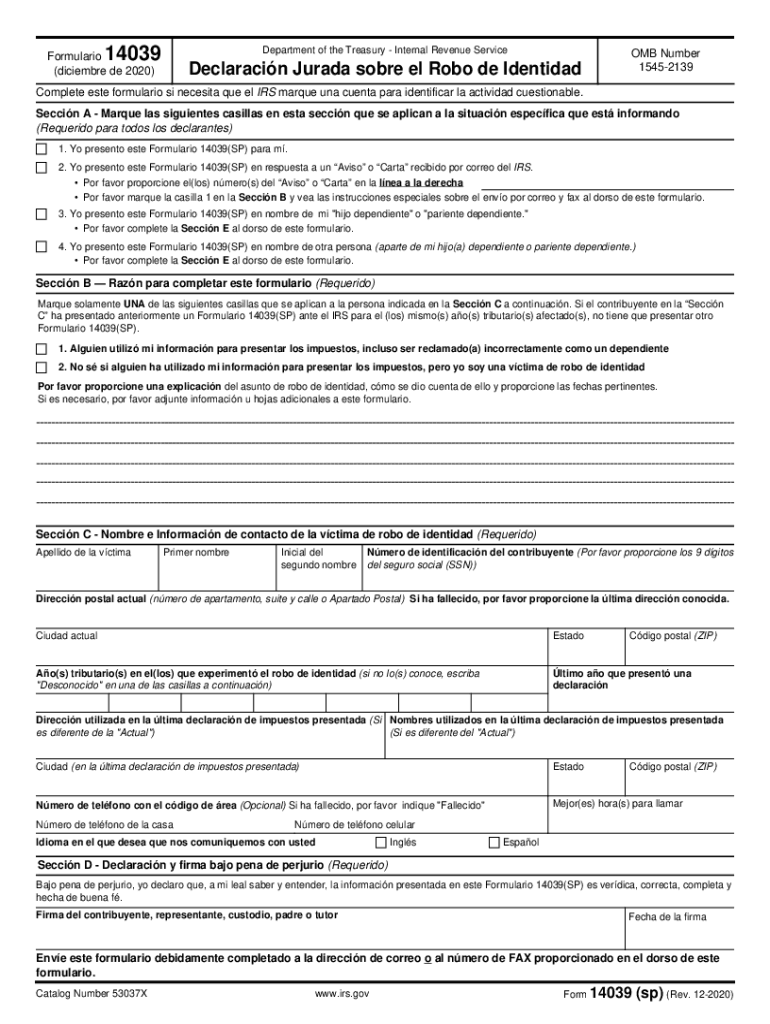







Definition and Purpose of IRS Form 14039
IRS Form 14039, also known as the Identity Theft Affidavit, is a document used by individuals who suspect they are victims of identity theft. This form serves as a written declaration to the Internal Revenue Service (IRS) that someone's personal information, such as a Social Security Number (SSN), is being misused, especially for tax-related purposes. By submitting Form 14039, individuals can alert the IRS, allowing them to take necessary actions to secure the taxpayer's account and prevent further unauthorized activities.
Context and Common Uses
- Tax Fraud Prevention: A primary use of IRS Form 14039 is to report fraudulent tax returns filed using a taxpayer's stolen personal information.
- Account Security: Filing the form helps the IRS place an alert on the individual's tax account, which assists in protecting against unauthorized actions.
- Resolution Process: Submitting this form initiates a resolution process where the IRS works with the individual to resolve any issues caused by the identity theft.
How to Obtain IRS Form 14039
Obtaining IRS Form 14039 is a straightforward process, with multiple access methods available to accommodate different preferences and circumstances.
Available Sources
- IRS Website: The most direct way to obtain the form is via the IRS official website, where it can be downloaded as a PDF.
- Request by Phone: Individuals can contact the IRS by phone to request a physical copy of the form be mailed to them.
- Local IRS Office: For those who prefer an in-person approach, a visit to a local IRS office can also result in obtaining the necessary form.
Considerations for Access
- Printable Format: Ensure access to a printer if downloading the form online, as a printed version is typically required for submission.
- Official Guidance: Check the IRS website or communicate with IRS representatives for the latest official guidance on accessing and submitting the form.
Steps to Complete IRS Form 14039
Filling out IRS Form 14039 entails providing critical information to help the IRS address identity theft concerns effectively.
Key Sections of the Form
- Personal Information: Provide basic personal details such as name, current address, and SSN to identify the affected account.
- Circumstances of Theft: Briefly describe the suspected identity theft, including how the taxpayer became aware of it.
- Documentation: Attach any relevant documentation that supports the claim, such as police reports or notices from the IRS.
Submission Process
- Complete and Accurate Information: Ensure all fields are filled accurately to avoid delays in processing.
- Supporting Documents: Gather necessary supporting documents to provide sufficient evidence of identity theft.
- Mailing Address: Send the completed form and documents to the appropriate IRS address listed on the form instructions.
Why You Should File IRS Form 14039
Filing IRS Form 14039 is crucial for individuals who suspect identity theft, as it is a proactive measure to protect against fraudulent activity.
Benefits of Filing
- Account Protection: Filing this form triggers the IRS to take protective measures on the taxpayer’s account, reducing the risk of further unauthorized actions.
- Resolution Path: Initiates a formal process with the IRS to resolve tax-related complications caused by identity theft.
- Prevention of Future Issues: Addressing the problem promptly can prevent additional complications in future tax filings.
Who Typically Uses IRS Form 14039
IRS Form 14039 is not limited to any particular demographic but is widely used by various individuals who encounter identity theft issues.
Typical Users
- Taxpayers: Anyone who files taxes and suspects their SSN has been compromised during tax season.
- Financial Institutions: Sometimes used by institutions assisting clients with identity theft issues.
- Tax Professionals: Advisors or accountants who assist clients in managing the aftermath of identity theft.
Key Elements of IRS Form 14039
Understanding the main components of IRS Form 14039 is essential for completing it correctly.
Essential Sections
- Victim Information: Includes name, contact information, and SSN.
- Type of Identity Theft: Specifies whether the issue is related to a stolen SSN, data breach, or another type of identity theft.
- IRS Contact Information: Information on how and where to submit the completed form.
IRS Guidelines for Form 14039
Taxpayers must follow specific IRS guidelines when dealing with identity theft, of which IRS Form 14039 is a crucial part.
Important Guidelines
- Timeliness: File the form as soon as identity theft is suspected to minimize potential damage.
- Accurate Details: Ensure details on the form match IRS records to prevent delays.
- Follow-Up: Keep track of IRS correspondence and any updates to ensure the resolution process is progressing.
Form Submission Methods
Understanding the various submission methods ensures the form is filed correctly and promptly.
Methods of Submission
- Mailing: The primary method involves mailing the form to the designated IRS address found on the form instructions.
- In-Person Submission: Though less common, some individuals may opt to file the form in person at an IRS office.
- Document Copies: Keep a copy of the completed form and any correspondence for personal records.
These sections provide comprehensive information about IRS Form 14039, addressing various scenarios and detailing procedures to assist individuals in effectively handling identity theft incidents related to tax issues.




