






Key Components of an MCQ Answer Sheet
An MCQ answer sheet serves as a vital tool for assessments across educational and professional environments. Understanding its structure and usage can enhance the effectiveness of evaluations. Below are the significant elements and considerations regarding MCQ answer sheets.
Understanding MCQ Answer Sheets
An MCQ (Multiple Choice Question) answer sheet is generally formatted to allow efficient marking of answers by candidates.
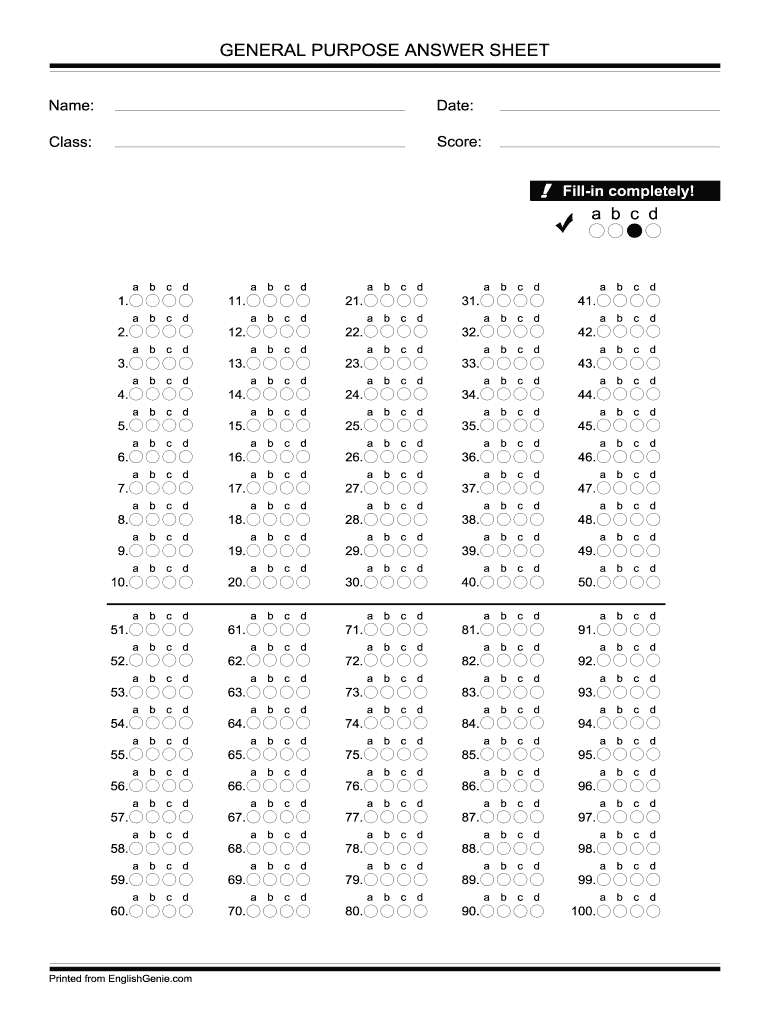
- Format: Typically presented in a grid or bubble format, where each question corresponds to a bubble that can be filled in. Options are listed alongside each question, often labeled with letters or numbers.
- Types: There are printable bubble answer sheets, PDF versions, and templates available for varying question counts, such as 40, 50, or 100 questions.
Practical Examples of MCQ Answer Sheets
Different formats are available depending on the testing needs. For instance:
- Printable 100 Question Bubble Sheet: Commonly used in schools for large assessments.
- MCQ Marking Sheet PDF: Facilitates digital scoring by allowing educators to input responses electronically.
- Bubble Answer Sheet for MCQs: Ideal for quick grading with minimal handwriting issues.
Each format has unique benefits that can streamline the testing and grading processes.
Features of an MCQ Answer Sheet
- Clarity in Design: Good designs help prevent confusion, making it clear which bubble to fill for each answer.
- Space for Identifier Information: Typically includes sections for the candidate's name, date, and possibly the test subject.
- Scoring Ease: Designs are often compatible with optical mark recognition (OMR) systems for automated grading.
Conversion and Usage of Answer Sheets
Creating Fillable Forms
Creating a fillable MCQ answer sheet can enhance the flexibility of assessments. This can be achieved using various digital tools which allow teachers to customize sheets according to their requirements.
- Form Fields: Incorporate text boxes, checkboxes, and signature fields to accommodate diverse answering styles.
- Field Requirements: Mandatory fields ensure essential information is completed.
Scoring Methods
- Manual Marking: Involves educators manually checking answers against a key.
- Automated Scoring: OMR technology can be employed to score answer sheets swiftly and accurately, reducing human error.
Legal Considerations and Usage Guidelines
Using MCQ answer sheets may be subject to various regulations and guidelines within an educational context.
- Compliance: Institutions should maintain adherence to legal requirements regarding student data handling and assessment integrity.
- Privacy: Protecting personal information on answer sheets is crucial, particularly when shared with external evaluators or analysis systems.
Conclusion and Best Practices
Implementing best practices while designing and utilizing MCQ answer sheets can significantly improve the testing experience. This includes standardized formatting, clear marking guidelines, and ensuring security around data handling.
Ultimately, the selection of the right format and adherence to guidelines can enhance both the efficiency and integrity of assessments utilizing MCQ answer sheets.