




01. Edit your 2023 form 1040 instructions online
Type text, add images, blackout confidential details, add comments, highlights and more.

Type text, add images, blackout confidential details, add comments, highlights and more.

Draw your signature, type it, upload its image, or use your mobile device as a signature pad.

Send 1040 line 25c via email, link, or fax. You can also download it, export it or print it out.
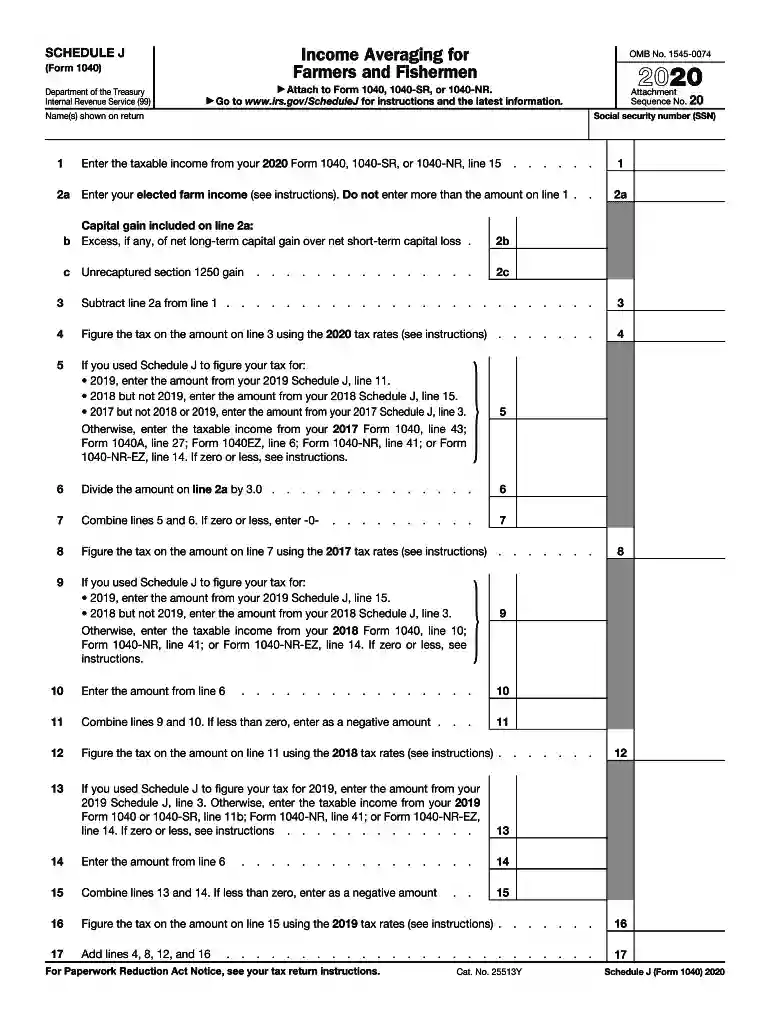
The IRS 1040 is a crucial form for individuals who need to report their annual income to the Internal Revenue Service (IRS). For fishermen, this form includes necessary schedules, such as Schedule J, which is particularly important for income averaging. This provision allows fishermen to average their income over several years, which can result in tax savings for those with fluctuating earnings. Typically, fishing operations, including those on boats and those involved in fish processing, use this form to ensure compliance with federal tax regulations.
The application of income averaging through the IRS 1040 is highly beneficial for this demographic, as their financial performance can vary significantly between seasons and years. By averaging income, fishermen can attain a more consistent tax obligation, which is less susceptible to the drastic changes typical within their industry.
Completing the IRS 1040 requires a detailed understanding of both the form and specific schedules such as Schedule J.
Filing the IRS 1040 enables fishermen to manage the tax implications of their varying income. The strategic use of income averaging allows them to potentially lower tax liabilities and stabilize financial planning. Moreover, adherence to IRS requirements protects against penalties and ensures continued legitimacy of operations, essential for planning and investment in their business.
The IRS 1040 is generally used by individuals or business entities engaged in fishing as a primary source of income. This includes:
Each group can leverage the tax benefits provided by IRS guidelines to optimize their financial outcome.
Understanding the form's key elements is fundamental for accurate submission:
This holistic approach ensures a fully compliant tax return, maximizing the form's utility.
Several essential terms are frequently associated with the IRS 1040 for fishermen. Examples include:
Understanding these concepts enhances the capability to file the form correctly and efficiently.
The guidelines ensure that all legal and financial obligations are met, which is essential for maintaining the legal standing of fishermen’s enterprises.
The IRS stipulates specific deadlines for filing tax-related forms. Typically, IRS 1040 forms need to be submitted by April 15th of each year, unless an extension has been granted.
Maintaining awareness of these deadlines is vital to avoid penalties and ensure that taxes are filed correctly according to the IRS guidelines.
We've got more versions of the 2023 form 1040 instructions form. Select the right 2023 form 1040 instructions version from the list and start editing it straight away!
| Versions | Form popularity | Fillable & printable |
|---|---|---|
| 2025 | 4.2 Satisfied (28 Votes) | |
| 2024 | 4.9 Satisfied (27 Votes) | |
| 2023 | 4.2 Satisfied (48 Votes) | |
| 2022 | 4.4 Satisfied (22 Votes) | |
| 2021 | 4.8 Satisfied (22 Votes) | |
| 2020 | 4.3 Satisfied (98 Votes) | |
| 2019 | 4.4 Satisfied (740 Votes) | |
| 2018 | 4.3 Satisfied (196 Votes) | |
| 2017 | 4.4 Satisfied (168 Votes) | |
| 2016 | 4.4 Satisfied (436 Votes) |
At DocHub, your data security is our priority. We follow HIPAA, SOC2, GDPR, and other standards, so you can work on your documents with confidence.
Mar 24, 2026 File your 2026 Form 1040 or 1040-SR by March 1, 2027. You dont need to make an estimated tax payment if you pay all the tax you owe at thatRead more
Apr 15, 1976 Increased section 179 deduction dollar limits. The maximum amount you can elect to deduct for most sec- tion 179 property you placed inRead more
Farmers and fishers experience DocHub variations in income from year to year, which causes their taxable income (and taxes owed) to fluctuate.


