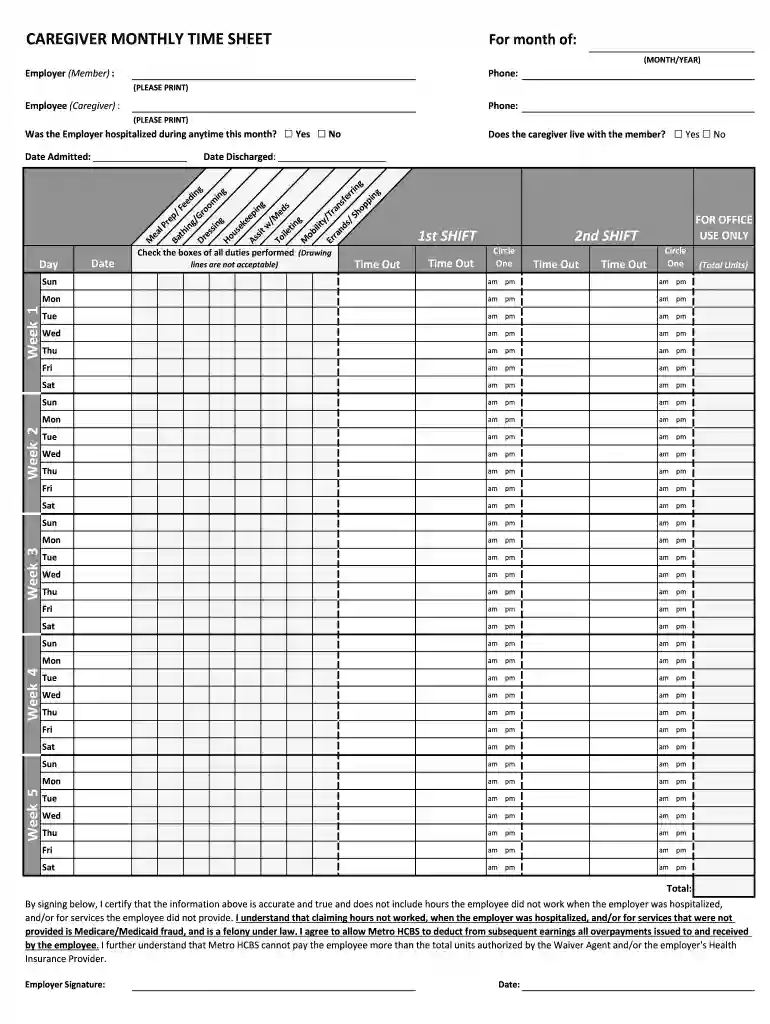
Definition & Meaning
The caregiver monthly time sheet is a structured document designed to log the hours worked by caregivers providing support to individuals, typically in a home care setting. This form serves multiple purposes, including tracking hours for payroll, ensuring accountability, and maintaining a record for auditing or compliance purposes.
Key Features of the Caregiver Time Sheet
- Tracking Hours: Caregivers record their hours worked, typically broken down by day and time.
- Duties Performed: There is a section to outline specific tasks or services provided to the client.
- Certification: The document includes a certification statement where both the caregiver and the employer affirm the accuracy of the reported hours.
- Signatures: Required signatures from both parties validate the document, establishing an official record of hours worked.
How to Use the Caregiver Monthly Time Sheet
Using the caregiver monthly time sheet effectively requires familiarity with its structure and purpose. Here's how to utilize it properly:
Step-by-Step Usage Guide
- Download the Form: Obtain a free printable caregiver timesheet from a reliable source, ensuring it is formatted correctly for your needs.
- Fill in Required Information: Enter the caregiver’s name, the client’s name, and the relevant dates for the month.
- Log Hours: Record daily hours worked in the designated fields, ensuring accuracy to avoid payroll discrepancies.
- Detail Duties: Use the area provided to outline specific tasks performed on each day, which can help provide clarity on the services rendered to the client.
- Certification and Signatures: Once completed, both the caregiver and employer should sign the form to confirm the hours and services reported.
Steps to Complete the Caregiver Monthly Time Sheet
Completing the caregiver monthly time sheet accurately is essential for financial and service accountability. Here’s how to ensure it's filled out correctly.
Detailed Completion Steps
- Identify the Month: Clearly indicate the month for which the time sheet is being completed.
- Daily Entries: For each day of the month, fill in the total hours worked. Break this down into morning, afternoon, and evening shifts if necessary.
- Task Documentation: Write a brief description of the key activities undertaken during each shift. This may include personal care, meal preparation, or companionship activities.
- Review for Accuracy: Double-check the recorded hours and tasks for any errors or omissions.
- Final Signatures: Ensure that both caregiver and employer add their signatures and dates to finalize the document.
Important Terms Related to the Caregiver Monthly Time Sheet
Understanding key terminology related to the caregiver monthly time sheet enhances communication and compliance.
Common Terms Defined
- Caregiver: An individual who provides personal care and assistance to a client or patient, often in a home setting.
- Employer: The person or organization that hires the caregiver, responsible for compensating them for their work.
- Hours Worked: The total amount of time spent providing care, documented on a daily basis.
- Certification: A statement affirming the accuracy of the reported hours and tasks, signed by both the caregiver and employer.
Examples of Using the Caregiver Monthly Time Sheet
Real-world applications of the caregiver monthly time sheet can clarify its importance and functionality.
Practical Application Scenarios
- Payroll Documentation: The completed time sheet serves as the basis for calculating the caregiver’s monthly pay, ensuring they receive appropriate compensation for their work.
- Compliance Records: In case of audits or reviews, the time sheet provides necessary documentation demonstrating adherence to care standards and employment agreements.
- Communication Tool: The recorded duties serve as a reference for caregivers and employers to discuss service quality and adjust care plans as necessary.
State-Specific Rules for the Caregiver Monthly Time Sheet
Variations in regulations across different states can affect how caregiver monthly time sheets should be completed and utilized.
Key Considerations for Different States
- Wage Guidelines: Some states have established minimum wage laws specifically for caregivers that must be adhered to.
- Documentation Requirements: Certain states may require additional documentation or specific formats for time sheets to qualify for reimbursement through Medicaid or insurance.
- Leave Policies: The caregiver may need to document time off or absences differently based on state regulations related to family leave or sick time.
Legal Use of the Caregiver Monthly Time Sheet
The caregiver monthly time sheet has legal implications that must be understood by both caregivers and employers.
Legal Considerations
- Binding Documentation: Signed time sheets can serve as legally binding records of hours worked and services provided.
- Compliance with Labor Laws: Ensures that both caregivers and employers adhere to fair labor practices and maintain compliance with relevant employment laws.
- Proof of Care: In some cases, the time sheet can act as proof of care should disputes arise regarding the quality or quantity of services provided.
These sections provide a comprehensive overview of the caregiver monthly time sheet's functionality, requirements, and use cases, ensuring clarity for both caregivers and employers.