




01. Edit your missouri subpoena form online
Type text, add images, blackout confidential details, add comments, highlights and more.

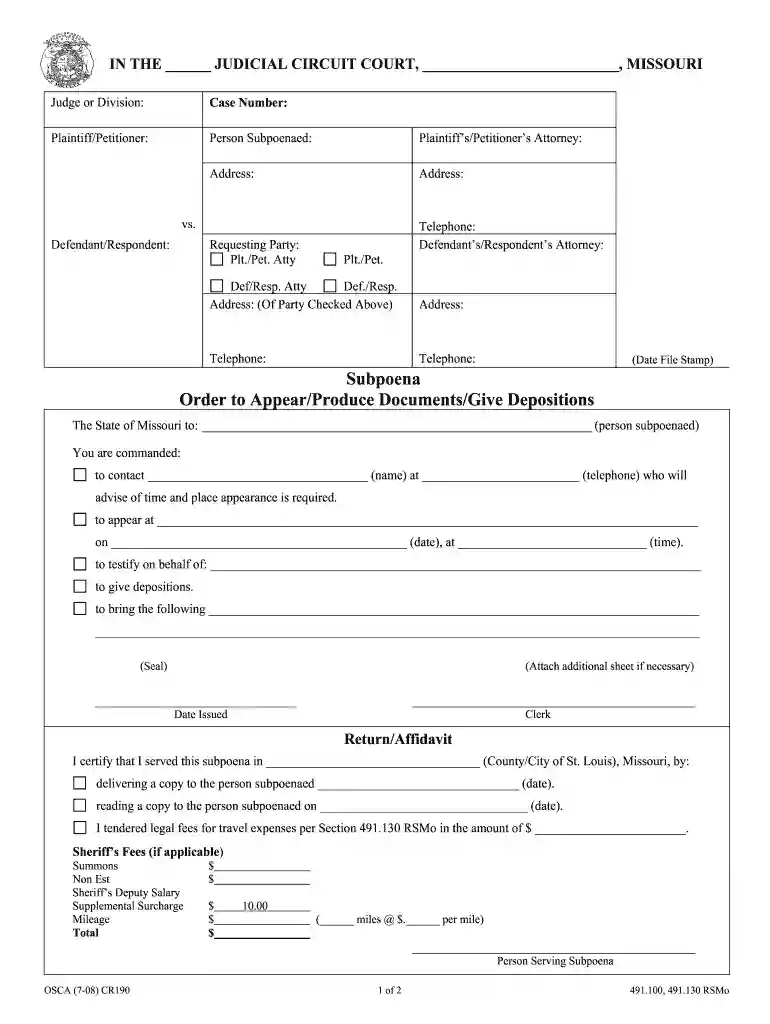
Type text, add images, blackout confidential details, add comments, highlights and more.

Draw your signature, type it, upload its image, or use your mobile device as a signature pad.

Send missouri subpoena rules via email, link, or fax. You can also download it, export it or print it out.
A Missouri subpoena is a legal document issued by a court or an attorney, compelling an individual to appear in court or produce requested materials and evidence. It is vital in legal proceedings and demands compliance from the recipient, making it enforceable under Missouri law. There are different forms of subpoenas, including a subpoena ad testificandum, which requires testimony, and a subpoena duces tecum, which mandates the production of documents. For those involved in legal matters, understanding the implications and requirements of a Missouri subpoena is crucial to avoid penalties.
The subpoena typically includes important details like:
Failure to comply with the subpoena can lead to serious consequences, such as contempt of court and potential penalties.
Obtaining a Missouri subpoena involves several steps, which can be straightforward if you follow the legal protocols. The process begins with a specific need for testimony or document production in a case.
Different scenarios might dictate variations in the process, such as urgency or the nature of documents needed. Understanding the procedure is essential for successful compliance with legal requirements.
Completing a Missouri subpoena requires attention to detail to ensure that all necessary information is accurately provided. The following steps will guide you through:
Accuracy in filling out the subpoena is critical as any errors can lead to delays in proceedings or potential challenges in court.
Understanding jargon associated with the Missouri subpoena is important for effective navigation through legal processes. Some key terms include:
Clear comprehension of these terms facilitates better adherence to legal obligations and processes.
Missouri has established specific rules and guidelines governing the issuance and execution of subpoenas. Familiarizing oneself with these regulations is essential for compliance and includes:
These rules ensure that both parties in a legal dispute are treated fairly and comply with legal standards.
Failure to comply with a Missouri subpoena can result in significant penalties. These consequences serve to uphold the court's authority and ensure the legal process is respected:
Understanding the ramifications of non-compliance highlights the importance of responding appropriately to subpoenas in Missouri. Compliance is not optional, and the judicial system actively enforces accountability.
Practical scenarios demonstrating the use of a Missouri subpoena can provide clarity. Here are several examples:
These examples illustrate the flexibility and necessity of subpoenas in various legal contexts within Missouri, providing valuable tools for evidence gathering and testimony procurement.
We've got more versions of the missouri subpoena form form. Select the right missouri subpoena form version from the list and start editing it straight away!
At DocHub, your data security is our priority. We follow HIPAA, SOC2, GDPR, and other standards, so you can work on your documents with confidence.
Requests for issuance of a subpoena duces tecum shall be in writing and shall include the name of the person to be served; the date for his/her appearance; andRead more
Contents Introduction Text of Exemption 5 Scope of Exemption 5 Threshold Requirement: Inter-Agency or Intra-Agency Memorandums or Letters PrivilegesRead more


