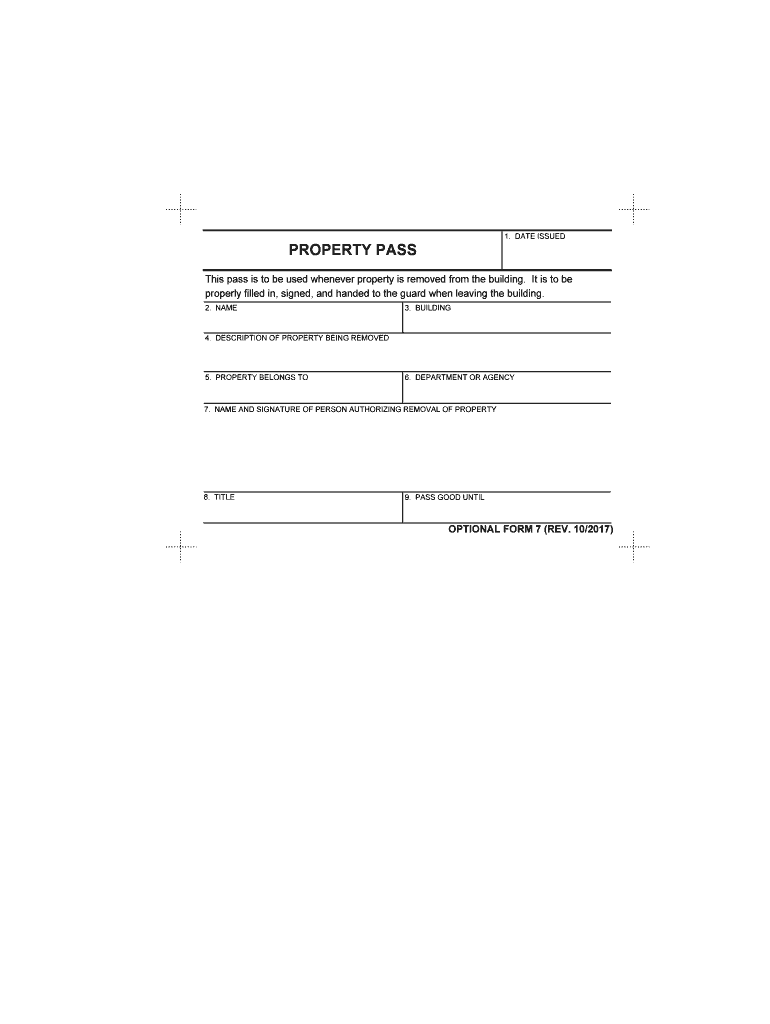







Definition and Purpose of the Federal Property Pass Form 7 - HUD
The Federal Property Pass Form 7, commonly referred to as the Form 7 - HUD, serves as an essential document for individuals or agencies wishing to remove property from federally owned buildings. This form is particularly important within the Department of Housing and Urban Development (HUD) as it outlines the permissions and processes involved in the temporary removal or transportation of government property.
Key elements of the Federal Property Pass Form 7 include:
- Date: The day on which the form is being filled out.
- Name: The individual who is requesting the pass.
- Building: The specific location or federal building from which the property will be removed.
- Description of the Property: A detailed account of what is being removed, including serial numbers or identifying features.
- Ownership Details: Information corroborating the ownership of the property being removed, including any relevant identification numbers.
- Department or Agency: The specific government body under which the property falls.
- Authorizing Person's Name and Signature: The signature of an official who verifies the legitimacy of the pass request, ensuring accountability.
- Title: The position or title of the authorizing person.
- Validity Period: This denotes how long the pass remains valid, after which a new form must be submitted for another request.
Each of these elements is crucial for proper documentation and adherence to federal regulations pertaining to property management.
How to Use the Federal Property Pass Form 7 - HUD
Using the Federal Property Pass Form 7 requires careful attention to detail to ensure compliance with federal protocols. The following steps outline how to effectively utilize this form:
- Gather Relevant Information: Before filling out the form, collect all necessary information regarding the property, including specific details as outlined in the form itself.
- Fill Out the Form: Using clear and legible writing, provide all required details in the respective fields. Ensure accuracy to avoid any potential delays or issues.
- Obtain Authorization: Secure the signature and title of an authorized personnel member from your agency or department. This adds legitimacy to your request.
- Keep a Copy: Before submitting, make a copy of the completed form for your records. This serves as proof of your request and may be necessary for future reference.
- Submit the Form: Depending on your agency's guidelines, submit the form through the designated method—this may include manual submission to a specific office, sending it via email, or using an online portal.
Incorporating these steps streamlines the process and ensures compliance with regulatory requirements governing federal property management.
Steps to Complete the Federal Property Pass Form 7 - HUD
Completing the Federal Property Pass Form 7 involves a straightforward series of steps. Each part of the form must be filled out methodically to ensure that no information is overlooked.
- Start with the Date: Enter the current date clearly at the top of the form.
- Fill in Your Name: Provide your full name in the designated field to identify the requestor.
- Identify the Building: Specify the federal building from which the property is being removed. This could be a HUD facility or any designated federal property.
- Describe the Property: Provide a comprehensive description of the item or items being removed. Include model numbers, serial numbers, and any distinguishing features to help identify the property.
- Ownership Details: Include details regarding ownership. This may involve referencing internal property numbers or documentation linking the property to the entity removing it.
- Specify the Department: Indicate which government department or agency governs the property being requested for removal.
- Authorization Signature: Ensure that the form is signed by an authorized individual within your agency. Include their name and title for verification purposes.
- Validity Period: Clearly state how long this pass will be valid, keeping in mind any relevant internal policies in your organization.
Each step should be approached with care, as inaccuracies or omissions can lead to significant delays in the process.
Important Terms Related to the Federal Property Pass Form 7 - HUD
Understanding certain terminology related to the Federal Property Pass Form 7 is vital for effective communication and compliance with federal guidelines:
- Pass: A documented permission that allows the removal of federal property.
- Authorized Personnel: Individuals within an agency who have the authority to approve and validate requests for property removal.
- Validity Period: The timeframe during which the pass remains effective, after which a new request may be necessary.
- Ownership Documentation: Supporting documents or identification required to substantiate claims of property ownership, including receipts or internal records.
- Federal Approval: The process whereby agencies recognize and permit the removal of property, ensuring adherence to regulations.
Familiarity with these terms aids individuals in navigating the complexities surrounding form submission and compliance.
Who Typically Uses the Federal Property Pass Form 7 - HUD
The Federal Property Pass Form 7 is utilized primarily by individuals and agencies involved in the management, maintenance, or oversight of federal properties. Key users include:
- Government Employees: Staff members within HUD or other federal agencies who need to remove property for maintenance, relocation, or other authorized purposes.
- Contractors: Individuals or companies engaged by federal agencies to perform work that may require the temporary removal of federal property for specialized handling or services.
- Internal Auditors: Departments conducting audits may need access to documentation regarding the movement of property in and out of federal buildings.
- Logistics Personnel: Those responsible for managing property transport and logistics within federal agencies may frequently use this form to ensure proper authorization.
By understanding the main users of this form, agencies can streamline the approval processes and ensure that legitimate requests are facilitated efficiently.