







Definition & Meaning
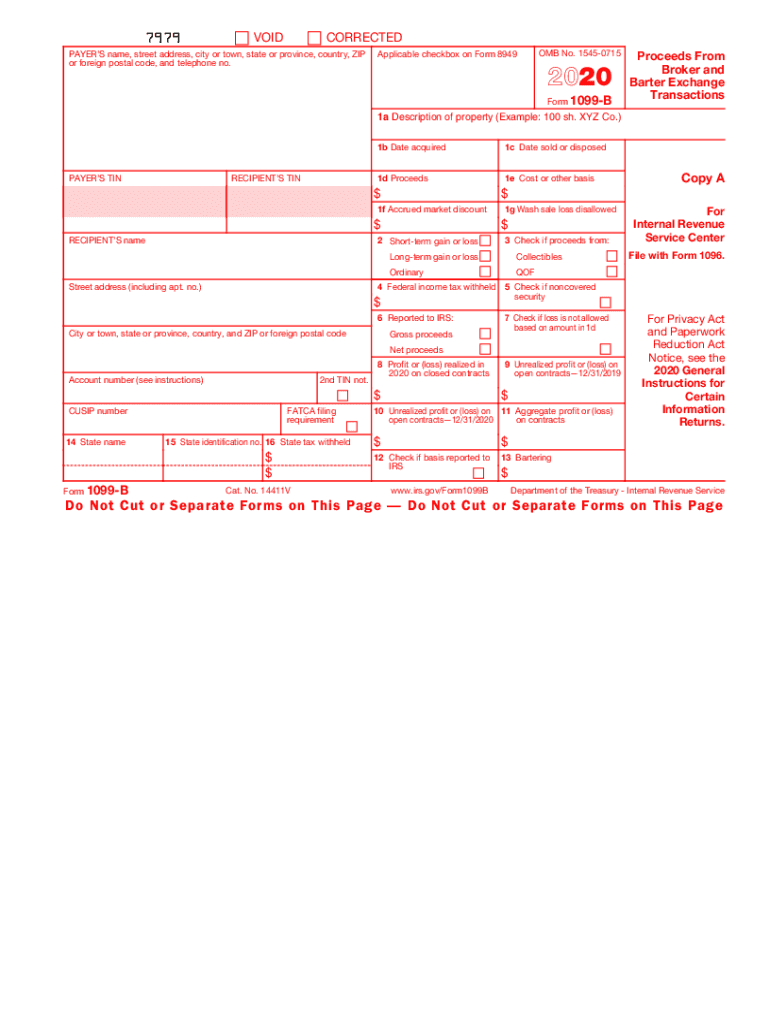
Form 1099-B, also known as the Proceeds from Broker and Barter Exchange Transactions form, is used by the IRS to report gains or losses from broker and barter exchange transactions. This form is crucial for ensuring that individuals and businesses accurately report income derived from the sale of securities and other financial instruments. Notably, it's an integral part of an individual's or entity's tax reporting if any investments were sold or if there were any barter exchanges during the tax year.
How to Use the 1099-B
The 1099-B form serves as a tool for reporting capital asset transactions. Here's how to use it:
- Verification of Information: Ensure the accuracy of the information provided by comparing it with your brokerage statements.
- Tax Reporting: Use the figures from Form 1099-B to report your capital gains or losses on Schedule D of your tax return.
- Record Keeping: Maintain records of transactions, including purchase and sale prices, to support your tax filings.
- Adjustments: In some cases, you might need to adjust the reported cost basis for accuracy, which may involve consulting the IRS rules or a tax professional.
Steps to Complete the 1099-B
Completing Form 1099-B involves the following steps:
- Input Personal Details: Enter the payer's and recipient's name, address, and tax identification number.
- Transaction Details: Record each transaction, detailing the date of acquisition, sale date, and the amount of proceeds.
- Cost Basis Report: Indicate the cost or adjusted basis of the securities sold and any applicable adjustments.
- Gain or Loss Calculation: Calculate the gain or loss based on the difference between the sale proceeds and the cost basis.
- Supplementary Information: Provide additional data or disclosures as required by specific transactions or IRS guidelines.
Key Elements of the 1099-B
Form 1099-B is structured to capture critical data related to each transaction:
- Proceeds from Transactions: The total amount received from sales.
- Cost or Other Basis: The original purchase price or adjusted cost.
- Wash Sale Disclosures: Indication of transactions that might be affected by the wash sale rules.
- Type of Gain or Loss: Classification into short-term or long-term based on holding period.
- Backup Withholding: Any federal taxes withheld on the transactions.
IRS Guidelines
The Internal Revenue Service (IRS) provides comprehensive guidelines for using Form 1099-B:
- Filing Requirements: Specify when and how the form must be filed, with deadlines typically in February for brokers.
- Exceptions and Special Cases: Outline circumstances under which exceptions to standard reporting may apply.
- Reportable Transactions: Define which transactions must be reported, such as the sale of stock, bonds, or derivatives.
Filing Deadlines / Important Dates
Critical deadlines for Form 1099-B include:
- Rendering to Recipients: Must be sent to taxpayers by February 15 to aid in timely tax filing.
- Filing with the IRS: Electronic or paper filing typically due by the end of February or early March.
- Extensions: Discuss the possibility of obtaining filing extensions if necessary.
Who Issues the Form
- Brokers: The primary entities responsible for issuing Form 1099-B to investors.
- Barter Exchanges: Other entities that might issue this form include platforms that facilitate barter transactions.
Penalties for Non-Compliance
Failing to comply with IRS requirements regarding Form 1099-B can result in several penalties:
- Late Filing: Penalties for delayed submission to recipients or the IRS.
- Incorrect Information: Fines for errors that lead to inaccurate tax filings.
- Non-Filing: Severe consequences for not issuing the form altogether.
Digital vs. Paper Version
Form 1099-B can be managed both digitally and on paper:
- Digital Filing: Many brokers offer digital copies, facilitating easier importation into tax software.
- Paper Copies: Issued upon request or when electronic delivery isn’t feasible, paper copies remain compliant.
The choice between digital and paper forms often hinges on user preference and access to resources such as tax preparation software.




