Definition and Purpose of the Fluid Intake Tracking Form
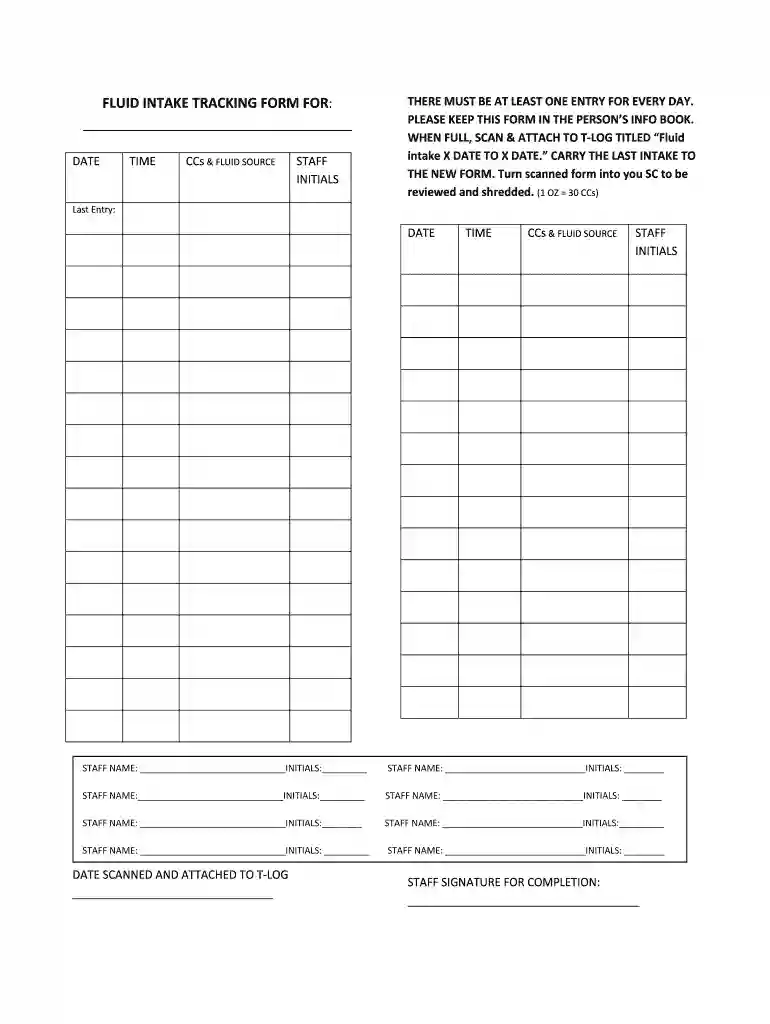
The Fluid Intake Tracking Form serves as an essential document for caregivers and healthcare professionals to meticulously record daily fluid intake for individuals under their care. This form is particularly relevant in medical settings, where monitoring hydration levels is critical, especially for patients with specific health conditions like heart disease, kidney issues, or those requiring fluid restrictions. Each entry on the form must capture accurate data regarding the volume and source of fluids consumed, thereby assisting in the effective tracking of hydration status and the assessment of dietary needs.
Key Elements of the Fluid Intake Tracking Form
- Date and Time: Each entry must include the date and time of fluid consumption, facilitating timely reviews of hydration patterns.
- Fluid Source: This section captures the type of fluid ingested, whether water, juice, broth, or other beverages, providing insights into hydration quality.
- Staff Initials: To ensure accountability, staff members documenting entries must initial each record, enabling easy identification of who recorded specific data.
- Completion Signature: A signature field on the form corroborates that the daily compilation of fluid intake has been reviewed, ensuring adherence to care protocols.
Steps to Effectively Complete the Fluid Intake Tracking Form
- Preparation: Gather all necessary materials before starting, including the form itself and any relevant information regarding the individual's daily fluid regimen.
- Accurate Recording: Ensure that entries are made promptly and accurately:
- For each fluid consumed, note the exact time and date.
- Specify the volume of fluid taken, using standardized measurements (e.g., ounces or milliliters).
- Identify the source of the fluid supplementing the entry.
- Review Entries: At the end of each day, staff should review the filled-out form for completeness, ensuring no time slots are left unrecorded.
- Sign and Submit: After verification, the form should be signed by the responsible staff member and then scanned or attached to the electronic record (T-log) for documentation.
Importance of Daily Logging
Daily logging serves multiple purposes, such as monitoring intake to avoid dehydration. It also helps nutritionists or doctors make informed decisions regarding dietary plans and necessary adjustments based on the individual’s health condition.
Practical Examples of Fluid Intake Scenarios
Tracking fluid intake can take various forms, depending on the needs of the patients. Some examples include:
- Post-Surgery Patients: After surgical procedures, patients often have restricted fluid intake. The Fluid Intake Tracking Form helps monitor adherence while ensuring they remain adequately hydrated for recovery.
- Elderly Patients with Limited Mobility: For elderly individuals, caregivers may find it challenging to ensure adequate fluid consumption. Regular entries help track hydration needs over an extended period.
- Patients with Specific Dietary Restrictions: For individuals who must limit sodium or sugar intake, the Fluid Intake Tracking Form becomes invaluable by recording not only volume but also the type of fluid consumed.
Variants and Electronic Options for the Fluid Intake Tracking Form
While the traditional paper form is commonly used, many healthcare facilities are transitioning to electronic documentation methods, which offer numerous advantages:
- Editable Templates: Institutions can create digital versions of the Fluid Intake Tracking Form, making it easier to edit and aggregate data electronically.
- Integration with Health Records Systems: Electronic forms can be integrated directly into electronic health record (EHR) systems, thus streamlining data management and ensuring real-time access for healthcare staff.
- Automated Reminders: Some advanced systems can send reminders for staff to document intake at specified intervals, thereby enhancing compliance and data accuracy.
Legal and Compliance Considerations for Using the Fluid Intake Tracking Form
Maintaining the integrity and confidentiality of the Fluid Intake Tracking Form is essential. Below are considerations to keep in mind:
- HIPAA Compliance: Any documentation that includes patient-related data must comply with the Health Insurance Portability and Accountability Act (HIPAA), ensuring that all information is securely handled.
- Audit Trails: In electronic formats, audit trails should be maintained to track changes and additions, adding an extra layer of security and reliability.
- Retention Policies: Organizations should establish clear policies regarding the retention of the Fluid Intake Tracking Form to abide by healthcare standards and state regulations.
By adhering to these guidelines and protocols, healthcare providers can ensure that their documentation remains accurate, secure, and compliant with legal standards while effectively managing patient care.