




Definition & Meaning of Patrol Menu Planning Worksheet
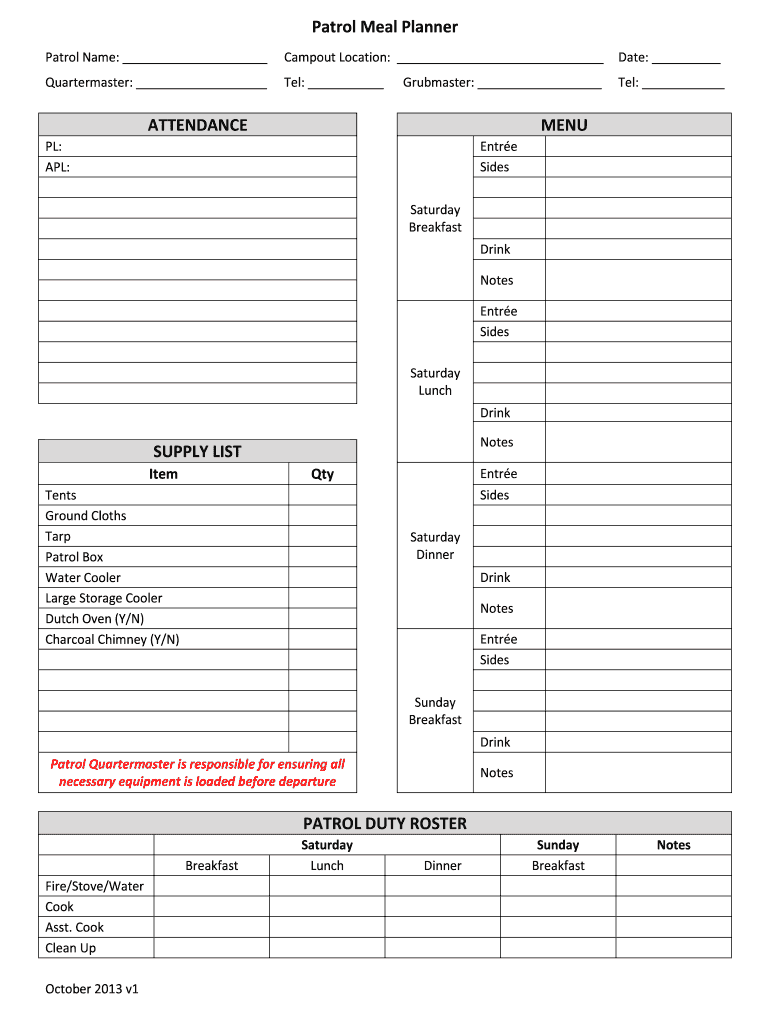
The patrol menu planning worksheet is a structured tool used primarily in scouting to organize meals for outings. It serves as an essential resource for leaders and scouts when planning food and supplies for camping trips, ensuring that nutritional needs are met and that all necessary items are accounted for prior to departure. Typically, the worksheet includes several sections that guide users through various aspects of meal preparation, such as attendance, supply lists, duty assignments, shopping lists, and budget calculations per participant, particularly for events like BSA and Girl Scout outings.
Through the use of this worksheet, participants learn valuable skills related to meal planning including dietary considerations, budgeting, and logistical organization, which are crucial for successful camping experiences. The worksheet can also encourage teamwork and responsibility when assigning food-related tasks among troop members.
Steps to Complete the Patrol Menu Planning Worksheet
- Gather Troop Information: Start by collecting essential information such as the number of attendees and any dietary restrictions. This ensures that all scouts are taken into account when planning meals.
- Plan the Menu: List meals for the duration of the camping trip, typically influenced by the number of participants and the length of the outing. Consider including breakfast, lunch, dinner, and snacks. For instance, planning a hearty breakfast might include oatmeal, fruit, and scrambled eggs, while dinner could feature pasta with tomato sauce and grilled vegetables.
- Create a Supply List: From your menu, draft a supply list detailing all ingredients and equipment needed. This list should specify quantities, ensuring that everything from staples like rice and beans to seasoning is mentioned.
- Assign Tasks: Designate specific roles, such as a Quartermaster to manage supplies and a Grubmaster to oversee meal preparation. Incorporating duties into the worksheet ensures accountability and participation among scouts.
- Calculate Costs: Estimate the total cost of supplies and calculate the per-scout contribution. This step is crucial for budget management and teaches scouts about financial responsibility.
- Review and Adjust: Before finalizing, review the worksheet to ensure completeness. This review process may involve adjustments based on feedback from troop members or logistical considerations.
By completing these steps, troops can ensure they are well-prepared for their camping experience, covering all essential aspects of meal planning.
How to Use the Patrol Menu Planning Worksheet
Using the patrol menu planning worksheet is a straightforward process that involves both preparation and execution. The worksheet can be filled out physically or digitally, depending on the preferences of the troop.
- Step One: Fill in Attendee Information: Begin by listing all scouts who will participate in the trip, including their dietary restrictions and preferences.
- Step Two: Menu Item Selection: Choose meals based on the preferences surveyed and the type of campsite facilities available (e.g., a fire pit for cooking). The choice of meals should consider nutrition as well as scout preferences to ensure everyone is satisfied during the trip.
- Step Three: Materials Compilation: Use the supply list portion to gather all necessary items. This may include coordinating with other leaders or parents for ease of procurement.
- Step Four: Task Distribution: Assign roles for grocery shopping, meal preparation, and cooking. Consider engaging scouts in learning cooking skills, which can enhance their camping experience.
- Step Five: Execution During the Trip: During the camping trip, utilize the worksheet to guide meal preparation and serving. It should be easily accessible so that scouts can refer to it for cooking and serving tasks.
This organized method not only maximizes efficiency in meal prep but also enhances scouts' learning experiences.
Important Terms Related to Patrol Menu Planning Worksheet
- Grubmaster: The individual responsible for food preparation and meal management during the camping trip, ensuring that meals are cooked and served efficiently.
- Quartermaster: The scout assigned to manage equipment and supplies, ensuring that all necessary items are accounted for and properly packed.
- Troop: A group of scouts that is organized under the BSA or similar youth organization, often participating together in camping and other outdoor activities.
- Patrol: A smaller group of scouts within a troop, often responsible for specific tasks during outings, including meals.
- Campout: A scheduled camping event for the troop or patrol, where the planning worksheet is particularly useful to ensure that all food and supplies are ready for use.
Familiarizing everyone with these terms enhances communication and teamwork among scouts, leading to a smoother camping experience.
Examples of Using the Patrol Menu Planning Worksheet
The patrol menu planning worksheet finds its application in various outdoor scenarios, enhancing the efficiency and enjoyment of scouting activities. Below are practical examples:
- Weekend Camping Trip: For a weekend outing, a troop might use the worksheet to plan three breakfasts, three lunches, and two dinners. The meals could include simple options such as sandwiches for lunch and mac and cheese for dinner, ensuring easy preparation and cleanup.
- Hiking Camp: When scouting involves hikes, the menu may include lightweight and non-perishable options like granola bars, jerky, and dried fruit. The worksheet will help plan each day's food supply and water needs based on hiking distances and the number of hikers.
- Special Dietary Needs: Troops with scouts who have food allergies can utilize the worksheet to ensure that safe and inclusive meal options are prepared. The worksheet can highlight specific menu items that are allergen-free and list alternative snacks.
Such scenarios demonstrate the versatility of the worksheet in accommodating various scouting needs and enhancing the overall camping experience.