Lien waiver 2025

Get Form
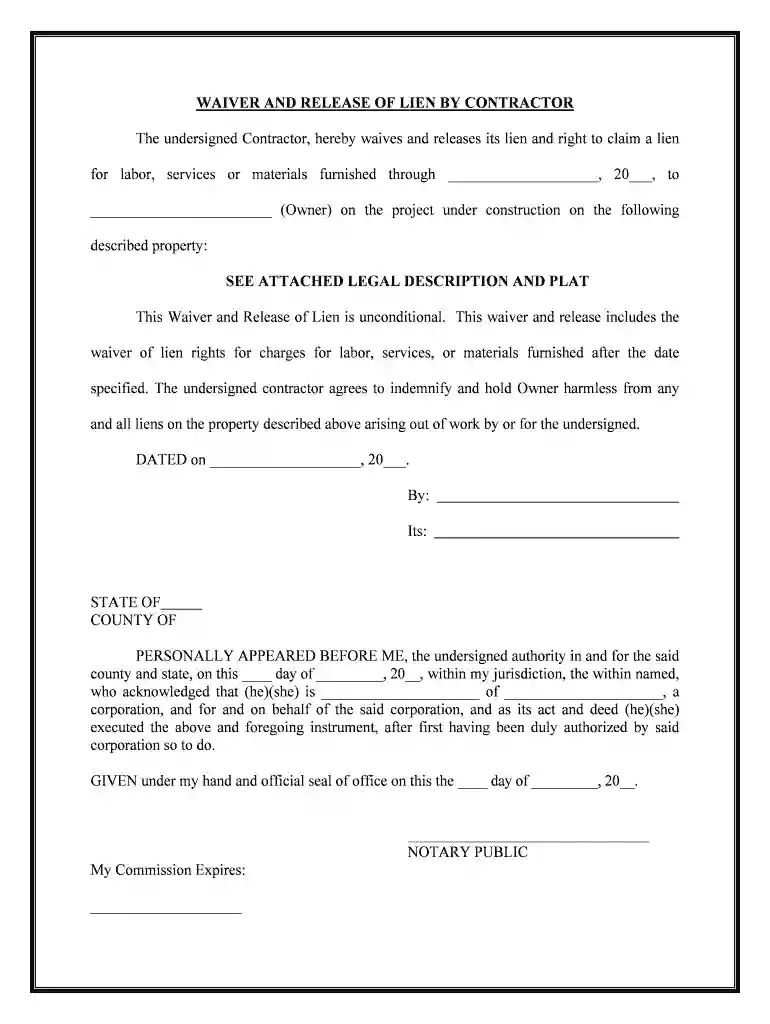
printable lien waiver form Preview on Page 1

Here's how it works

01. Edit your printable lien waiver form online
Type text, add images, blackout confidential details, add comments, highlights and more.

02. Sign it in a few clicks
Draw your signature, type it, upload its image, or use your mobile device as a signature pad.

03. Share your form with others
Send lien waiver template via email, link, or fax. You can also download it, export it or print it out.

Understanding a Lien Waiver: Definition and Purpose

A lien waiver is a legal document used in construction and real estate that relinquishes a contractor's right to assert a lien against a property for labor, materials, or services provided. This document is critical in ensuring that property owners are protected from future claims regarding unpaid or disputed debts related to contracted work. It serves as assurance that the contractor has been compensated for the work performed up to a specified date, thus preventing any potential financial encumbrance on the property.

Key Elements of a Lien Waiver

  • Identification of Parties: Clearly states the contractor and property owner's names.
  • Property Description: Includes a description of the property to which the waiver pertains.
  • Scope of Work: Details the nature of the labor, materials, or services rendered.

By ensuring these elements are present, the lien waiver becomes a reliable record that protects both parties involved.

Types of Lien Waivers

Lien waivers generally come in two main forms: conditional and unconditional.

  • Conditional Lien Waiver: This type is effective only when the contractor receives payment. It ensures that the waiver will be valid once compensation is confirmed.
  • Unconditional Lien Waiver: This waiver is effective immediately, indicating that the contractor has received payment, regardless of whether the payment has cleared the bank.

Understanding the differences between these forms is crucial when determining how to proceed with contracts and payments in construction projects.

How to Create a Lien Waiver

Creating a lien waiver involves specific steps to ensure legality and enforceability.

  1. Select the Appropriate Template: Choose between a blank lien waiver form, printable lien waiver form, or contractor lien waiver form PDF.
  2. Fill in Contractor Information: Enter the contractor's name as well as any necessary business information.
  3. Detail the Property: Include a precise description and address of the property affected.
  4. Outline Work Done: Specify the services rendered and any materials supplied.
  5. Indicate Waiver Type: Clearly state whether it is a conditional or unconditional waiver.

By following these steps, parties can ensure that the lien waiver is properly completed and meets legal standards.

Legally Binding Aspects of a Lien Waiver

A lien waiver is a legally binding document once signed. It adheres to the guidelines set forth by the local and state jurisdictions regarding lien rights.

  • Notarization Requirements: In many states, notarization is mandatory for a lien waiver to be enforceable. This adds a layer of authenticity and prevents fraudulent claims.
  • Adherence to State Laws: Each state may have specific regulations governing lien waivers, such as time frames for submission and required verbiage. It's crucial to understand and comply with these regulations to maintain the document's validity.

Being informed about the legal aspects ensures that the lien waiver upholds its protective intentions.

Best Practices for Using Lien Waivers

Using lien waivers effectively requires careful consideration of best practices to mitigate risks associated with contracting.

  • Use a Standard Template: Whenever possible, utilize standardized lien waiver templates tailored to state-specific requirements to ensure compliance.
  • Maintain Records: Keep copies of all lien waivers submitted. Documentation is essential for dispute resolution and provides proof of completed transactions.
  • Consult Legal Counsel: Before issuing or signing a lien waiver, consult with legal professionals to ensure that your rights and interests are protected.

Implementing these practices contributes to a smoother workflow and safeguards against misunderstandings in the contracting process.

Common Scenarios for Using a Lien Waiver

Various situations necessitate the use of a lien waiver in real estate and construction agreements.

  • Before Final Payments: Contractors may be required to submit a lien waiver before receiving final payment to assure property owners that no future claims will arise.
  • For Subcontractors: Subcontractors often need to provide a lien waiver to the general contractor to confirm they have been paid before they can receive further payments themselves.

Recognizing these scenarios allows parties to preemptively manage lien rights effectively.

Conclusion on Lien Waivers

Ultimately, lien waivers play a pivotal role in the construction and real estate sectors, safeguarding against financial disputes and ensuring that rights and responsibilities are clearly defined. By understanding the intricacies of lien waivers, parties can protect their interests and foster smoother, more trustful business relationships.

be ready to get more

Complete this form in 5 minutes or less

Get form

Got questions?

We have answers to the most popular questions from our customers. If you can't find an answer to your question, please contact us.
Contact us
North Carolina does not provide or require statutory forms for lien waivers. For a lien waiver to be valid in North Carolina, it must be done by express agreement clearly stating intent to waive lien rights. Lien waivers will fall under two categories: progress payments and final payments.
Contractors, vendors, and project owners sign lien waivers to agree that no one will place a lien against the property. Lien waivers serve as proof that payment has been received, all parties are satisfied with their pay, and no one will dispute their payment.
The definition of a lien waiver is simply a document that releases, or waives, the rights of a lienholder. A lien is a legal claim or right to keep possession of someone elses property until a debt owed to the lienholder is paid.
In the mechanics lien process, a lien waiver is a document from a contractor, subcontractor, materials supplier, equipment lessor or other party to the construction project (the claimant) stating they have received payment and waive any future lien rights to the property (of the owner) for the amount paid.
In its simplest form, a lien waiver is a document used to release a lien on a property when a contractor or supplier is paid for services or goods that have been rendered. In the U.S., construction companies and material suppliers have the right to place a lien on the property they work on or supply materials to.