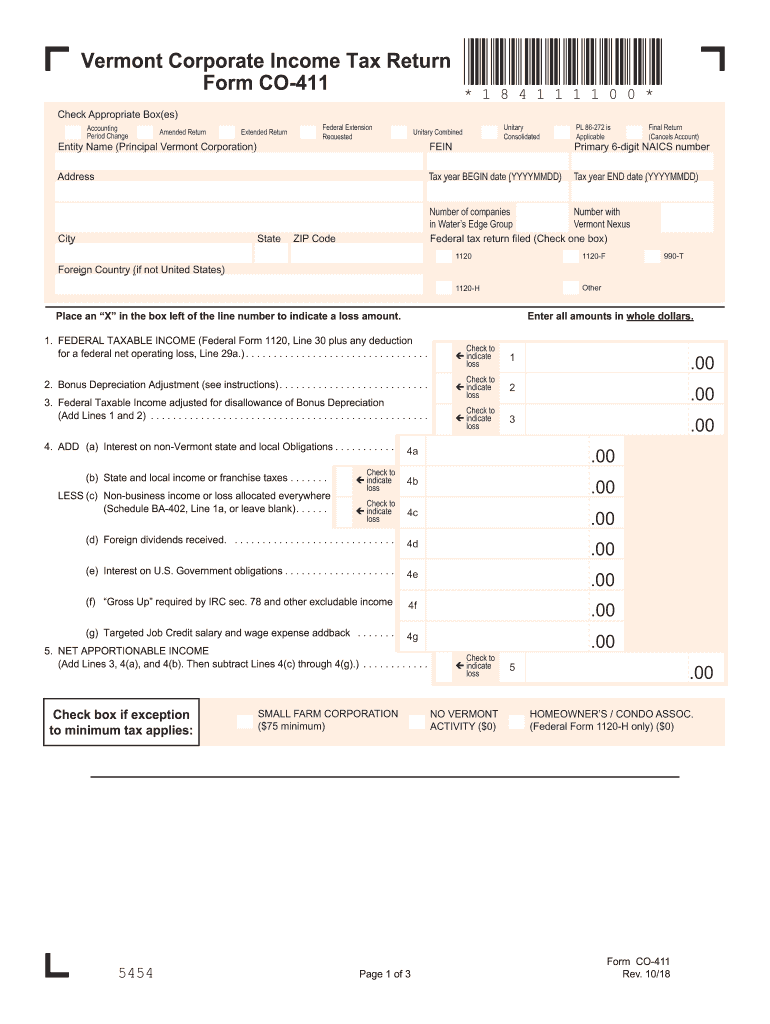
Fillable vt co 411 2026

Get Form
fillable vt co 411 Preview on Page 1

Here's how it works

01. Edit your form online
Type text, add images, blackout confidential details, add comments, highlights and more.
02. Sign it in a few clicks
Draw your signature, type it, upload its image, or use your mobile device as a signature pad.
03. Share your form with others
Send it via email, link, or fax. You can also download it, export it or print it out.

How to use or fill out fillable vt co 411 with our platform

Form edit decoration
9.5
Ease of Setup
DocHub User Ratings on G2
9.0
Ease of Use
DocHub User Ratings on G2
  1. Click ‘Get Form’ to open the fillable vt co 411 in the editor.
  2. Begin by checking the appropriate boxes for your accounting period, whether it’s an amended return or an extended return.
  3. Enter your entity name and FEIN in the designated fields. Ensure that all information is accurate to avoid processing delays.
  4. Fill in the tax year begin and end dates using the YYYYMMDD format. This is crucial for determining your tax obligations.
  5. Complete the income sections by entering amounts as whole dollars. Pay attention to loss indicators where applicable.
  6. Review all entries, especially calculations related to Vermont income and credits, ensuring accuracy before submission.

Start filling out your vt co 411 form online for free today!

See more fillable vt co 411 versions

We've got more versions of the fillable vt co 411 form. Select the right fillable vt co 411 version from the list and start editing it straight away!
Versions Form popularity Fillable & printable
2022 4.1 Satisfied (45 Votes)
2021 4.8 Satisfied (183 Votes)
2019 4.2 Satisfied (101 Votes)
2018 4.4 Satisfied (241 Votes)
2015 4.3 Satisfied (116 Votes)
2014 4.4 Satisfied (461 Votes)
2012 4 Satisfied (48 Votes)
2011 4 Satisfied (23 Votes)
2010 4.2 Satisfied (68 Votes)
be ready to get more

Complete this form in 5 minutes or less

Get form

Got questions?

We have answers to the most popular questions from our customers. If you can't find an answer to your question, please contact us.
Contact us
If you make $50,000 a year living in the region of Vermont, USA, you will be taxed $9,781. That means that your net pay will be $40,219 per year, or $3,352 per month.
The average effective property tax rate in Vermont is 1.78%, which ranks as the fifth-highest rate in the U.S. The typical homeowner in Vermont can expect to spend $4,859 annually in property taxes. Not in Vermont?
In conclusion, Vermont offers a range of retirement options, from historic towns to peaceful natural scenery. Retirees can enjoy a moderate climate and a variety of recreational activities but should be prepared for a higher cost of living.
Vermont Property Tax Breaks for Retirees Vermont offers a property tax credit of up to $8,000 to eligible homeowners. Homeowners must meet all of the following requirements to qualify for the credit in 2025.
If youre looking for low property taxes in Vermont, Franklin County is one of your best bets. The countys average effective property tax rate is 1.59%, good for second-lowest in the state. In St. Albans, the largest city in the county, the total municipal rate is about 2.6265%.

Security and compliance

At DocHub, your data security is our priority. We follow HIPAA, SOC2, GDPR, and other standards, so you can work on your documents with confidence.

Learn more
ccpa2
pci-dss
gdpr-compliance
hipaa
soc-compliance
be ready to get more

Complete this form in 5 minutes or less

Get form

People also ask

Vermonts Social Security Exemption Vermonts personal income tax exemption of Social Security benefits reduces tax liabilities mainly for lower- and middle-income Vermonters who are retired or disabled.
Overview of Vermont Retirement Tax Friendliness Property taxes in Vermont are among the highest in the nation, but sales taxes are below average. To find a financial advisor who serves your area, try our free online matching tool. Vermont is not tax-friendly toward retirees. Social Security income is partially taxed.
South Dakota is one of the most tax-friendly states for U.S. retirees. It does not levy state income tax, so retirement income and income from dividends and interest are tax-free. South Dakota does not charge inheritance or estate taxes and has fairly low sales taxes.

Related links