
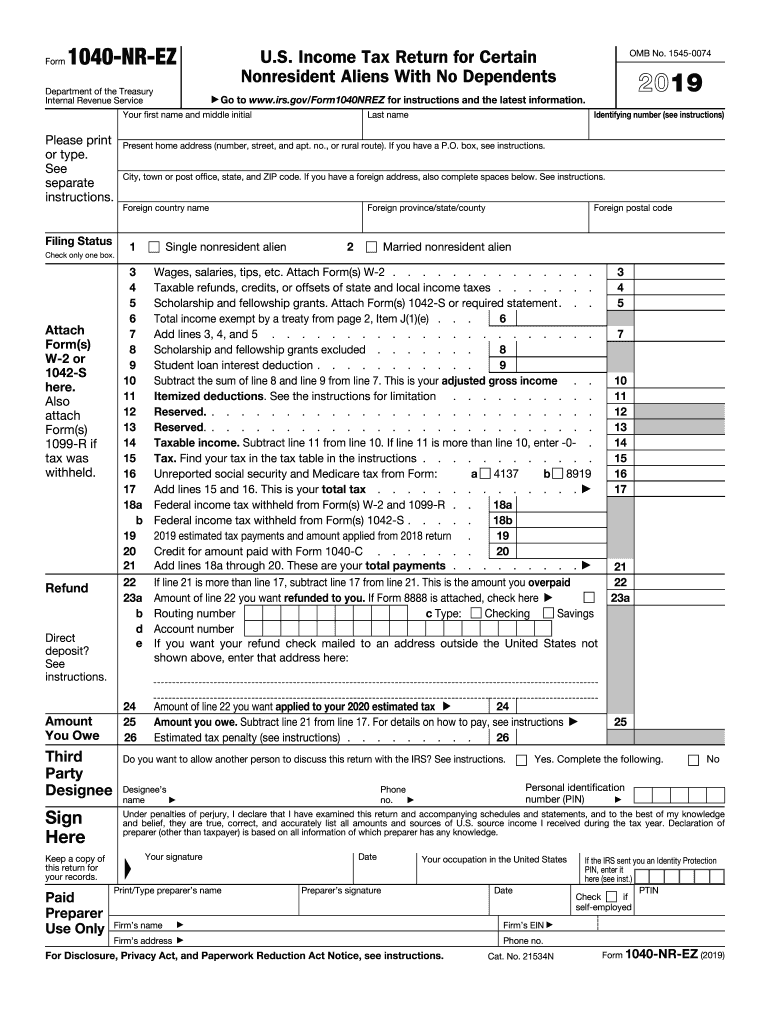






Definition and Purpose of Form 1040-NR
Form 1040-NR is a U.S. income tax return designed for nonresident aliens who engage in certain taxed activities within the United States. This form is crucial for individuals who meet specific criteria, such as those who are not U.S. citizens or residents and who receive income from U.S. sources. The form includes comprehensive sections for filing status, income reporting, deductions, tax computations, and potential refunds. Its purpose is to ensure that nonresident aliens accurately report their U.S.-sourced income and are taxed appropriately according to their tax status. Given its specialized nature, Form 1040-NR aligns with international tax treaties, which may impact the overall tax liabilities of the filer.
How to Obtain Form 1040-NR
Form 1040-NR can be acquired through several methods to ensure accessibility for users. The most straightforward way to obtain the form is by visiting the official IRS website, which provides downloadable and printable versions. Additionally, tax preparation software frequently includes access to Form 1040-NR as part of their suite of forms, enabling users to fill it out digitally. While these online resources are convenient, individuals can still request a paper form through the mail by contacting the IRS directly. For those without reliable internet access, local libraries or community centers often carry copies, especially during tax season.
Steps to Complete Form 1040-NR
Completing Form 1040-NR entails a detailed process that requires careful attention to each section. Here’s a step-by-step guide to filing this form effectively:
- Filing Status Selection: Choose your filing status based on your personal circumstances and IRS guidelines for nonresident aliens.
- Personal Information: Provide your name, address, identifying number, and the details required in Part I.
- Income Reporting: Report U.S.-sourced income, including wages, dividends, and other earnings specified in Part II.
- Adjustments to Income: List any eligible adjustments, such as the student loan interest deduction or moving expenses.
- Calculating Deductions and Exemptions: Use Schedule A of Form 1040-NR to itemize deductions or claim standard deductions where applicable.
- Tax and Credits Calculation: Calculate the taxes owed using the rates and exemptions available to nonresident aliens, considering any applicable credits.
- Refund or Amount Owed: Determine if you are eligible for a refund or if an amount is owed.
- Sign and Date the Form: Ensure the form is signed by you and your tax preparer, if applicable, before filing.
Eligibility Criteria for Form 1040-NR
Understanding the eligibility criteria for Form 1040-NR is indispensable for determining if you should file this form. Nonresident aliens who have earned income from U.S. sources are required to file this form. This includes income such as:
- Wages for services performed within the United States
- U.S.-based dividends and investment income
- Income as an independent contractor operating in the U.S.
These criteria also extend to individuals who wish to claim a refund for taxes withheld on specific types of U.S. income. Additionally, student visa holders and scholars who have U.S.-sourced income may need to complete this form. Individuals should consult IRS guidelines for comprehensive eligibility verification.


Filing Deadlines and Important Dates
The typical filing deadline for Form 1040-NR is April 15th of the following year after the tax period ends. However, nonresident aliens who are employees and have employment income that falls under a significant presence test usually have until June 15th to file. Also, taxpayers who earn income from abroad might have additional stipulations or options regarding deadline extensions. To avoid penalties, it's vital to understand these dates and submit the form promptly, keeping domestic and international holidays in mind.
Required Documents for Form 1040-NR
Preparing Form 1040-NR necessitates gathering several pieces of documentation to ensure accuracy and compliance. Key documents include:
- Your passport and relevant visa information
- Income statements such as W-2s or 1099 forms
- Documentation of deductions or credits, like receipts for educational expenses or charitable contributions
- Bank statements for interest income
It's crucial for taxpayers to maintain comprehensive and organized records to facilitate smooth tax filing. If you're benefiting from a tax treaty, having the relevant treaty documentation is also essential.
IRS Guidelines for Form 1040-NR
The IRS provides a robust framework of guidelines for filing Form 1040-NR to aid nonresident aliens. These guidelines specify the processes for claiming treaty benefits, whether exemptions or reduced tax rates. The IRS further delineates how to document income from various sources, address tax impacts from partnerships and estates, and identify pertinent tax credits, ensuring compliance and minimizing mistakes.
Examples and Scenarios for Using Form 1040-NR
Understanding the practical application of Form 1040-NR can be greatly enhanced by examining typical scenarios:
- Example 1: A Canadian engineer temporarily working on a project in the U.S. may need to file Form 1040-NR to declare their U.S.-earned salary.
- Example 2: A French student on an F-1 visa who tutors students in the U.S. on a part-time basis might use this form to report their income.
- Example 3: A Japanese investor earning dividends from U.S. stocks can report that income on Form 1040-NR, reflecting applicable treaty benefits.
Recognizing these scenarios enables taxpayers and preparers to identify when this form is necessary, ensuring compliance with U.S. tax laws.