






Understanding the Face to Name Transition Sheet
The face to name transition sheet is a crucial tool used in educational and childcare settings to ensure the safety and well-being of children. It facilitates tracking individual children as they transition between various activities throughout the day.
Purpose of the Face to Name Transition Sheet
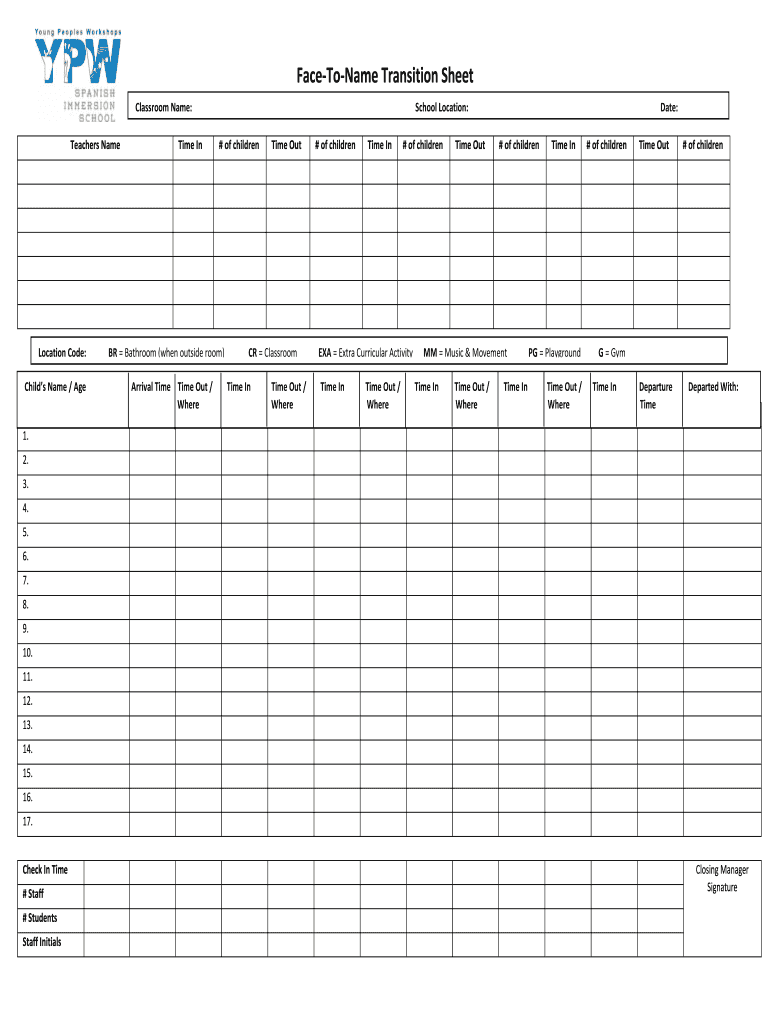
The primary purpose of a face to name transition sheet is to keep an organized record of children's whereabouts and the staff members responsible for their supervision at any given time. By documenting children's names, ages, and locations, this form enhances accountability and communication among staff.
- Safety Assurance: By tracking the arrival and departure times, educators can ensure that all children are accounted for, reducing the risk of losing track of a child during transitions.
- Activity Management: It helps in managing transitions smoothly between activities, such as moving from classrooms to playgrounds or during bathroom breaks.
- Staff Accountability: Including staff initials ensures that there is always a record of who was responsible for supervising the children at specific times.
Structure of the Face to Name Transition Sheet
A face to name transition sheet typically includes several key sections designed for organized record-keeping.
- Child Information: This section includes fields for recording individual child names, ages, and specific notes related to their daily activities.
- Time Stamps: Specific columns for tracking the time children enter and exit various areas are included. This ensures clear visibility on who is where at any point.
- Activity Sections: Different sections for various activities (classroom, bathroom, outdoor play) allow for detailed understanding of children's movements and interactions.
- Staff Initials and Signatures: Space for staff to provide their initials and signatures enhances accountability and records who supervised which activities at specific times.
Benefits of Using the Face to Name Transition Sheet
Using this structured approach provides numerous benefits in a daycare or preschool setting.
- Enhanced Communication: The face to name transition sheet allows educators to communicate more effectively regarding the movements and needs of children as they transition throughout the day.
- Facilitates Parental Inquiries: When parents inquire about their child's activities, having this detailed record allows for accurate communication.
- Data Collection for Future Planning: This data can serve as a foundation for future programming and adaptations based on children's engagement levels during different activities.
Implementation Best Practices
To maximize the effectiveness of the face to name transition sheet, certain best practices should be followed.
- Regular Updates: Staff members should be trained to update the sheet in real-time to ensure accuracy. This helps maintain current records and prevents misunderstandings regarding children's whereabouts.
- Integration into Daily Routines: Incorporating the use of the sheet into daily routines can make it easier for staff to remember to document transitions promptly.
- Review Sessions: Conducting regular reviews of the documented information can help identify patterns of movement which can inform better scheduling or staffing needs as necessary.
Common Variations and Use Cases
While the primary function remains consistent, variations of the face to name transition sheet can be found to suit various childcare environments.
- Customized Templates: Schools and daycares often create tailored templates that include specific sections relevant to their operational needs, such as emergency protocols or health tracking.
- Digital Implementations: Some institutions may use digital versions of the face to name transition sheet, which can improve accessibility and real-time updates across devices.
- Specialized Formats: In some cases, specialized versions may be designed for particular activities, such as field trips or after-school programs, to ensure that tracking remains consistent even in diverse settings.
By employing a well-structured face to name transition sheet, childcare providers can enhance safety, communication, and accountability, ensuring a structured and supportive environment for children during their daily activities.