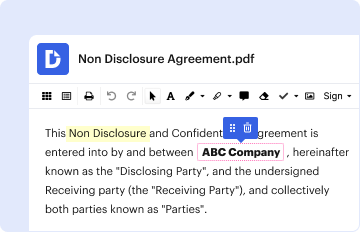
Type text, add images, blackout confidential details, add comments, highlights and more.
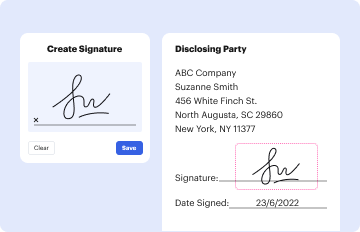
02. Sign it in a few clicks
Draw your signature, type it, upload its image, or use your mobile device as a signature pad.
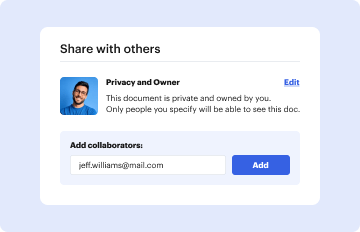
03. Share your form with others
Send it via email, link, or fax. You can also download it, export it or print it out.
How to use or fill out quitclaim deed with our platform
Ease of Setup
DocHub User Ratings on G2
Ease of Use
DocHub User Ratings on G2
Click ‘Get Form’ to open the quitclaim deed in the editor.
Begin by filling in the 'Grantor(s)' section with the name of the individual transferring property rights. Ensure you indicate their marital status as either married or unmarried.
Next, complete the 'Grantee(s)' section by listing all individuals receiving the property. Again, specify each grantee's marital status.
In the 'Description of Property' field, provide a detailed description of the property being transferred or state 'SEE DESCRIPTION ATTACHED' if applicable.
Fill in any prior instrument references, including Book and Page numbers, if available.
Sign and date the document in the designated area for Grantor(s).
If required, have a Notary Public witness your signature and complete their section to validate the deed.
Start using our platform today to easily fill out your quitclaim deed for free!
Quitclaim deed formDoes a quitclaim deed give you ownershipQuitclaim deed with mortgageQuitclaim deed divorceQuitclaim deed tax implicationsQuitclaim deed NYQuitclaim deed vs warranty deedQuitclaim deed pdf
Security and compliance
At DocHub, your data security is our priority. We follow HIPAA, SOC2, GDPR, and other standards, so you can work on your documents with confidence.
A quit claim deed can be used to transfer property or titles. Deeds can be used to transfer property or titles from a grantor (or seller) to a grantee (orRead more
quitclaim deed | Wex | US Law | LII / Legal Information Institute
A document by which a grantor conveys his or her present interest, if any, in a given parcel of [wex:real property] to a grantee without representing,Read more
RP-5217-PDF Real Property Transfer Report Instructions
A foreclosure deed or quitclaim deed would fall into this category. F. Sale of Fractional or Less than Fee Interest (Specify Below) - An interest in part of aRead more
Cookie consent notice
This site uses cookies to enhance site navigation and personalize your experience.
By using this site you agree to our use of cookies as described in our Privacy Notice.
You can modify your selections by visiting our Cookie and Advertising Notice.