




01. Edit your 1040a instructions online
Type text, add images, blackout confidential details, add comments, highlights and more.

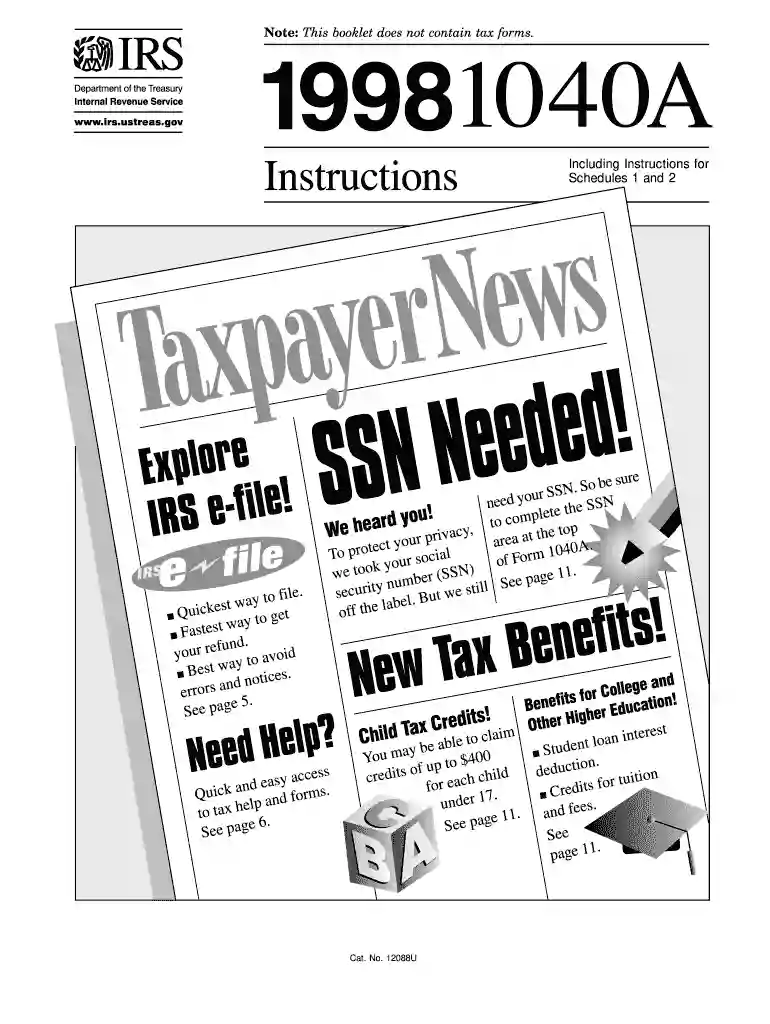
Type text, add images, blackout confidential details, add comments, highlights and more.

Draw your signature, type it, upload its image, or use your mobile device as a signature pad.

Send form 1040a via email, link, or fax. You can also download it, export it or print it out.
Completing the 1998 Form 1040A requires careful adherence to specific steps, ensuring accuracy in reporting income and claiming deductions. Here is a detailed breakdown of the process:
Gathering Required Documents: Ensure you have all necessary documents, including W-2s, 1099s, and records of income. This information will be vital for accurately completing your form.
Reporting Income: Begin by listing all sources of income on the form. This includes wages, salaries, tips, and other compensations. It is crucial to report every stream to avoid discrepancies.
Claiming Allowable Deductions: Utilize Schedule 1 to list any adjustments to your income. These might include educator expenses or IRA contributions, which can lower taxable income.
Determining Credits: Identify credits you may qualify for, such as the Earned Income Credit (EIC). Schedule EIC provides instructions for calculating this credit, essential for taxpayers with qualifying children.
Reviewing Instructions: Carefully read through the instructions to ensure every line is accurately completed. Missing or incorrect information can lead to filing delays or rejections.
The 1998 Form 1040A instructions are designed to guide taxpayers through the filing process in an organized manner. Key elements include:
The 1998 Form 1040A is generally used by taxpayers with relatively straightforward tax situations. This includes individuals and families with income primarily from wages or salaries. It is suitable for those:


The IRS provides detailed guidelines to simplify filling out the 1040A form, ensuring compliance and accuracy. These guidelines include:
Meeting tax deadlines is critical to avoid penalties. Key filing dates for the 1998 tax season include:
Familiarity with terms associated with the 1998 Form 1040A enhances efficiency while completing the tax process:
Understanding AGI helps determine eligibility for certain deductions and credits, impacting overall tax obligations.
Securing a copy of the 1998 Form 1040A instructions is a crucial first step in the filing process. Methods to obtain include:
Non-compliance with the 1040A filing requirements can result in significant penalties, including:
Choosing between digital and paper form versions affects your filing method. Considerations include:
Various life scenarios impact the use and filing of the 1040A form:

We've got more versions of the 1040a instructions form. Select the right 1040a instructions version from the list and start editing it straight away!
At DocHub, your data security is our priority. We follow HIPAA, SOC2, GDPR, and other standards, so you can work on your documents with confidence.
large-print copies of Form 1040A, Schedules 1, 2, 3, and EIC, and their instructions. You can use the large-print form and schedules as worksheets to figure.Read more
Publication 1615, which contains Form 1040A,. Schedules 1, 2, 3, and EIC, and their instructions. CAUTION !Read more
Form 1040 to make review easier. Note. Forms 1040A and 1040EZ were discontinued beginning in 2018. TAX RATES. Individual Tax Rates (1, 15, 63(c)(2)(A)).Read more


