




01. Edit your form 2553 pdf online
Type text, add images, blackout confidential details, add comments, highlights and more.

Type text, add images, blackout confidential details, add comments, highlights and more.

Draw your signature, type it, upload its image, or use your mobile device as a signature pad.

Send 2553 form pdf via email, link, or fax. You can also download it, export it or print it out.
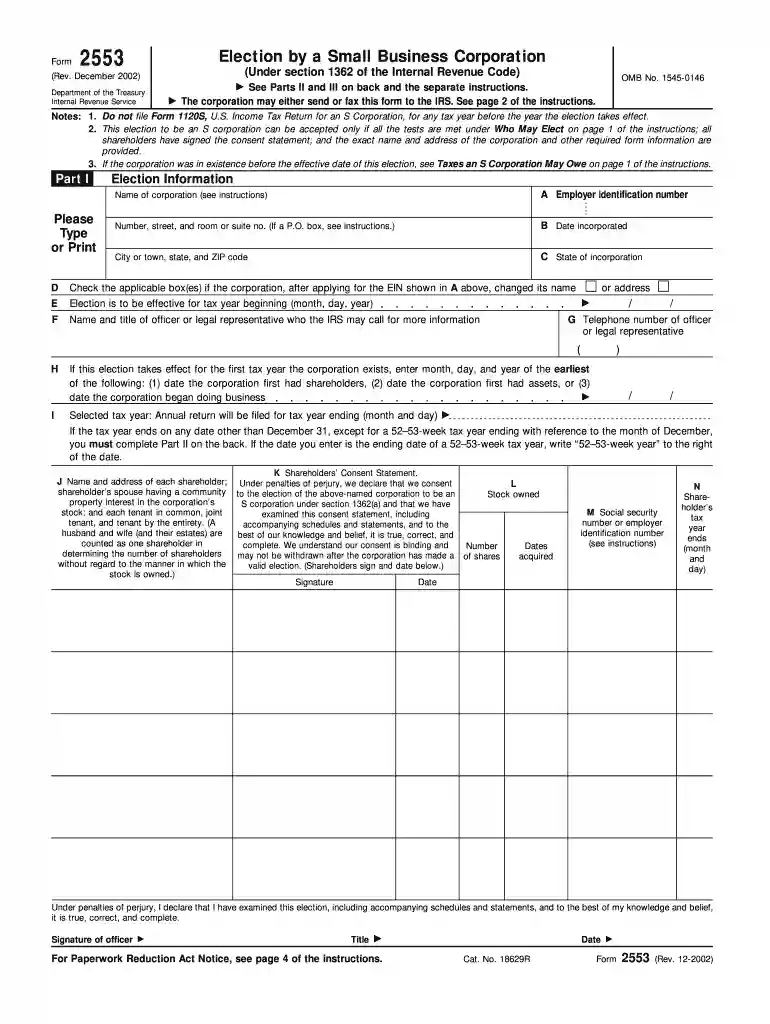
IRS Form 2553 is a crucial document for small business corporations seeking to elect S corporation status. This election is under section 1362 of the Internal Revenue Code, offering tax advantages for eligible entities. The form requires comprehensive details about the corporation, its shareholders, and the agreements necessary to consent to S corporation election.
Form 2553 consists of several key sections, each demanding precise information:
Completing IRS Form 2553 involves several essential steps:
Adherence to specific deadlines is crucial for the successful processing of Form 2553:
Several documents are essential when preparing to file Form 2553:
Not all corporations can elect S corporation status. Eligible entities include:


Not every business will find the S corporation election beneficial. Typically, the following business types consider IRS Form 2553:
Failing to comply with IRS guidelines or submission deadlines for Form 2553 has consequences:
Both digital and paper versions are available for Form 2553, each offering unique advantages:
There are multiple ways to submit IRS Form 2553:
By understanding and following these guidelines, businesses can effectively navigate the complexities of IRS Form 2553 and reap the fiscal benefits of electing S corporation status.
We've got more versions of the form 2553 pdf form. Select the right form 2553 pdf version from the list and start editing it straight away!
Yes, a typed name is accepted as a valid electronic signature when you create it on your form using a compliant solution like DocHub. Simply upload your form 2553 instructions to our editor, click Sign in the top tool pane → Create your signature → Type your name in the appropriate tab, and decide how it will look on your document.
You need only an internet connection and a browser to complete your form 2553 irs on an iOS phone. Open the DocHub website and authenticate. Then, add your document or select it from the list in your dashboard. Then use our editing tools to complete your form and preserve all your modifications. You may also send it to a specified recipient right away.
At DocHub, your data security is our priority. We follow HIPAA, SOC2, GDPR, and other standards, so you can work on your documents with confidence.
Complete and file Form 2553 (a) at any time before the service (see Notice 2002-62, 2002-39 I.R.B. 574 (or its. 16th day of the 3rd month of the tax year, ifRead more
A small business corporation makes an election under section 1362(a) to be an S corporation by filing a completed Form 2553. The election form must be filedRead more
This reference manual is intended for persons interested in the operation and characteristics of the System/34 at the machine code level. Readers should beRead more


