






Understanding the 2006 Form 4562
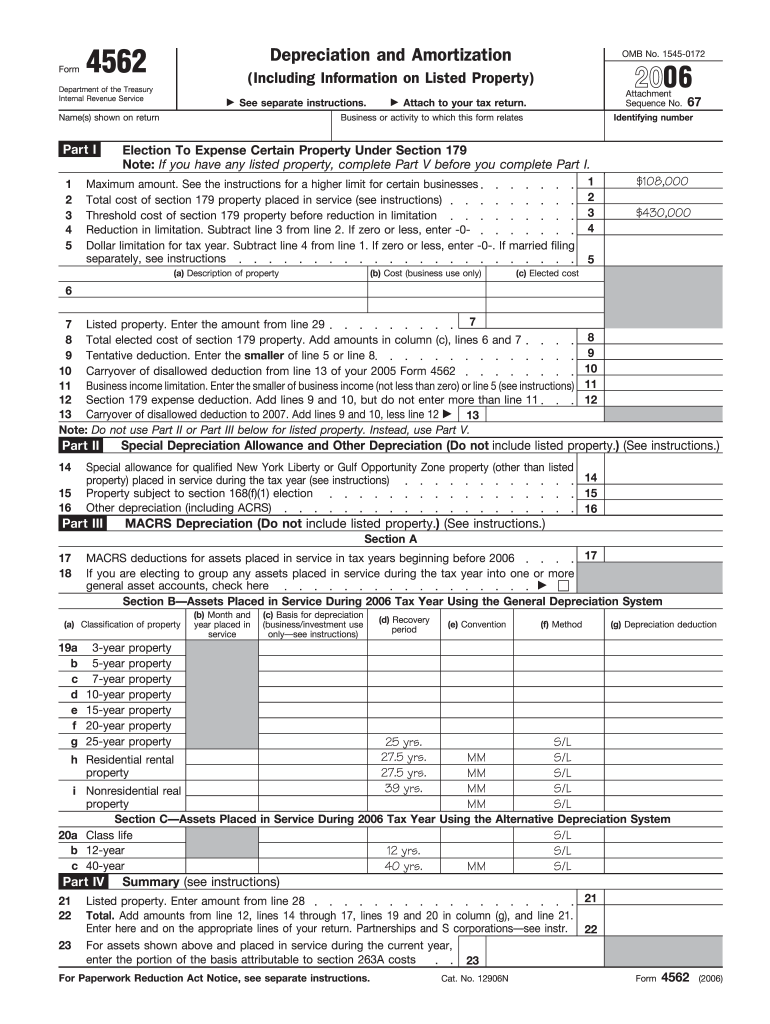
The 2006 Form 4562 is utilized by taxpayers to report depreciation and amortization of property for tax purposes. This form assists in claiming deductions for property that is used in a trade or business, or for income-producing activities. Depreciation allows you to recover the cost or other basis of certain property over a specific period, providing a critical advantage in reducing taxable income.
Purpose of the 2006 Form 4562
Form 4562 serves multiple purposes, including:
- Electing to expense certain property under Section 179.
- Establishing special depreciation allowances.
- Outlining Modified Accelerated Cost Recovery System (MACRS) depreciation.
Filling out this form accurately ensures compliance with IRS requirements and can significantly impact your overall tax liability.
How to Use the 2006 Form 4562
To effectively utilize the 2006 Form 4562, follow these critical steps:
-
Section 179 Election: Determine if you qualify to elect to expense certain property and adhere to the specified limits for deductions.
-
Special Depreciation Allowance: Identify any property that qualifies for special depreciation allowances, and ensure to apply these correctly.
-
Report Business Use of Vehicles: If you use vehicles for your business, be sure to accurately report the percentage of business versus personal use.
-
Amortization: Detail any costs that need to be amortized over a period, including any applicable adjustments or limitations.
Detailed Process to Complete the 2006 Form 4562
-
Filling out Part I:
- Enter details for property expensed under Section 179, including specific Dollar limits and company usage.
-
Completing Part II:
- Calculate special depreciation allowances for qualified new property and other asset additions.
-
Using Part III:
- Always maintain accurate records for listed property like vehicles and computers.
- Ensure accurate entries for business and investment use.
Key Elements of the 2006 Form 4562
Numerous significant components require attention:
- Section 179 Deduction Limit: Understanding these limits is vital for maximizing deductions.
- Depreciation: Accurate calculation of MACRS for different classes of property.
- Assets: Properly classify properties to ensure accurate calculation of deductions.
Important Terms Related to the 2006 Form 4562
- Depreciation: Spreading the cost of an asset over its useful life.
- Amortization: Similar to depreciation but applicable to intangible assets.
- Listed Property: Assets like vehicles, computers, and other property used for both personal and business purposes.
Filing Requirements and Deadline Considerations
This form should be submitted with your tax return by the standard deadline of April 15, barring extensions. Keep in mind:
- Penalties: Late submissions may incur penalties, emphasizing the importance of timely completion.
- Extensions: If needed, file for extensions in advance to avoid unnecessary complications.
Submission Methods for the 2006 Form 4562
Multiple options exist for submitting the 2006 Form 4562:
- Electronic Filing: Utilize IRS-approved tax software.
- Mail: When opting for traditional submission, ensure forms are mailed to the proper IRS address.
- In-Person: Visit a local IRS office for direct submission, if necessary.
IRS Guidelines and Legal Use of the 2006 Form 4562
Adhering to IRS guidelines ensures compliance and avoidance of penalties or audits.
- Eligibility Criteria: Only certain taxpayers with qualifying property can use this form. Ensure eligibility before proceeding.
- Legal Obligations: Completely fill all sections relevant to your situation, report accurately, and maintain thorough records.
Examples of Using the 2006 Form 4562
Consider scenarios where businesses depreciate equipment to reduce taxable income or where a taxpayer may take a Section 179 deduction for a new piece of machinery. Providing accurate and timely information on Form 4562 ensures that such financial strategies are both compliant and effective.
Proper use of the 2006 Form 4562 enables taxpayers to take advantage of tax benefits associated with the depreciation and amortization of assets, ultimately contributing to significant tax savings and optimized financial planning.