
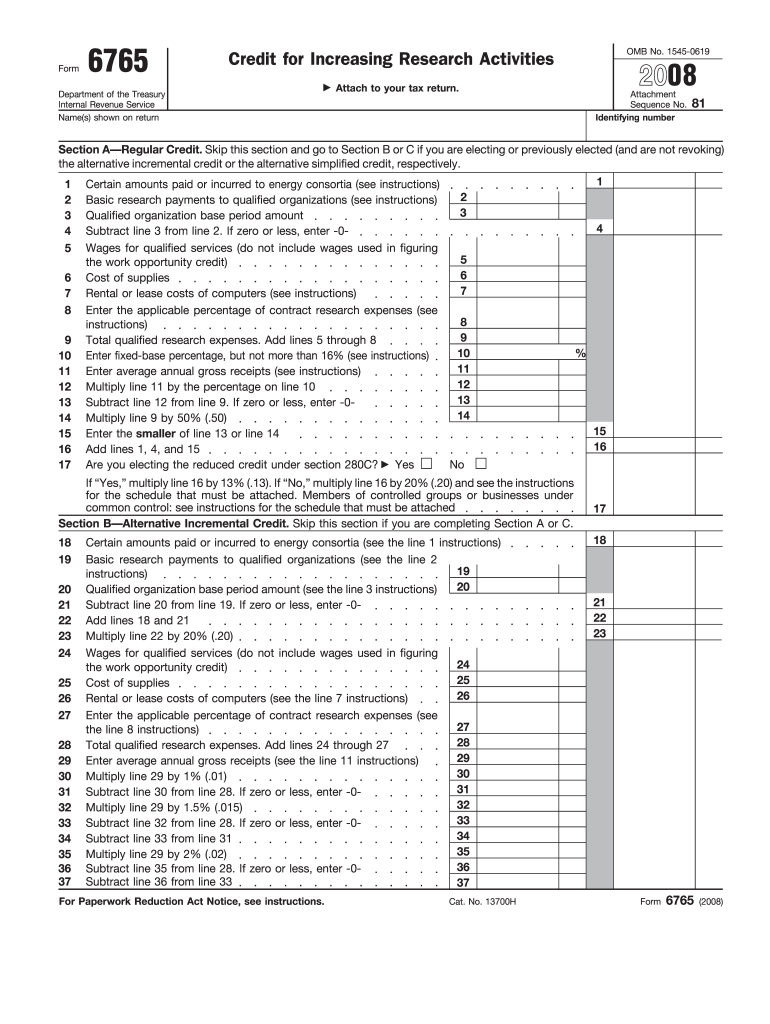







Definition and Purpose of 2008 Form 6765
Form 6765 is used by businesses to calculate and claim the Credit for Increasing Research Activities, commonly referred to as the research and development (R&D) tax credit. The purpose of the form is to incentivize innovation by allowing businesses to reduce their tax liability through credits for qualified research expenses. It includes various sections to account for different types of credits such as the Regular Credit, Alternative Incremental Credit, and Alternative Simplified Credit. Understanding the nuances of the form is essential for businesses that invest in research and development activities.
How to Use the 2008 Form 6765
Completing Form 6765 involves several steps to ensure accuracy in claiming the R&D credit. Businesses must first identify qualified research activities and expenses, which can include wages, supplies, and contract research costs. The form is structured to guide taxpayers in determining the eligible credit amount by offering clear instructions for each section. Companies need to compute the credit using either the Regular Credit or the Alternative Simplified Credit method, based on their unique financial situation and historical research expenditure data.
Steps to Complete the 2008 Form 6765
- Identify Qualified Research Activities: Evaluate activities to confirm they fall under IRS guidelines for eligibility.
- Gather Financial Data: Collect all relevant financial records related to research expenditures.
- Calculate Base Amount: Use historical research expenses to determine the base amount, which will be a reference for credit calculation.
- Compute the Credit: Select either the Regular Credit or Alternative Simplified Credit method, and follow the instructions to calculate the credit properly.
- Review and Submit: Ensure all calculations are correct, review the completed form for errors, and submit it with the tax return by the applicable deadline.
Who Typically Uses the 2008 Form 6765
The primary users of Form 6765 are businesses within the United States that are heavily invested in research and development. This includes corporations, partnerships, and individuals reporting business income who meet the IRS criteria for engaging in qualified research activities. Companies across various industries such as technology, pharmaceuticals, and manufacturing are typical filers since they often allocate substantial resources to innovation and improvement.


Key Elements of the 2008 Form 6765
- Part A: Regular Credit Method, detailing the necessary calculations for companies using this method.
- Part B: Alternative Simplified Credit, offering an option for businesses with less detailed record-keeping.
- Section for Partnerships and S Corporations: Specific guidance on credit allocation for pass-through entities.
- Qualified Research Expenses: Detailed criteria on what expenses can be counted towards the credit.
Filing Deadlines and Important Dates
Form 6765 should be submitted with the company’s tax return by the usual filing deadline, which is typically March 15 for corporations or April 15 for other entities, unless an extension has been filed. Businesses should be aware of any IRS announcements that may affect these dates.
Required Documents for Form 6765 Submission
Businesses must maintain thorough documentation to support their claims, including:
- Detailed project descriptions
- Financial records showing incurred research expenses
- Historical data on prior research activities to verify the base amount
- Any contracts with third-party research providers
Legal Use of the 2008 Form 6765
Adhering to IRS guidelines is crucial to legally claim the R&D tax credit. This includes accurately reporting qualified research expenses and maintaining adequate documentation. Non-compliance or false claims can result in penalties or disqualification from future credits. Consulting with a tax professional is recommended to ensure proper understanding and application of the form.
Software Compatibility and Integration
Form 6765 is compatible with tax preparation software that supports business tax returns, such as TurboTax and QuickBooks. These tools can aid in the accurate completion of the form by providing guidance and automating calculations, ensuring compliance with IRS standards. Businesses should verify that their software version supports the 2008 form requirements to facilitate seamless integration into their tax filing process.




