
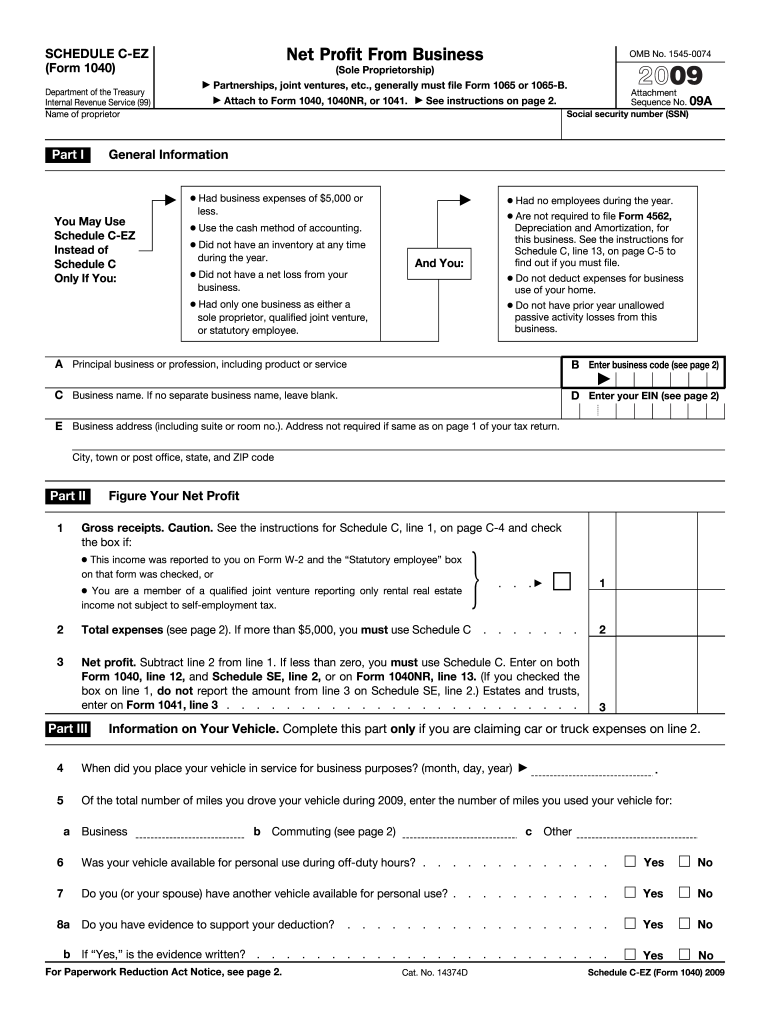







Definition & Purpose of the Schedule C-EZ Form
The Schedule C-EZ form is a simplified version of the standard Schedule C. It is used by sole proprietors to report business income, specifically net profit, on their personal tax return. Designed for the tax year 2009, this form was ideal for those with low business expenses and straightforward financial reporting. Utilizing this form helps streamline the tax filing process, reducing the complexity for eligible small business owners and independent contractors.
Steps to Complete the Schedule C-EZ Form
-
Gather Necessary Information: Ensure you have all relevant financial records, including income statements and receipts for business expenses.
-
Determine Gross Receipts: Calculate the total amount of money received from selling goods or services, without subtracting any expenses.
-
List Business Expenses: Include any costs that were necessary and appropriate for operating your business, such as supplies, travel, and marketing expenses. Note that the total cannot exceed $5,000 for this specific form.
-
Calculate Net Profit: Subtract your total business expenses from your gross receipts to determine your net profit or loss.
-
Vehicle Information (if applicable): If you used a vehicle for business purposes, provide relevant details, including miles driven.
-
Finalize and Attach: Once completed, attach the form to your Form 1040 when filing your taxes.
Eligibility Criteria for Using the Schedule C-EZ Form
- Minimal Business Expenses: Total business expenses must be $5,000 or less.
- No Employees: The form is not for those who pay wages to employees.
- No Inventory: You do not hold merchandise for sale to customers.
- Cash Accounting Method: Your business uses the cash method of accounting.
- No Home Office Deduction: The form is not for those claiming office space expenses.


How to Obtain the Schedule C-EZ Form
The Schedule C-EZ form is part of the IRS's collection of tax forms and can be accessed via several channels:
- IRS Website: Download a PDF version directly from the official IRS site.
- Tax Software: Many tax preparation software programs, like TurboTax and QuickBooks, include the form, facilitating digital completion and e-filing.
- Tax Professionals: Obtain a paper copy by visiting a tax professional.
Important IRS Guidelines for Schedule C-EZ
- Timeliness: Ensure the form is submitted together with Form 1040 by the April 15 deadline.
- Accuracy: Double-check all financial entries for accuracy to prevent miscalculations.
- Recordkeeping: Maintain supporting documents, such as receipts and invoices, for at least three years in case of an audit.
Common Scenarios for Utilizing Schedule C-EZ
- Freelancers and Independent Contractors: Particularly those in writing, design, or IT services, with uncomplicated accounting.
- Small Business Owners: Operating simple service businesses like consulting or repair without inventory or employees.
Potential Penalties for Non-Compliance
- Late Filing: Failing to file the form by the deadline can result in penalties and interest on any taxes owed.
- Inaccurate Reporting: Mistakes or intentional misreporting can lead to penalties, or in severe cases, criminal charges.
Key Elements of the Schedule C-EZ Form
- Basic Business Information: Includes the business name, address, and type of activity.
- Expense Categories: Specifically those allowable within the $5,000 limit.
- Net Profit Calculation: Essential for understanding the business's taxable profit, impacting overall tax liability.
Digital vs. Paper Version
- Digital Benefits: Offers convenience, reduces errors due to automated calculations, and ensures a quicker filing process with e-filing options.
- Paper Version: Suitable for those who prefer traditional filing methods, though it may involve a slightly longer processing time through mail submission.
By adhering to the specific guidelines and utilizing the form efficiently, eligible taxpayers can simplify their reporting and potentially reduce their tax burden while ensuring compliance with IRS requirements for the 2009 tax year.




