
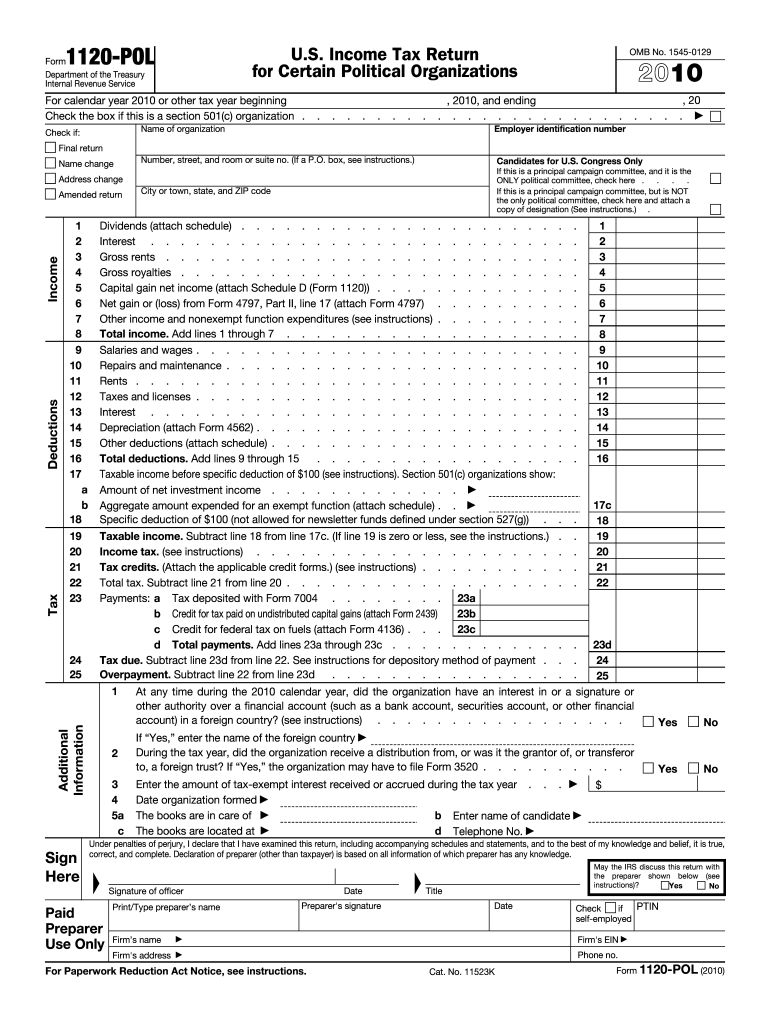







Definition and Meaning of the 2010 IRS Form Tax
The 2010 IRS form tax comprises various federal tax forms used to report income, calculate tax liability, and disclose financial activities to the Internal Revenue Service (IRS). Each form serves a specific purpose, such as reporting wages or claiming deductions. In 2010, these tax forms covered a range of situations, including personal income tax filing, business profit reporting, and specific scenarios like capital gains or foreign income.
Key Forms Included
- Form 1040: Used primarily for individual tax filing, covering income, deductions, and credits.
- Form 1120: Used by corporations to report income, gains, losses, deductions, and credits.
- Form W-2: Issued by employers to report wage and tax withholding information for employees.
- Schedule C: Applied by sole proprietors to declare business income and expenses.
How to Use the 2010 IRS Form Tax
Utilizing the 2010 IRS form tax involves identifying the correct forms needed for your specific tax situation and accurately completing them to report your financial data.
Basic Usage Instructions
- Gather Financial Documents: Collect all financial records such as W-2s, 1099s, and receipts for deductions.
- Choose the Right Forms: Determine which forms are applicable to your needs. For instance, individuals would start with Form 1040, while businesses would use forms like the 1120 or Schedule C.
- Complete the Forms: Fill in the required information, ensuring accuracy in reporting income and claiming deductions.
- Cross-Check Information: Verify that all entries are correct and consistent with your financial documents.
Practical Tips
- Use IRS instructions for each form to understand specific input requirements.
- Consider tax software to streamline the process and minimize errors.
How to Obtain the 2010 IRS Form Tax
Securing copies of the 2010 IRS forms can be done through various methods.
Available Methods
- IRS Website: Forms can be downloaded directly from the IRS official site by searching for the 2010 versions within their archives.
- Local IRS Office: Printed copies are usually available at local IRS offices nationwide. Visiting these centers offers the opportunity for face-to-face assistance.
- Certified Tax Preparers: Many certified accountants and tax professionals maintain archives of older forms.
Steps to Complete the 2010 IRS Form Tax
Accurate form completion is critical in ensuring correct submission and avoiding potential issues with the IRS.
Step-by-Step Process
- Identify Forms Required: Based on income source and filing status.
- Input Personal Information: Include Social Security Number, name, and address.
- Report Income: Accurately input all income details, including employment and investment earnings.
- Document Deductions and Credits: List out applicable deductions and credits to reduce taxable income.
- Calculate Tax Liability: Determine the total tax owed or refund due based on the forms completed.
- Review and Sign: Double-check all information before signing the forms.
Who Typically Uses the 2010 IRS Form Tax
Various taxpayers use these forms, each with specific referencing scenarios.


Common Users
- Individual Filers: Typically use Form 1040 for reporting personal income.
- Corporations: Submit Form 1120 for their corporate tax returns.
- Independent Contractors: Utilize Schedule C to report business earnings and expenses.
- Investors: Rely on Schedule D to declare capital gains or losses.

Key Elements of the 2010 IRS Form Tax
Understanding the primary components of these forms helps streamline the filing process.
Form Components
- Identification Sections: Require personal data such as taxpayer name and identification number.
- Income Reporting: Sections for disclosing different income sources.
- Deductions and Credits: Lines dedicated to listing deductible expenses and available credits.
- Signature Area: Ensures taxpayer affirmation of the form's accuracy.
Filing Deadlines and Important Dates
Adhering to the deadline is crucial to avoid penalties and interest charges.
Key Dates for 2010
- Tax Filing Deadline: April 15, 2011, was the standard deadline for 2010 tax forms.
- Extension Request Date: File for an extension by April 15, 2011, to push the filing date to October 15, 2011.
Penalties for Non-Compliance with 2010 IRS Form Tax
Failing to adhere to IRS requirements for the 2010 tax forms can lead to financial penalties as well as interest on unpaid taxes.
Common Penalties
- Late Filing Penalty: Typically 5% per month of unpaid taxes owed.
- Late Payment Penalty: Approximately 0.5% per month of the unpaid tax.
- Accuracy-Related Penalties: Can reach 20% on errors due to negligence.
Overall, understanding the details and requirements of the 2010 IRS form tax facilitates compliance and effectively manages legal tax obligations.




