
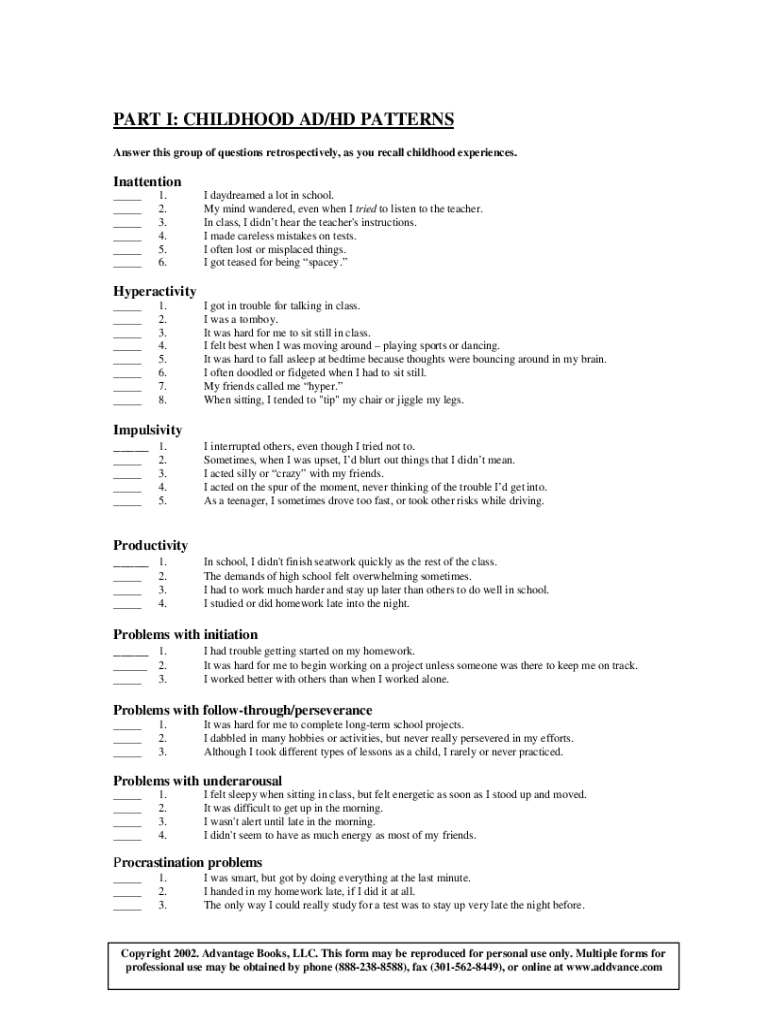







Understanding the SASI AD/HD Scoring System
The Women's AD/HD Self-Assessment Symptom Inventory (SASI) offers a valuable resource for individuals wishing to understand their experiences with Attention Deficit/Hyperactivity Disorder (AD/HD). Designed specifically for women and girls, the SASI includes a variety of self-assessment questions that capture common symptoms of AD/HD encountered throughout childhood and into adulthood.
Components of the SASI Instrument
The SASI aims to evaluate the presence and severity of AD/HD symptoms. Each component of the tool serves a specific purpose in identifying patterns and behaviors associated with AD/HD. Key elements of the SASI include:
- Self-Assessment Questions: The SASI contains a range of questions that prompt respondents to reflect on their behavior, emotions, and experiences.
- Areas of Focus: Topics covered often include organization, attention, impulsivity, and emotional regulation, helping to surface symptoms that might otherwise go unrecognized.
- Scoring Framework: Each question generally follows a Likert scale format, allowing respondents to express the frequency of specific behaviors.
How to Interpret SASI Scores
Scoring the SASI involves summing the responses to determine an overall score that reflects the severity of symptoms.
-
Scoring Methodology:
- Typically, higher scores indicate greater symptom severity.
- Each section of the inventory correlates with possible symptom categories, providing insight into specific areas of difficulty.
-
Thresholds for Consideration:
- While the SASI is not diagnostic, scores can indicate whether a further evaluation by a professional may be warranted.
- Common thresholds might guide discussions with healthcare providers about potential diagnoses or support measures.
-
Understanding Context:
- Scores need to be understood in the context of individual life circumstances, including stressors and support systems that may influence symptom manifestation.
The SASI's Role in Women's Health
The SASI highlights unique experiences of women with AD/HD, acknowledging that symptoms and coping mechanisms can differ significantly from those of men. It aims to facilitate a deeper understanding of how AD/HD specifically impacts women's lives.
- Gender Considerations: The assessment encourages dialogue around the influence of gender roles and expectations on mental health and wellness.
- Tailored Strategies: By identifying particular symptoms and behaviors, women can develop tailored strategies to manage AD/HD more effectively, leveraging their unique experiences.
Collecting Data with SASI
The self-assessment nature of the SASI makes it a valuable tool for individuals and healthcare providers alike. It serves as a preliminary step that can inform treatment planning and support interventions based on individual needs.
- Survey Administration: The SASI can be administered in various settings, whether online or in-person, making it easily accessible.
- Follow-Up Opportunities: A SASI score can serve as a discussion starter during subsequent appointments, guiding healthcare professionals in providing targeted resources or referrals.
Implementing the SASI in Daily Life
Once a SASI score has been determined, individuals can utilize insights gained to create more effective routines and coping mechanisms in daily life.
- ** Identifying Strategies**: For example, if organizational issues are highlighted, specific strategies such as planner usage or digital reminders may be implemented.
- Building Support Networks: Engaging with support groups or counseling can also be beneficial, fostering connections with others who share similar experiences.
- Monitoring Progress: Revisiting the SASI periodically can help track changes over time and assess the effectiveness of personalized strategies.
The Importance of Community Support
Engagement with community resources can enhance the effectiveness of individual strategies learned through the SASI.
- Workshops and Training: Many organizations offer workshops focusing on AD/HD management, providing tools and resources tailored for women.
- Peer Support Groups: Connecting with others facing similar challenges can empower women to share insights and experiences, fostering a sense of community and support.
Conclusion
The SASI represents more than just a scoring tool; it is an integral part of understanding and addressing the complexities of AD/HD in women. With comprehensive scoring and interpretive frameworks, it assists in identifying symptoms, supports dialogue about mental health, and promotes tailored strategies for effective management.




