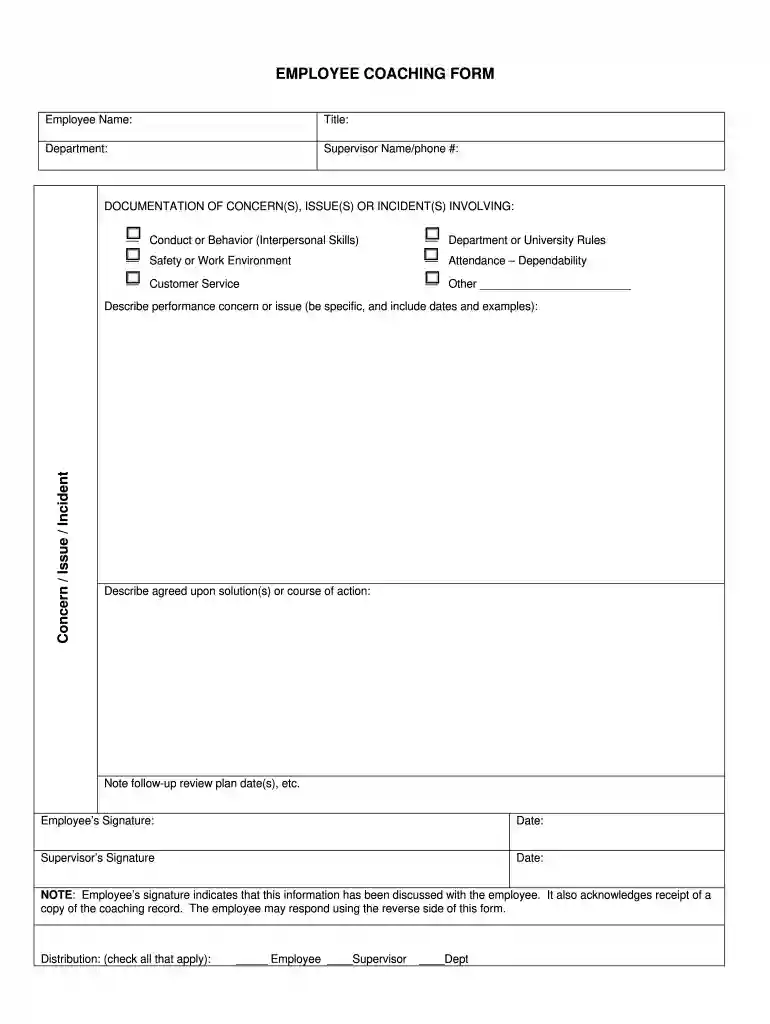
Definition and Purpose of the Coaching Form
The coaching form serves as a structured document utilized by organizations to address performance, behavior, and attendance issues with employees. It is designed to clearly outline concerns, document discussions, and track performance improvements through a formalized process. This form typically includes sections for detailing specific performance problems, outlining agreed solutions, and establishing follow-up plans.
Key Features of the Coaching Form
- Documentation of Issues: Captures factual details regarding incidents or ongoing concerns.
- Action Plan: Outlines specific steps for improvement and corrective measures.
- Follow-Up Procedures: Establishes parameters for evaluating employee progress over time.
- Acknowledgment Section: Requires signatures from both the employee and supervisor, confirming the discussion took place.
The proper use of a coaching form can lead to enhanced communication between employees and management, ultimately fostering an environment of support and growth.
How to Use the Coaching Form Effectively
Utilizing a coaching form effectively involves several steps aimed at ensuring clarity and constructive feedback. The following guidelines can enhance its effectiveness:
- Identify Specific Issues: Clearly articulate the performance or behavioral issues being addressed. Use objective language to avoid personal bias or ambiguity.
- Engage in a Discussion: Before completing the form, have a candid conversation with the employee about the concerns. This allows them to contribute their perspective and promotes a sense of inclusion.
- Collaborate on Action Steps: Work together with the employee to create a plan for improvement. This collaboration helps in securing buy-in from the employee regarding the agreed-upon goals.
- Set Follow-Up Dates: Establish a timeline for follow-up meetings to assess progress and make any necessary adjustments to the action plan.
- Document Conversations: Ensure that any discussions related to the coaching form are recorded on the form itself, maintaining a comprehensive record of the process.
Example of a Step-by-Step Process
- Conduct an initial meeting to address concerns.
- Complete the coaching form based on employee feedback and supervisor observations.
- Schedule regular follow-up meetings (e.g., after 30 and 60 days) to review progress.
- Adjust the action plan as necessary, documenting changes on the form.
Steps to Complete the Coaching Form
Completing the coaching form involves a systematic approach to capture all necessary information. Here are the steps involved:
- Fill in Employee Details: Include the employee's name, job title, and department.
- Describe Concerns: Provide a detailed account of the specific performance or behavior issues.
- Outline Expected Behaviors: Specify what is expected from the employee moving forward, in clear and understandable terms.
- Action Plan Development: Collaboratively define measurable goals and timelines.
- Feedback Section: Allow space for the employee to provide their input or comments regarding the coaching session.
- Signatures: Both parties should sign the document to affirm understanding and agreement.
Useful Tips for Completion
- Use clear, concise language to avoid any misunderstanding.
- Keep the tone supportive and oriented towards improvement.
- Schedule time to review the completed form to ensure accuracy.
Who Typically Uses the Coaching Form?
Coaching forms are utilized across various sectors, but they are particularly common in industries where performance monitoring and employee interactions are critical. Typical users include:
- Human Resources Personnel: HR professionals often employ coaching forms for performance management and ensuring consistent practices across teams.
- Supervisors and Managers: Direct supervisors use coaching forms during one-on-one discussions with employees to document feedback and agree on action plans.
- Training and Development Teams: These teams may incorporate coaching forms into their training processes to monitor progress and support employee development effectively.
- Call Center Managers: Specifically, coaching forms tailored for a call center may include metrics relevant to call quality and customer service interactions.
Understanding the users of the coaching form ensures that it is applied appropriately for maximum workforce impact.

Important Terms Related to the Coaching Form
Familiarity with key terms associated with coaching forms can greatly aid in their effective implementation. Here are some important terms to know:
- Performance Improvement Plan (PIP): A structured approach to address underperformance, which may coincide with the coaching form.
- Feedback Mechanism: A process through which supervisors provide actionable insights to employees.
- Goal Setting: The act of establishing clear, measurable, and achievable objectives within the coaching process.
- Documentation: The practice of recording details of performance discussions, which are essential for organizational compliance and future references.
- Follow-Up: A designated time period after which the employee's progress will be reviewed.
Familiarity with these terms enhances communication and clarity when employing coaching forms and discussing performance concerns.
Legal Use of the Coaching Form
The legal framework surrounding the use of coaching forms is essential to ensure compliance with employment laws. Adhering to best practices can mitigate legal risks associated with performance management.
Key Legal Considerations
- Factual Basis: Ensure that all concerns documented are based on observable behaviors or performance metrics to avoid disputes.
- Consistency: Apply coaching forms consistently across all employees to reduce the risk of discrimination claims.
- Retention of Records: Maintain complete records of coaching forms and any related documentation for a specified period, adhering to company policy and legal requirements.
- Employee Rights: Be aware of and respect employee rights during the coaching process, ensuring that they have the opportunity to express their views.
Understanding these legal considerations can help organizations navigate the complexities of employment law while conducting effective coaching sessions.