



Definition and Purpose of a Stock Ledger Template
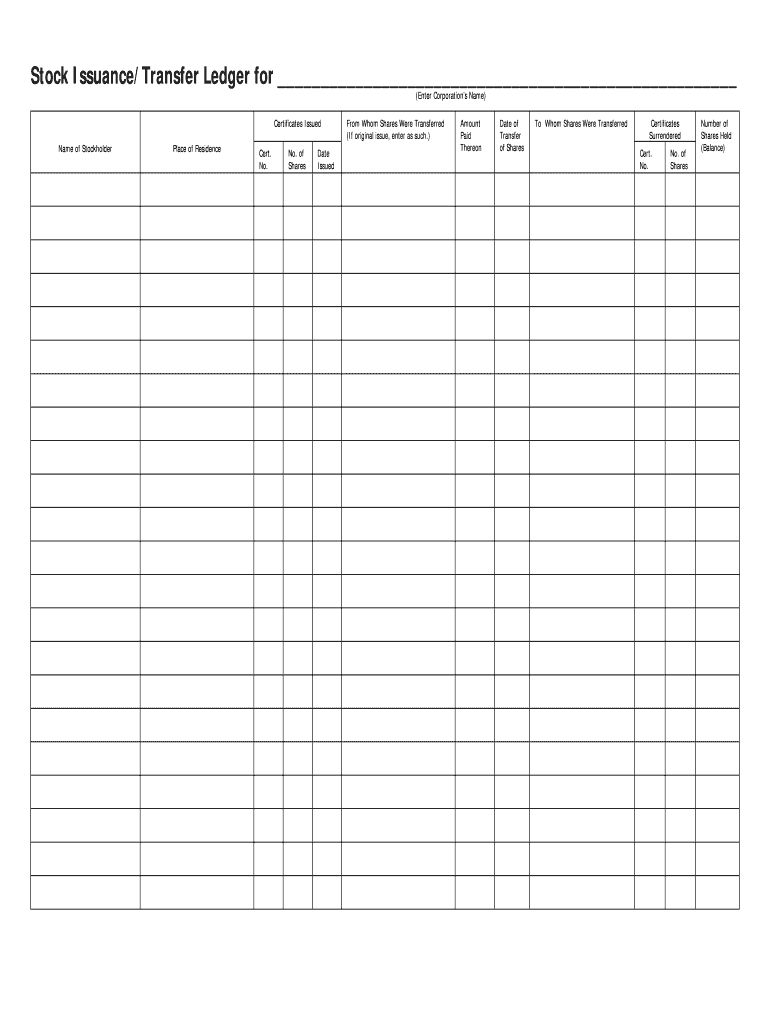
A stock ledger template serves as a formal record used by corporations to document details regarding the issuance and transfer of stock ownership. It provides a structured format that includes essential elements such as stockholder information, certificate numbers, the number of shares, issuance and transfer dates, payment details, and any applicable balances. Utilizing a stock ledger template ensures compliance with corporate governance and legal requirements, facilitating accurate tracking of stock ownership and transactions.
Key Components of a Stock Ledger Template
- Stockholder Information: Name, address, and contact details of each stockholder.
- Certificate Numbers: Unique identification numbers for each stock certificate issued.
- Quantity of Shares: The number of shares owned by each stockholder.
- Issuance and Transfer Dates: Date when shares are issued or transferred.
- Payment Details: Information on payment methods for shares, including any outstanding balances.
A well-maintained stock ledger template also serves the critical purpose of providing a clear, auditable record of a company’s stock transactions, which is essential for annual reporting and during financial audits.
How to Effectively Use a Stock Ledger Template
Using a stock ledger template involves a few straightforward steps to correctly record stock transactions:
-
Select the Appropriate Template: Choose a stock ledger template that fits your company's needs. Several variations exist, such as Excel spreadsheets, Google Sheets, and fillable PDF formats.
-
Input Stockholder Details: Begin by entering the full names, contact information, and identification numbers for all stockholders. Ensure accuracy to prevent future discrepancies.
-
Record Stock Transactions: Each time shares are issued or transferred, log the transaction details, including dates and quantities.
-
Maintain Regular Updates: Keep the ledger current by making entries as stock transactions occur, which is critical for maintaining an accurate record.
-
Review for Accuracy: Periodically audit the stock ledger for missing entries or discrepancies to ensure compliance and accuracy.
Employing these steps ensures that stock transactions are recorded systematically and can be traced easily when required.
Obtaining a Stock Ledger Template
To obtain a stock ledger template, there are multiple pathways a business can take:
-
Downloadable Templates: Many websites offer free stock ledger templates for download in different formats such as Excel, Google Sheets, or PDF. These templates often come pre-formatted with sections for necessary information.
-
Custom Templates: Businesses may opt for creating a custom stock ledger in spreadsheets tailored to their unique requirements. Features can be added based on specific state laws or corporate policies.
-
Legal & Financial Software: Certain accounting software packages, such as QuickBooks or TurboTax, may include built-in templates or features for tracking stock issuance and transfer.
Each of these options provides an efficient starting point for organizations needing to establish formal stock transaction records.
Steps to Complete Your Stock Ledger Template
Completing a stock ledger template successfully requires careful attention to detail. Here is a systematic approach to ensure accuracy:
-
Begin with Company Details: At the top of the ledger, include the company name, address, and registration number.
-
List Stockholder Entries: Create rows for each stockholder, ensuring to fill in their name, contact information, and any relevant identifiers.
-
Record Transactions:
- Use distinct columns for certificate numbers, the number of shares issued or transferred, issuance, and transfer dates.
- Enter payment details or outstanding balances regarding stock transactions.
-
Finalize the Document: After inputting all information, conduct a thorough review to confirm no omissions or errors exist before finalizing.
-
Secure the Ledger: Store the completed stock ledger securely, either digitally or in a physical format, to ensure it remains accessible yet protected.
By adhering to these steps, businesses can maintain an organized and accurate stock ledger.
Importance of a Stock Ledger Template
Utilizing a stock ledger template is crucial for numerous reasons:
-
Legal Requirement: Corporations are often legally required to maintain accurate stock records, ensuring transparency and compliance with regulations.
-
Shareholder Communication: A well-maintained stock ledger provides clarity to stockholders about their ownership and the status of their investments.
-
Financial Accuracy: The ledger contributes to overall financial accuracy and integrity, essential for audits and financial reporting.
-
Easier Management of Stock Transactions: By having an organized system, companies can manage stock issuances, transfers, and changes in stockholder status more effectively.
Maintaining a stock ledger allows businesses to navigate their ownership structure efficiently, aiding in decision-making processes and financial planning.
Who Uses a Stock Ledger Template?
The stock ledger template is utilized by diverse entities, including:
-
Corporations: Both public and private corporations use stock ledgers to manage their shares and track ownership changes.
-
Limited Liability Companies (LLCs): LLCs that issue membership units may also maintain similar records to ensure compliance and transparency.
-
Startups: Emerging businesses that are seeking investment often need meticulous stock records to attract potential investors.
-
Accountants and Legal Professionals: These professionals often help maintain or analyze stock ledgers to ensure compliance and proper financial health.
Understanding the various users of a stock ledger underscores its importance across different business sectors.