







Definition and Overview of the Mutual Release Form in Ontario
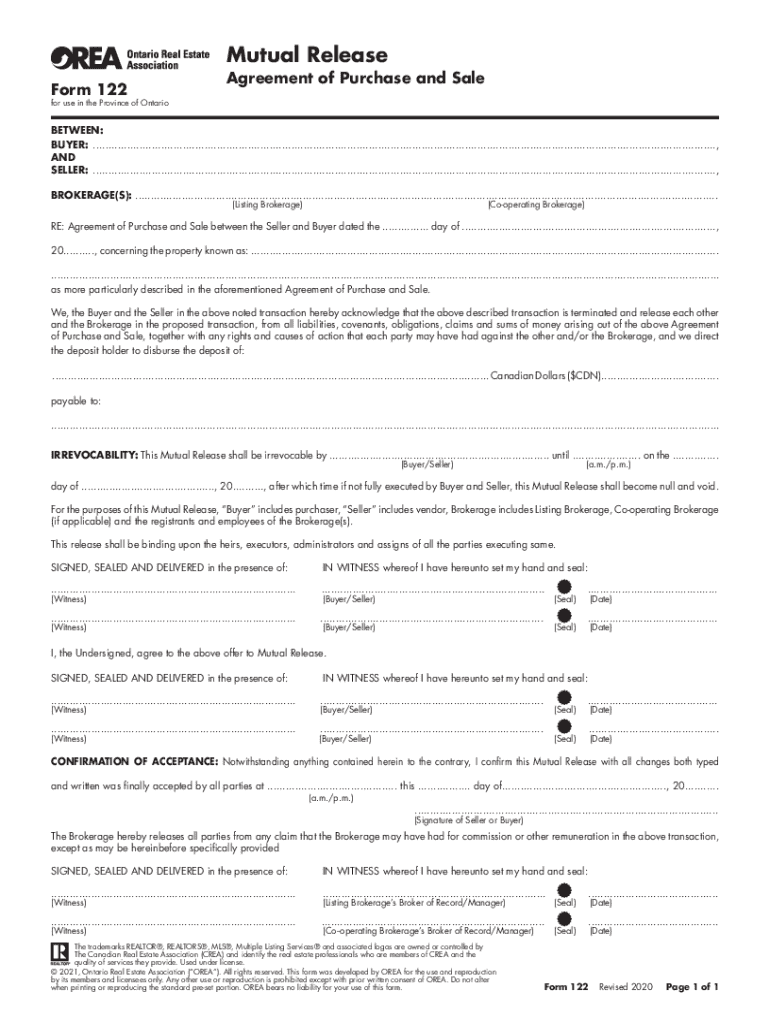
The Mutual Release Form in Ontario is a legal document designed to formally terminate agreements between parties, particularly in real estate transactions. This form, often referred to as OREA Form 122, facilitates the mutual release of obligations and claims arising from a purchase and sale agreement. It serves to clear both the buyer and seller from any future liability associated with the transaction, establishing that neither party can come back to claim damages or enforce terms of the original agreement.
Key attributes of the mutual release form include:
- Clear Release of Liability: It explicitly states that both parties waive any rights to pursue claims related to the agreement.
- Structured Format: The form includes designated sections for signatures, witness acknowledgment, and confirmation of acceptance, making it legally robust and ensuring all parties formally consent to the release.
- Adaptability: While commonly used in real estate, the mutual release form can be applied in various contractual contexts where a formal termination is needed.
Steps to Complete the Mutual Release Form in Ontario
Completing the Mutual Release Form requires careful attention to detail to ensure its validity and enforceability. Follow these steps to complete the form accurately:
- Obtain the Proper Form: Access the mutual release form, preferably from an official source or the OREA website to ensure you have the most current and accurate version.
- Fill in Party Information: Input the names and contact details of all parties involved in the transaction. This includes both the buyer and seller along with any relevant brokerage details.
- State the Agreement Details: Clearly specify the agreement being terminated, including pertinent dates and any identifying details relevant to the original transaction.
- Review Liability Clauses: Ensure that the terms outlining the mutual release of liabilities are present and are clearly articulated. This section is vital as it protects both parties from future claims.
- Signatures and Witnessing: Both parties must sign the form. Additionally, it’s crucial to have a witness to the signatures to bolster the document's legitimacy. The witness should not have an interest in the agreement.
- Distribute Copies: After execution, provide copies of the completed form to all parties involved and keep a record for your files.
Legal Use of the Mutual Release Form in Ontario
The Mutual Release Form is legally binding in Ontario when executed properly. It is pivotal in scenarios where a real estate transaction is canceled and both parties wish to avoid further legal consequences. Key aspects include:
- Mutual Consent: Both parties must willingly sign the document; any form of coercion may invalidate the release.
- Consideration: While not always required, having some form of consideration (though minimal) exchanged between parties can strengthen the enforceability of the release.
- Jurisdictional Compliance: Ensure that the form adheres to the laws of Ontario and any specific provisions that may apply to the type of agreement being released.
Who Typically Uses the Mutual Release Form in Ontario?
The mutual release form is commonly utilized among various stakeholders in real estate and contractual transactions. Typical users include:
- Buyers and Sellers: Individuals involved in residential or commercial real estate transactions often use this form to formalize the termination of their agreement.
- Real Estate Agents and Brokerages: Professionals in the real estate sector use the form to protect their clients' interests while mitigating liability.
- Contractual Parties: Any parties engaged in contractual agreements that require a termination or release may find the mutual release form beneficial.


Important Terms Related to the Mutual Release Form
Understanding key terminology related to the Mutual Release Form is crucial for effective use:
- Release: The act of relinquishing a right or claim against another party.
- Liability: Legal responsibility that one party may have towards another.
- Contractual Obligation: A legal duty established by an agreement between two or more parties.
- Mutuality: A principle indicating that both parties agree to the terms of the release, ensuring fairness and equity in the transaction.
- Witness: An individual who observes the signing of a document and can provide verification of the authenticity of the signatures.
Examples of Using the Mutual Release Form in Ontario
Real-world scenarios highlight the applications of the mutual release form:
- Failed Real Estate Transactions: If a buyer decides not to proceed with purchasing a property, a mutual release form can be executed to terminate the agreement amicably, protecting both parties.
- Contract Disputes: In cases where contractual terms cannot be met by one or both parties due to unforeseen circumstances, this form allows them to part ways without ongoing liability.
- Business Agreements: Companies may use mutual release forms when entering or exiting partnerships, ensuring that past obligations do not carry into the future.
Key Elements of the Mutual Release Form in Ontario
The essential components of the Mutual Release Form ensure clarity and enforceability:
- Identifying Information: Names and addresses of all parties involved in the agreement.
- Description of the Agreement: Clear identification of the original agreement being terminated.
- Release Clause: Specific language outlining the release of claims and liabilities.
- Signatures: Required signatures of all parties and a witness to validate the agreement.
- Effective Date: A date in which the mutual release becomes active, providing a clear timeline for all parties.
This comprehensive overview of the Mutual Release Form in Ontario ensures users understand its complexities while facilitating its proper use within real estate and contractual frameworks.




