






Definition and Purpose of IRS Form 1040
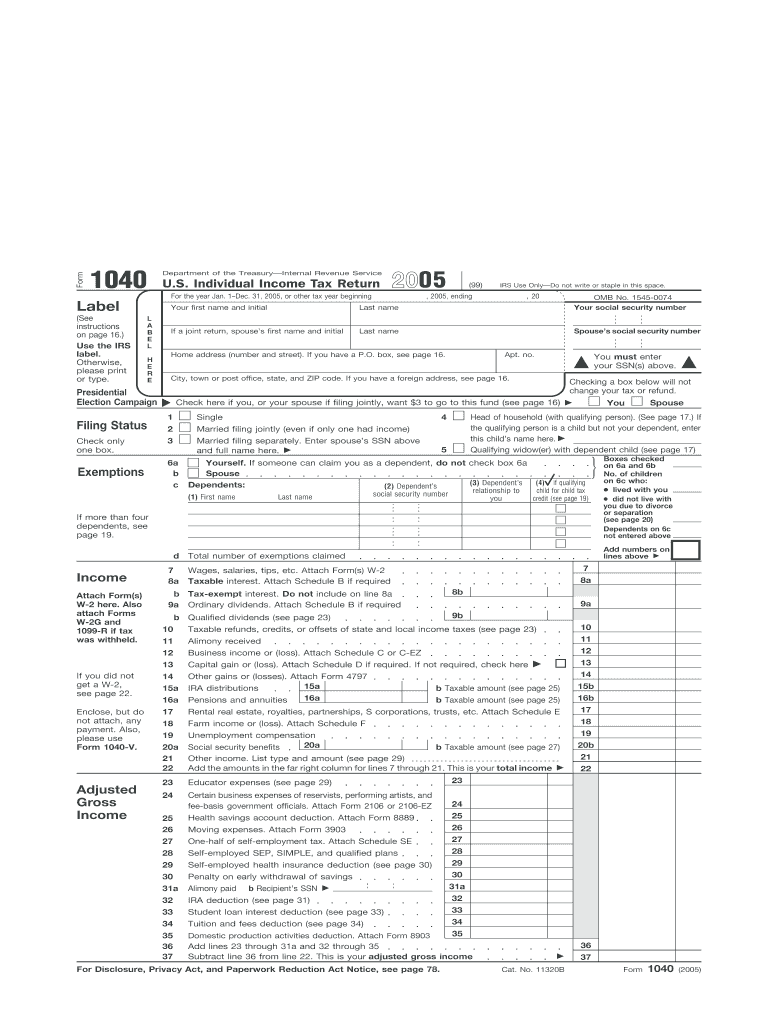
IRS Form 1040, known as the U.S. Individual Income Tax Return, is the standard federal form used by individuals to report their annual income and determine their tax liability to the Internal Revenue Service (IRS). This crucial document collects essential information on a taxpayer’s income, deductions, credits, and tax payments, ensuring accurate calculations of owed taxes or any refunds. The form's primary objective is to enable taxpayers to provide a comprehensive overview of their financial situation to comply with federal tax regulations.
Key Elements of IRS Form 1040
IRS Form 1040 is structured into several critical sections that gather distinct types of information:
- Personal Information: Includes name, Social Security number, and filing status.
- Income Reporting: Details on wages, salaries, dividends, and other income sources.
- Deductions and Adjustments: Opportunities to reduce taxable income, such as student loan interest or retirement contributions.
- Tax Credits: Information on available credits that reduce tax liability, like the Child Tax Credit.
- Tax Liability and Payments: Calculations of taxes owed and prior payments or withholding.
- Signatures: Both the taxpayer and, if applicable, a spouse must sign the form.
How to Use IRS Form 1040
The process of using IRS Form 1040 involves several critical steps:
- Gather Documentation: Obtain all necessary financial records, including W-2s, 1099s, and receipts for deductible expenses.
- Choose Filing Status: Determine the most beneficial filing status, whether single, married filing jointly, or others.
- Report Income: Accurately list all earning sources to ensure a complete income report.
- Calculate Deductions and Credits: Identify eligible deductions and credits to minimize tax liability.
- Complete Tax Liability: Use the information provided to compute the final tax owed or determine if a refund is due.
- Submit the Form: Choose a method for filing, electronically or via mail, ensuring all signatures are included.
Steps to Complete IRS Form 1040
Completing IRS Form 1040 involves the following detailed steps:
- Obtain Necessary Forms and Instructions: Access the current year’s Form 1040 and accompanying instructions from the IRS website.
- Input Personal Information: Enter basic identification information, ensuring accuracy for processing.
- Determine Income: Use multiple income schedules if necessary to cover all sources of earnings.
- Deduct and Adjust: Identify adjustments to gross income, such as tuition fees or health savings account contributions.
- Apply Tax Credits: Check eligibility for both refundable and nonrefundable tax credits.
- Calculate Tax or Refund: Utilize IRS tax tables or software to compute taxes owed or overpayments.
- Review and Sign: Verify all sections for accuracy and sign the form to finalize.
Who Typically Uses IRS Form 1040
IRS Form 1040 is primarily utilized by:
- Individuals with Varied Income Sources: Those who gain income from wages, investments, rental properties, or self-employment.
- Taxpayers with Planned Deductions and Credits: Individuals eligible for specific tax benefits that require itemization.
- U.S. Residents: All U.S. citizens or residents are required to file, irrespective of local or global income sources.
Special Cases
- Retirees: Must report Social Security benefits and retirement income.
- Self-Employed Individuals: Required to declare business profits or losses.
- Students: May report educational benefits and grants.
How to Obtain IRS Form 1040
Form 1040 is readily available through several avenues:
- IRS Website: Downloadable PDFs of the form and instructions are available at no cost.
- Local IRS Offices: Physical copies can be obtained directly from public IRS offices.
- Tax Software: Platforms like TurboTax and H&R Block offer built-in access to the form.
Filing Deadlines and Important Dates
Staying aware of key filing timelines is critical:
- Regular Deadline: Typically, April 15 of each year.
- Extension Requests: Option to apply for an extension extends filing to October 15 but doesn't delay tax payments.
- Amended Returns: The form allows for correction submissions within three years of the original filing date.
Required Documents for Filing
Essential documentation ensures a comprehensive filing:
- Income Documentation: W-2s, 1099s, and other income statements.
- Deduction Proofs: Receipts, invoices, or bills required to support deduction claims.
- Prior Tax Returns: Reference to prior filings can assist with consistency and accuracy.
Legal Use and Compliance with IRS Form 1040
Proper compliance with IRS Form 1040 requirements ensures legal adherence:
- Accurate Reporting: Federal laws demand complete disclosure of all taxable income.
- Audit Preparedness: Retain records for at least three years to respond effectively to audits.
- Penalties for Non-Compliance: Fines or criminal charges can result from intentional underreporting or failure to file.
Examples and Scenarios Using IRS Form 1040
Several taxpayer scenarios illustrate diverse applications of Form 1040:
- Self-Employed Contractor: Utilizes the form to report variable income and claim business expenses.
- Family with Dependents: Files to maximize deductions for childcare and educational expenses.
- First-Time Filers: New to the workforce, requiring guidance on straightforward income reporting and standard deductions.
IRS Form 1040 is an indispensable tool for navigating the complexities of individual taxation in the United States. Proper understanding and utilization of the form are paramount for accurate compliance and optimizing tax outcomes.