





Definition & Purpose of Form 8809
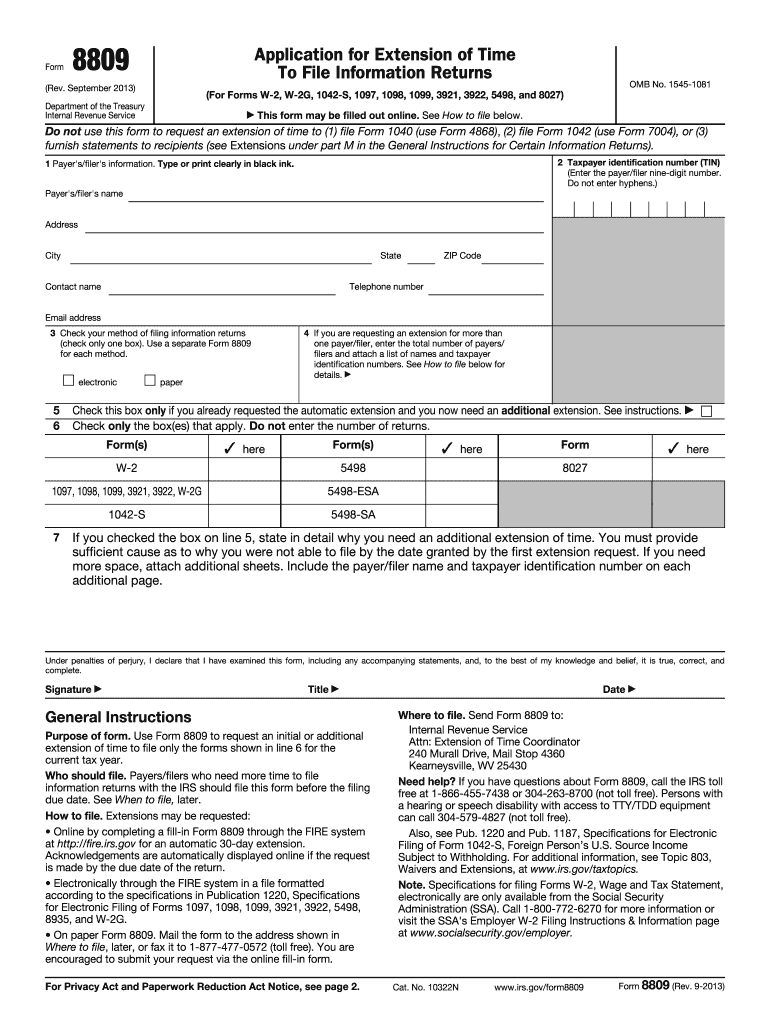
Form 8809 is an important IRS document used to request an extension of time for filing various informational returns such as Forms W-2, 1099, and others. This extension can be crucial for ensuring compliance and avoiding potential penalties due to late submissions. The initial extension granted upon approval is for 30 days, with a possibility of a further extension under specific conditions. Understanding the purpose and use of Form 8809 can significantly impact your filing processes and ensure that you are adhering to IRS deadlines.
- Purpose: Allows an automatic 30-day extension for filing certain returns.
- Eligible Forms: Includes W-2, 1099, among others.
How to Use Sample Form 8
Using Form 8809 effectively requires understanding its components and accurately filling it out. Here’s a breakdown of how you can navigate its sections:
-
Begin with General Information: Enter your name, address, and tax identification number. This section is crucial as it identifies the entity requesting the extension.
-
Specify Returns: Indicate which returns you are filing for an extension. Listing the relevant forms clarifies the purpose and scope of your extension request.
-
Submit on Time: Ensure submission on or before the due date of your regular form. Timely submission is essential to qualify for an automatic extension.
Steps to Complete Sample Form 8
Completing Form 8809 involves several detailed steps, each aimed at ensuring the accuracy and validity of your request:
-
Gather Information: Have your IRS forms, identification numbers, and business details on hand.
-
Fill Out Sections: Input your business or personal details in the appropriate lines, ensuring all information matches IRS records.
-
File Electronically or via Mail: Depending on your preference, submit the form through IRS-authorized e-filing services or mail it to the designated IRS center.
- Electronic Filing: Typically faster and allows for confirmation receipt.
- Mailing: Suitable for those preferring or needing paper documents.
Important Terms Related to Sample Form 8
Understanding the terminology specific to Form 8809 will enhance your ability to fill it correctly:
- Extension: A period granted by the IRS that allows a delay in the filing of specific forms.
- IRS: Internal Revenue Service, the U.S. government agency responsible for tax collection and tax law enforcement.
- Filing Deadline: The last date by which a completed form must be submitted to avoid penalties.
Legal Use of Sample Form 8
Form 8809 is legally recognized as a legitimate method to request more time for filing certain IRS forms. It provides:
- Legal Protection: Extends the deadline officially, protecting you from late filing penalties.
- Formal Agreement: The IRS acknowledgment of the form grants a temporary reprieve from penalties.
Filing Deadlines and Important Dates
Adhering to strict IRS guidelines, filing deadlines for Form 8809 are pivotal:
- Standard Deadline: Each form type has its own deadline. Generally aligned with the traditional tax season's end.
- Extension Requests: Must be made by the form’s original due date to be valid.
Required Documents for Form 8809
When submitting Form 8809, you will need various documents and information:
- Identification Numbers: Such as your Taxpayer Identification Number (TIN).
- Employer Identification Number (EIN): If filing on behalf of a business.
Form Submission Methods
IRS provides multiple methods for submitting Form 8809, enhancing convenience and accessibility:
- Online Filing: Fastest method, often using IRS-approved e-filing services.
- Mail: Standard method that requires postal service use.
- In-Person Submission: Rarely used but available at IRS locations.
Penalties for Non-Compliance
Failing to submit Form 8809 on time, or improperly, can result in penalties:
- Late Fees: May be imposed for each form filed after the deadline.
- Interest Costs: Accumulate if penalties aren’t paid promptly.
IRS Guidelines and Compliance
Adhering to IRS guidelines while completing Form 8809 can prevent issues:
- Accuracy: Ensure all information is precise.
- Timeliness: Submission dates are meticulously upheld by the IRS.
These detailed steps and considerations help in properly using and understanding Sample Form 8, ensuring effective compliance with IRS requirements.


