
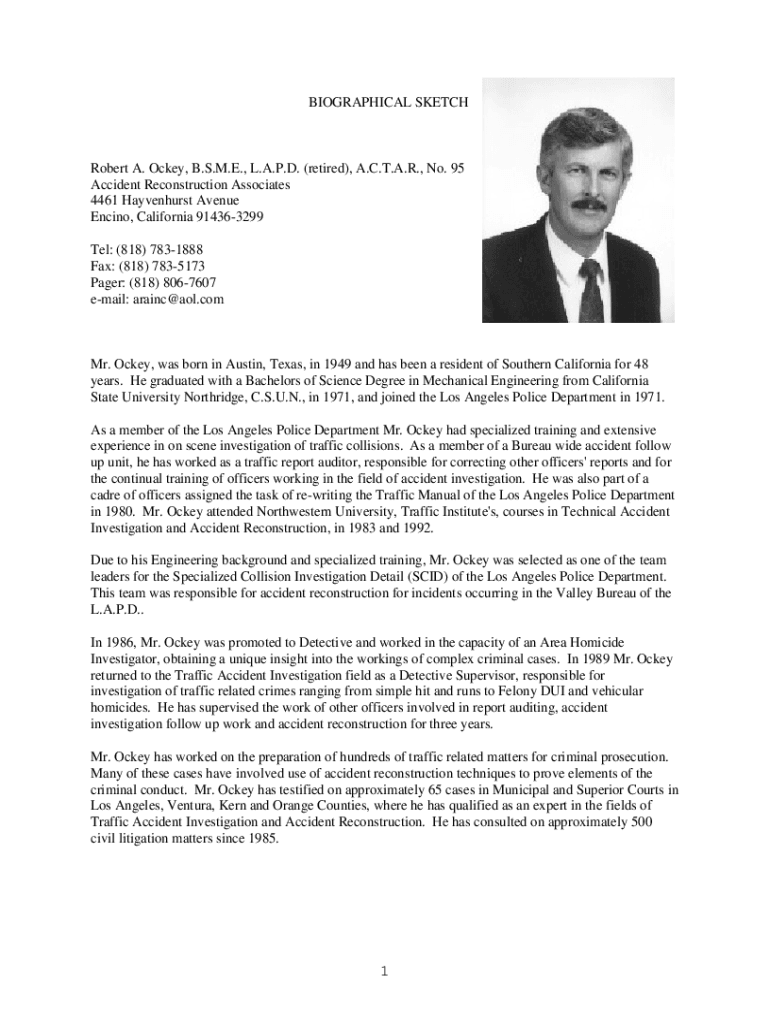







Definition and Meaning of a Biographical Sketch
A biographical sketch, or biosketch, is a concise summary highlighting an individual's background, accomplishments, and contributions. This document provides readers with a snapshot of who the person is, typically covering aspects such as education, professional experience, skills, and notable achievements. Biographical sketches are commonly used in academic, professional, and personal contexts, serving to introduce individuals in various settings, such as conferences, publications, or job applications.
When crafting a biographical sketch, it's essential to focus on clarity and brevity while providing enough detail to offer insight into the individual's significant milestones. A well-written biosketch can enhance a person’s credibility and convey the essence of their journey in a way that is engaging and informative.
Key Components of a Biographical Sketch
- Personal Information: Name, birthdate, and current position.
- Education: Degrees earned, institutions attended, and relevant honors.
- Professional Experience: Job titles, organizations worked for, and key responsibilities.
- Notable Achievements: Awards, recognitions, and significant projects.
- Skills and Areas of Expertise: Highlight professional competencies that set the individual apart.
How to Use a Biographical Sketch Example
Utilizing a biographical sketch example can streamline the writing process by providing a proven framework to structure your own narrative. When creating a biosketch, reference examples that align with your industry or purpose to ensure relevance and impact.
Steps to Effectively Use a Biographical Sketch Example
- Identify the Purpose: Determine the specific context in which the sketch will be used. This could range from job applications to research presentations.
- Choose an Appropriate Example: Select a biographical sketch that closely resembles your background or aligns with your professional field.
- Outline Key Sections: Analyze the example for its structure, noting how it organizes personal info, education, experience, and achievements.
- Personalize Content: Customize the content to reflect your unique journey, ensuring accuracy and authenticity.
- Keep it Concise: Aim for clarity and directness, typically limiting the sketch to one or two pages.
Important Terms Related to Biographical Sketch Examples
Familiarity with key terms associated with biographical sketches enhances your understanding and allows for better communication within relevant contexts. Here are some essential terms:
- Curriculum Vitae (CV): A comprehensive document detailing an individual’s academic and professional history, often longer than a resume.
- Biography: A full account of a person's life written by someone else, typically more extensive than a biosketch.
- Professional Statement: A brief narrative describing an individual's career and achievements, similar to a biographical sketch.
- Personal Statement: Often required for academic applications, this focuses on the individual’s motivations and experiences in relation to their field.
Who Typically Uses a Biographical Sketch?
Biographical sketches serve a wide audience across various professions and settings, making them versatile tools for personal branding and communication.
Common Users of Biographical Sketches
- Academics and Researchers: Often included in grant applications, academic publications, and conference presentations to establish credibility.
- Professionals: Used in resumes, LinkedIn profiles, and networking events to present achievements succinctly.
- Speakers and Presenters: Introduced at conferences or seminars to give audiences a brief overview of the speaker's background and expertise.
- Students: Required in applications for scholarships, internships, and admissions to provide insight into their academic and extracurricular achievements.


Example of a Biographical Sketch
A practical illustration helps to clarify the structure and components of a biographical sketch. Below is a sample outline:
Name: Sarah J. Thompson
Education:
- Bachelor of Science in Environmental Science, University of California, Berkeley
- Master of Public Administration, Harvard University
Professional Experience:
- Senior Environmental Analyst at EcoAdvocates
- Former Project Manager at Green City Initiative
Notable Achievements:
- Recipient of the 2023 Green Leadership Award
- Published research on urban sustainability in the Journal of Environmental Management
Skills:
- Expertise in environmental policy and regulatory compliance
- Proficient in data analysis and project management tools
This example covers not only the facts but also conveys a sense of the individual's expertise and contributions to their field.
Why Should You Create a Biographical Sketch?
Creating a biographical sketch serves multiple purposes and can significantly benefit one's professional life and personal development.
Reasons to Develop Your Biographical Sketch
- Professional Branding: Establishes a personal brand, highlighting your unique skills and achievements.
- Networking: Facilitates introductions within professional settings, making it easier to connect with peers and industry leaders.
- Visibility: Enhances your profile in academic and professional arenas, making it easier for others to recognize your contributions and expertise.
- Reflective Practice: The process of drafting a biosketch encourages self-reflection on achievements and career goals, helping individuals identify areas for growth.
Developing a biographical sketch can be an empowering experience that showcases accomplishments while setting the stage for future opportunities.




