






Definition and Meaning of the L501 SSS
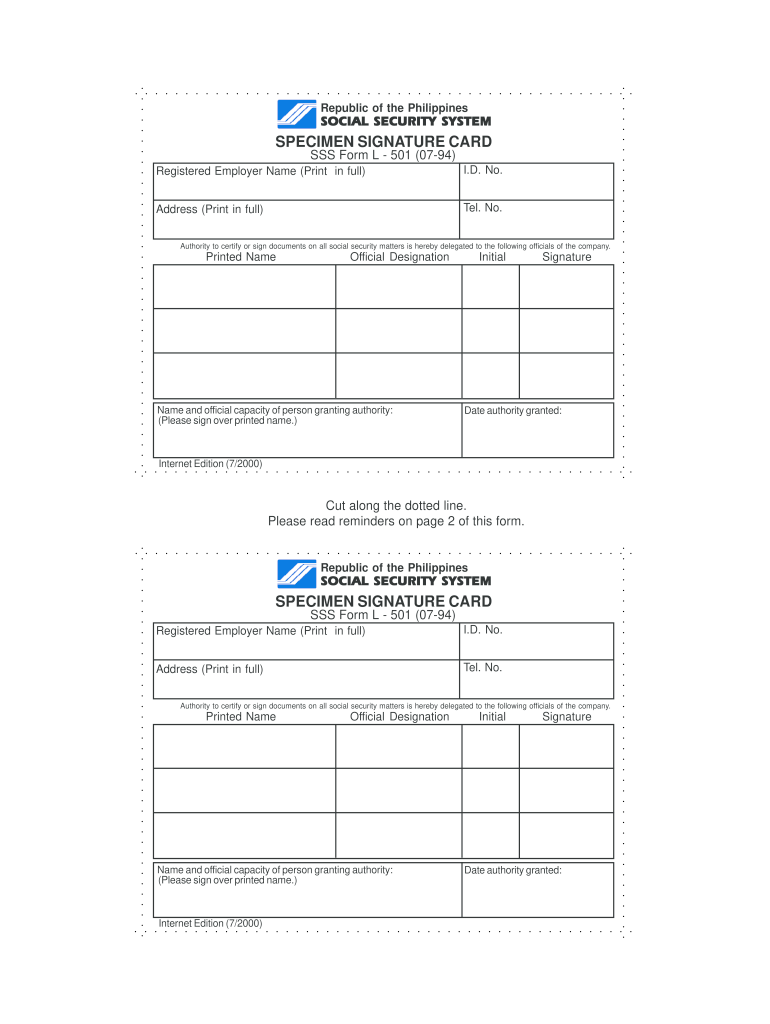
The L501 SSS, known as the Specimen Signature Card, is an essential document in the Social Security System (SSS) of the Philippines. This form is designed for employers to authorize specific officials to certify or sign documents related to various social security matters, such as contributions, loan applications, and more. The L501 SSS ensures that only designated representatives can act on behalf of the organization regarding important transactions with the SSS. The form requires details such as the employer's name, identification number, address, and the signatures of the authorized representatives.
The L501 SSS plays a crucial role in streamlining communication between employers and the SSS by verifying who can legally represent the company. It supports accountability and authenticity in the submission of documents, allowing the SSS to establish a verified channel of communication with employers. Understanding the meaning of the L501 SSS is paramount for compliance with requirements set by the SSS.
How to Use the L501 SSS
Using the L501 SSS form effectively involves several key steps. Understanding the purpose and the process allows for correct completion and submission.
-
Gather Required Information: Before filling out the form, collect necessary details, including the company’s official name, SSS identification number, and the names and signatures of authorized personnel.
-
Fill Out the Form: Complete the L501 SSS by providing accurate information related to your organization. When listing authorized signatories, ensure you include their titles and signatures in the necessary spaces. Each signatory's role is important, and they should be individuals with the authority to represent the company legally.
-
Review and Sign: After completing the form, review the information for any errors. Ensure that all required fields are filled, and that the signatures are legible. Incomplete forms can lead to delays in processing.
-
Submission: Submit the completed L501 SSS form to the SSS through the appropriate channels. Depending on SSS guidelines, submissions can often be made online, through mail, or in-person.
-
Record Keeping: Maintain a copy of the completed form for your records. This ensures that you can reference it for future transactions or in case of any disputes.
Understanding how to use the L501 SSS correctly helps maintain compliance and ensures smooth operations related to social security transactions.
Steps to Complete the L501 SSS
Completing the L501 SSS form accurately is vital for its acceptance by the SSS. Follow these detailed steps to ensure proper filling:
-
Download the Form: Obtain the L501 SSS form from the official SSS website or relevant resources. Ensure you have the latest version to comply with current regulations.
-
Fill in Employer Details: In the designated section, input the company’s name as registered, along with the SSS identification number and address. This information should match the details registered with the SSS.
-
Add Authorized Representatives: Specify the names, titles, and signatures of individuals authorized to act on behalf of the company. You might consider including details such as contact numbers for better identification.
-
Verification of Signatures: Ensure that the signatures provided are distinct and match the individuals' official signatures already on file with the SSS. Each authorized signatory should be verified to avoid any discrepancies.
-
Finalize and Submit: After double-checking all entered data, print the form if completing a paper version, or save it in an appropriate format if submitting electronically. Look into SSS submission guidelines to choose the correct method.
Following these systematic steps aids in the comprehensive completion of the L501 SSS, reducing the risk of errors that could delay processing.
Important Terms Related to the L501 SSS
Understanding terminology associated with the L501 SSS is crucial for clarity and effective communication during processing. Here are some key terms to be aware of:
- Authorized Signatory: The individual(s) designated by the organization to sign on behalf of the company regarding SSS-related matters.
- Specimen Signature: A sample of the authorized signatory's signature required for validation and verification purposes.
- Employer Identification Number: A unique identifier assigned to businesses in the Philippines for identifying all transactions with the SSS.
- SSS: The Social Security System, a government agency responsible for providing social security benefits to employees in the Philippines.
- Submission Channels: The various methods available for submitting the L501 SSS, including online submission, mailing, and in-person delivery.
Familiarity with these terms can facilitate better understanding and reduce confusion during the process involving the L501 SSS.
Legal Use of the L501 SSS
The L501 SSS serves an important legal function within the scope of social security transactions. The legitimacy of signatures on the L501 SSS binds the employer to any agreements or certifications made on behalf of the company. Financial and legal obligations, such as payment of contributions or submission of claims processed through unauthorized signatures, could lead to penalties or non-compliance with SSS regulations.
Employers must ensure that the individuals nominated as authorized signatories have the appropriate authority to act. Additionally, any changes to signatories or the organization's details should be promptly updated through the L501 SSS to maintain compliance and legal standing.
Failure to use the L501 SSS correctly can result in significant complications in handling social security matters, including legal repercussions and loss of eligibility for benefits. Therefore, understanding the legal implications of the L501 SSS ensures that organizations remain compliant with the law while managing their social security obligations effectively.
Examples of Using the L501 SSS
Real-world scenarios can illustrate the practical application of the L501 SSS. Here are a few examples:
-
Company Incorporation: A newly established business would need to submit an L501 SSS to designate individuals authorized to transact with the SSS. This ensures that contributions and claims processes are handled efficiently from the outset.
-
Change in Signatories: An organization experiencing management changes might need to complete a new L501 SSS to reflect the new authorized representatives. This update is essential to avoid delays in processing contributions or benefits due to outdated signatures.
-
Branch Offices: A corporation with multiple locations might use the L501 SSS to authorize different signatories at various branches. Each branch may need specific representatives to facilitate localized transactions with the SSS.
-
Loan Applications: If a business submits a loan application to the SSS, the required L501 SSS form ensures that only authorized personnel can sign certain documents concerning the loan request, thus securing both lender and borrower interests.
By understanding these examples, employers can better appreciate the significance of the L501 SSS form in real-world business operations, ensuring compliance and efficient management of social security interactions.