




01. Edit your will the irs catch a missing 1099 online
Type text, add images, blackout confidential details, add comments, highlights and more.

Type text, add images, blackout confidential details, add comments, highlights and more.

Draw your signature, type it, upload its image, or use your mobile device as a signature pad.

Send it via email, link, or fax. You can also download it, export it or print it out.
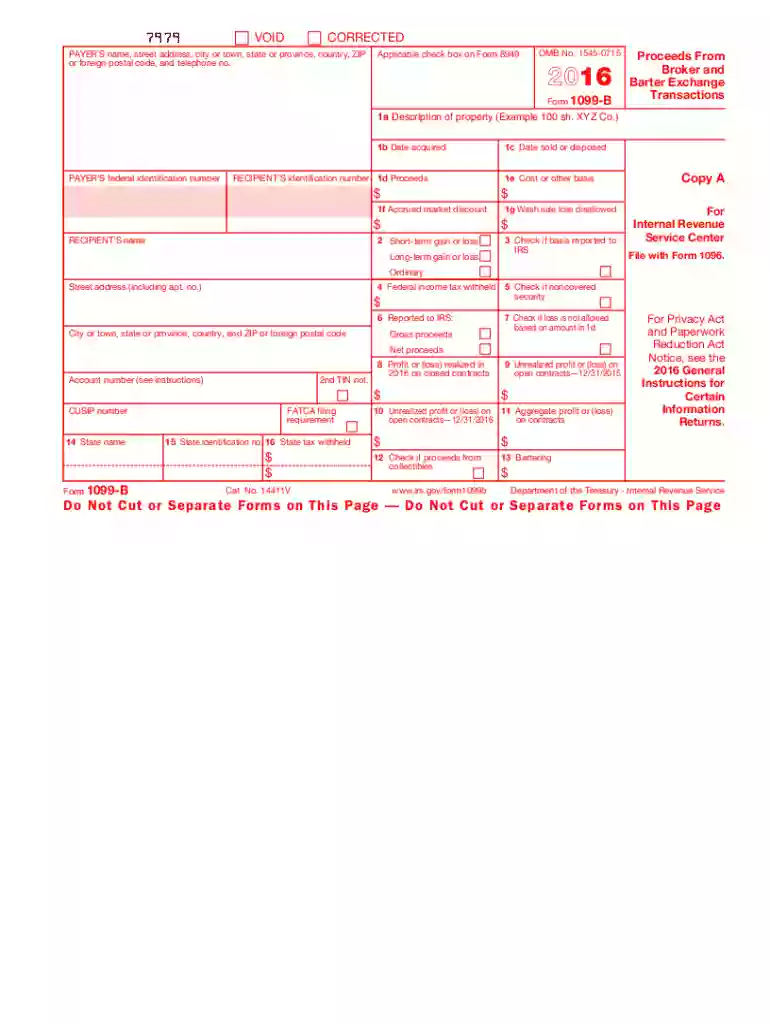
Form 1099-B is a tax document mandated by the IRS to report proceeds from broker and barter exchange transactions. This form is crucial for taxpayers who have sold stocks, bonds, or other securities through a brokerage or engaged in barter exchange transactions. The primary purpose of Form 1099-B is to ensure accurate reporting of capital gains and losses on the taxpayer's tax return, corresponding to Schedule D (Form 1040). By detailing the gross proceeds from these transactions, the form helps prevent omission or underreporting of taxable income, which could result in penalties.
Utilizing the 2016 Form 1099-B involves several steps to ensure accurate reporting:
The form's use is integral to ensuring all capital transactions are reflected in your annual tax filing, aiding in compliance and preventing future discrepancies.
Completing Form 1099-B correctly involves a detailed process:
The detailed completion is essential to ensure that financial activities are properly reported and taxed.
Adhering to filing deadlines is crucial for tax compliance:
Maintaining awareness of these dates ensures timely submission and avoidance of penalties.
Failure to comply with IRS regulations regarding Form 1099-B can result in several penalties:
Understanding these penalties underscores the importance of timely and accurate compliance.
A thorough understanding of relevant terms enhances accurate form preparation:
These terms are foundational in understanding the financial nuances necessary for accurate filing.
Adhering to IRS guidelines ensures proper use and filing:
Following IRS guidelines minimizes errors and ensures compliance with federal tax laws.
While Form 1099-B primarily serves federal tax purposes, state rules can vary:
Understanding state-specific rules helps fully leverage regional tax benefits and comply with all necessary regulations.
We've got more versions of the will the irs catch a missing 1099 form. Select the right will the irs catch a missing 1099 version from the list and start editing it straight away!
| Versions | Form popularity | Fillable & printable |
|---|---|---|
| 2025 | 4.4 Satisfied (22 Votes) | |
| 2024 | 4.9 Satisfied (52 Votes) | |
| 2023 | 4 Satisfied (25 Votes) | |
| 2022 | 4.5 Satisfied (41 Votes) | |
| 2021 | 4.8 Satisfied (80 Votes) | |
| 2020 | 4.3 Satisfied (97 Votes) | |
| 2019 | 4.4 Satisfied (362 Votes) | |
| 2018 | 4.1 Satisfied (67 Votes) | |
| 2017 | 4.3 Satisfied (63 Votes) | |
| 2016 | 4.3 Satisfied (55 Votes) | |
| 2015 | 4.4 Satisfied (484 Votes) | |
| 2014 | 4.4 Satisfied (53 Votes) | |
| 2013 | 4.2 Satisfied (58 Votes) | |
| 2012 | 4.2 Satisfied (53 Votes) | |
| 2011 | 4 Satisfied (51 Votes) |
At DocHub, your data security is our priority. We follow HIPAA, SOC2, GDPR, and other standards, so you can work on your documents with confidence.
Brokers and barter exchanges must report proceeds from (and in some cases, basis for) transactions to you and the IRS on Form 1099-B. Reporting is also requiredRead more
Feb 28, 2017 1099-INT form from your bank outlines earned interest (if any). 1099-DIV outlines dividend interest on investments (if any). 1042-S showsRead more


