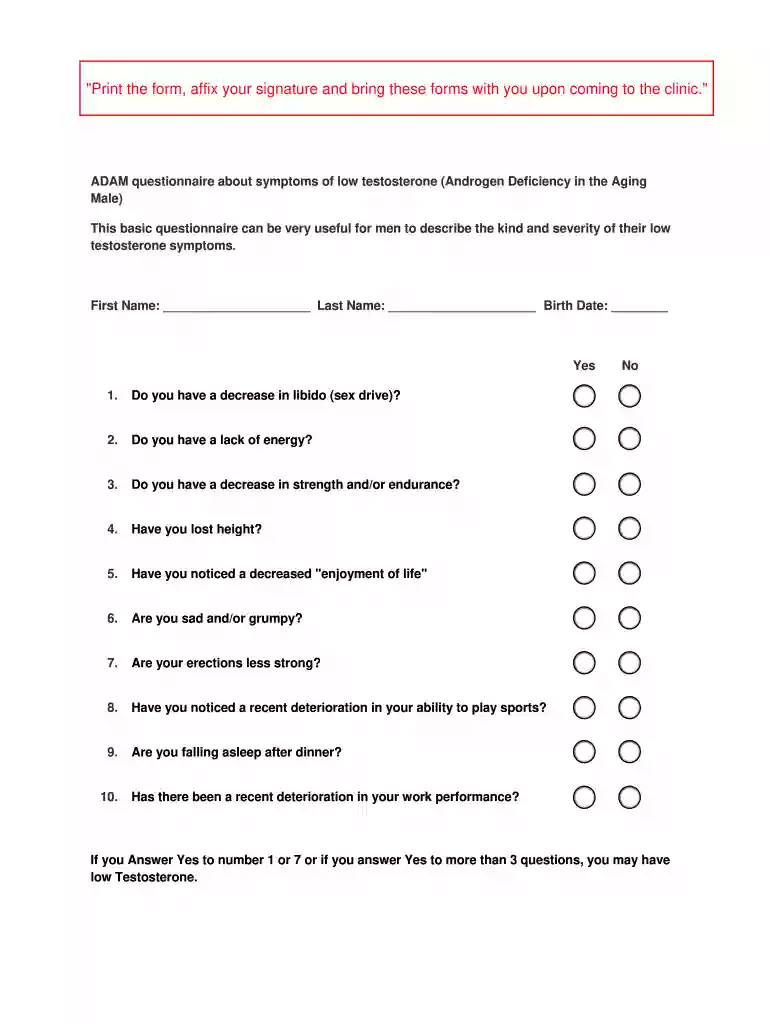
Adam questionnaire 2025

Get Form
adam questionnaire pdf Preview on Page 1

Here's how it works

01. Edit your adam questionnaire pdf online
Type text, add images, blackout confidential details, add comments, highlights and more.

02. Sign it in a few clicks
Draw your signature, type it, upload its image, or use your mobile device as a signature pad.

03. Share your form with others
Send adam questionnaire via email, link, or fax. You can also download it, export it or print it out.

Definition and Meaning of the ADAM Questionnaire

The ADAM questionnaire, which stands for Androgen Deficiency in Aging Males, is a widely utilized tool designed to evaluate potential symptoms of low testosterone levels in men. This questionnaire consists of a series of yes/no questions, allowing individuals to self-assess symptoms that may indicate testosterone deficiency. The format is straightforward, making it accessible for users, and it serves an important role in identifying individuals who may need further medical evaluation.

Key aspects of the ADAM questionnaire include:

  • Assessment of Symptoms: The questions focus on symptoms commonly associated with low testosterone, such as fatigue, reduced libido, and mood changes.
  • Self-Evaluation: It allows men to reflect on their health and effectively communicate possible concerns to healthcare providers.
  • Health Awareness: By fostering awareness about testosterone levels, the questionnaire can guide individuals toward seeking appropriate medical support.

Steps to Complete the ADAM Questionnaire

Filling out the ADAM questionnaire is a straightforward process that empowers individuals to assess their testosterone levels. Here are the steps to complete it effectively:

  1. Acquire the Questionnaire: Locate the ADAM questionnaire PDF online or request a hard copy from a healthcare provider.
  2. Review Instructions: Ensure you read any accompanying instructions carefully for clarity on how to respond to each question.
  3. Answer the Questions: Respond honestly to each question, marking "yes" or "no" based on your experiences and symptoms over the past few months.
  4. Calculate Your Score: Some versions of the questionnaire may require scoring based on your responses. This typically involves tallying "yes" answers to determine the level of concern.
  5. Consult with a Healthcare Provider: Once completed, share your results with a healthcare professional, especially if your answers indicate a likelihood of low testosterone.

Properly completing the ADAM questionnaire enables you to gain insight into your health status and potentially pursue further evaluation if necessary.

Important Terms Related to the ADAM Questionnaire

Understanding specific terminology associated with the ADAM questionnaire can enhance clarity and ease of use. Here are several important terms:

  • Androgen Deficiency: Refers to lower-than-normal levels of male hormones, particularly testosterone.
  • Self-Assessment: The process of evaluating one’s symptoms without the immediate assistance of a medical professional.
  • Total Testosterone Levels: The overall amount of testosterone circulating in the bloodstream; a key metric in assessing androgen deficiency.
  • Hypogonadism: A condition characterized by insufficient hormone production, often related to low testosterone levels.
  • Scoring System: A method of assessing responses where certain answers may raise flags indicating the need for consultation.

Understanding these terms will aid individuals in better navigating discussions with healthcare providers and grasping the implications of their responses.

Examples of Using the ADAM Questionnaire

The ADAM questionnaire has practical applications in various scenarios where evaluating testosterone levels is crucial. Here are some examples:

  • Pre-Clinical Evaluation: A man experiencing fatigue and decreased sexual desire may utilize the ADAM questionnaire to determine if these symptoms align with potential testosterone deficiencies. Completing the questionnaire helps him prepare for an upcoming doctor’s visit.
  • Routine Health Checks: Men attending routine check-ups may be encouraged to complete the ADAM questionnaire as a proactive measure for health monitoring, ensuring any signs of low testosterone are not overlooked.
  • Research Studies: In clinical settings, researchers may use the ADAM questionnaire to recruit participants for studies focused on testosterone replacement therapies, collecting data on symptoms from prospective subjects.

These examples highlight the ADAM questionnaire's utility in self-evaluation and broader health monitoring contexts.

Why Should You Use the ADAM Questionnaire?

Utilizing the ADAM questionnaire can offer several benefits to individuals, particularly concerning their overall health and wellbeing. Key reasons to use it include:

  • Early Detection of Symptoms: Identifying potential symptoms of low testosterone allows for early intervention and appropriate medical attention.
  • Informed Health Choices: The questionnaire promotes awareness and understanding of personal health, enabling individuals to make informed choices about their lifestyle or medical treatment.
  • Facilitation of Medical Discussions: Bringing results from the questionnaire to medical consultations can facilitate more productive discussions with healthcare professionals about hormone levels and treatment options.
  • Monitoring Changes Over Time: Repeating the questionnaire periodically enables men to monitor changes in symptoms, providing a valuable perspective on their health status over time.

By completing the ADAM questionnaire, men can take proactive steps in managing their health and addressing any concerns regarding hormone levels.

be ready to get more

Complete this form in 5 minutes or less

Get form

Got questions?

We have answers to the most popular questions from our customers. If you can't find an answer to your question, please contact us.
Contact us
The ADAM (Androgen Deficiency in Aging Males) questionnaire consists of 10 questions that help determine if a male patient suffers from androgen deficiency (low testosterone) and whether or not further testing and follow-up are needed.
The ADAM questionnaire is a tool utilized to help identify males with low testosterone; in one study it demonstrated 88% sensitivity and 60% specificity (Morley et al., 2000).
The ADAMS subscale average scores are categorised using the following qualitative descriptors: Not a Problem (average scores between 0 and 0.49) Mild Problem (average scores between 0.5 and 1.49) Moderate Problem (average scores between 1.5 and 2.49) Severe Problem (average scores between 2.5 and 3).
(Androgen Deficiency in the Aging Male) This basic questionnaire can be very useful for men to describe the kind and severity of their low testosterone symptoms.
be ready to get more

Complete this form in 5 minutes or less

Get form