






Understanding the Child Service Report for Daycare
The child service report for daycare is a crucial document that outlines a child's developmental progress and experiences within a daycare setting. This report serves not only as a record for caregivers but also as a tool for parents to understand their child's growth and areas requiring attention.
Key Components of a Child Service Report
-
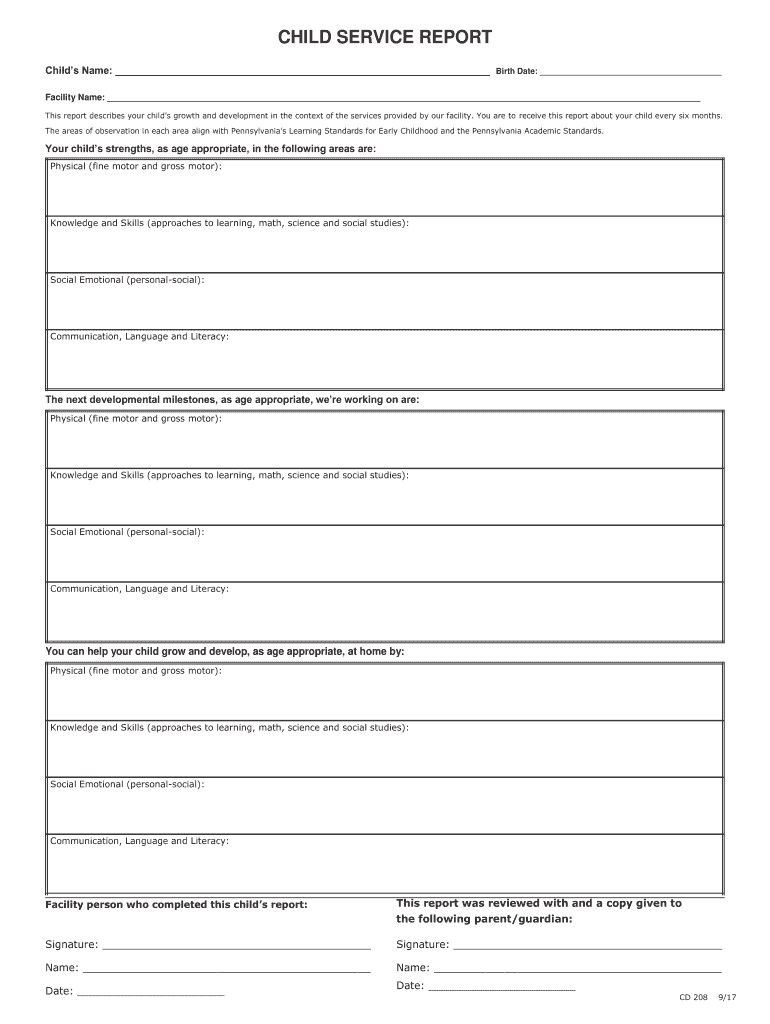
Identification Information: Each report must include the child's full name, date of birth, and unique identification number assigned by the daycare facility. This data ensures the report is accurately linked to the child.
-
Developmental Milestones: The report details specific milestones across various developmental areas such as cognitive development, physical health, and social skills. This section compares the child's progress against established benchmarks relevant to their age group.
-
Strengths and Areas for Improvement: Caregivers provide insights into what the child excels in and identifies any challenges or areas where additional support may be needed. For instance, a child might be proficient in verbal communication yet require support for fine motor skills.
How to Fill Out a Child Service Report
Filling out a child service report involves several key steps:
-
Gather Information: Collect data on the child's growth, daily activities, and interactions over the reporting period. This can involve input from teachers, caregivers, and parental observations.
-
Complete Sections Methodically: Use a structured format to fill in each section, ensuring clarity and thoroughness. It's critical to avoid vague statements; instead, provide specific examples of behaviors or incidents that illustrate each point.
-
Seek Collaboration: Involve parents in the discussion of their child's progress. This not only enriches the report but also allows for a comprehensive understanding of the child's strengths and challenges from multiple perspectives.
Importance of Parent Involvement
Reports often include suggestions for how parents can support their child's development at home. Examples encompass:
-
Engagement Activities: Activities such as reading together or participating in arts and crafts can foster learning and relationship-building.
-
Feedback Mechanisms: Encourage parents to provide regular feedback concerning their observations about developmental progress, which can enrich future reports.
Legal and Educational Regulations
In many states, including Pennsylvania, child service reports must comply with educational regulations that govern early childhood development programs. This compliance ensures:
-
Accurate Reporting: Daycare providers must adhere to guidelines that specify what information needs to be included, ensuring the report meets educational standards.
-
Confidentiality Protections: Policies to protect the child's privacy and the confidentiality of the report's content are enforced, ensuring that sensitive information is handled appropriately.
Sample of a Child Service Report
A sample child service report illustrates how the completed document should look. This includes:
- A header containing the name of the daycare, the child's details, and the reporting period.
- Sections clearly labeled for ease of reading, detailing observations made during the reporting period.
- Spaces for both educator and parental signatures, affirming the shared understanding of the child's progress.
Benefits of Regular Reporting
Regularly issued child service reports can lead to various benefits, such as:
-
Continuous Monitoring: Regular assessments enable caregivers to track ongoing development and make necessary adjustments to care plans.
-
Informed Decision-Making: Insight drawn from reports allows daycare providers and parents to collaborate in creating effective strategies for the child's learning and development.
Resources for Caregivers
Many daycare facilities provide additional resources to help parents understand the information shared in the child's service report:
-
Workshops and Seminars: Educational sessions to discuss developmental milestones and effective parenting strategies.
-
Resource Materials: Access to guides or websites that help parents understand child development stages and best practices for supporting growth at home.
This comprehensive understanding of a child service report for daycare helps ensure that children receive the attention and support they need for a successful developmental journey.