
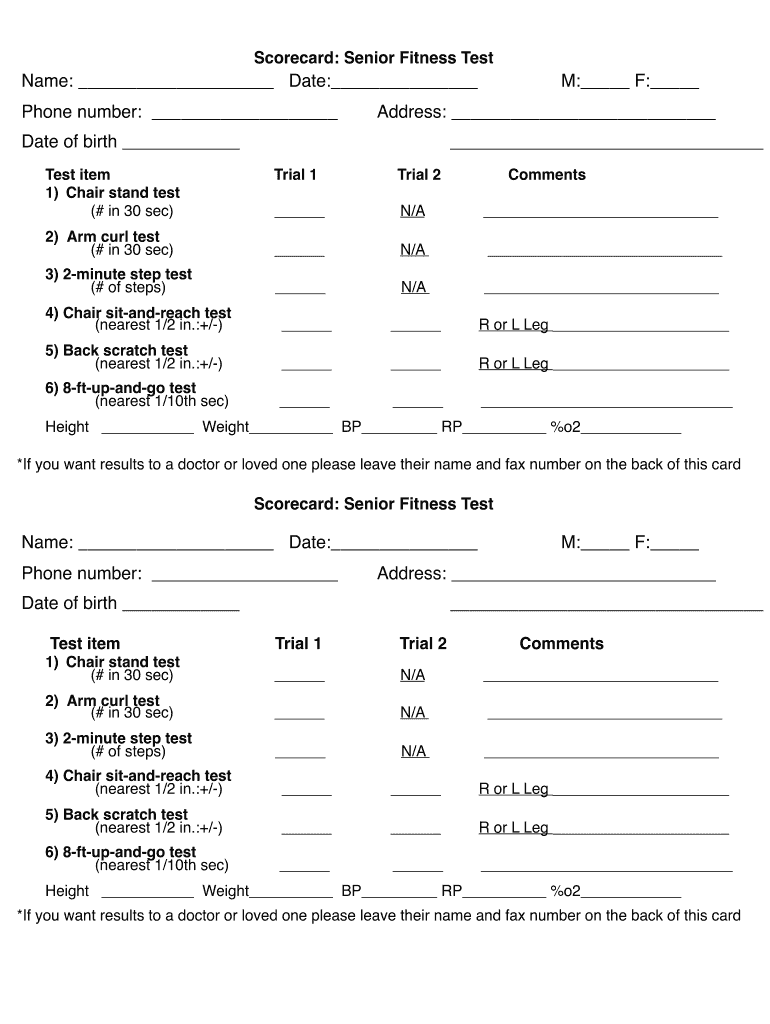







Definition and Meaning of the Scorecard Senior Fitness Test
The Scorecard Senior Fitness Test serves as a comprehensive assessment tool designed to evaluate the physical fitness levels of senior adults. It encompasses various components of fitness, including strength, flexibility, endurance, and balance, tailored specifically for older populations. The test typically includes exercises like chair stands, arm curls, and the 8-foot up-and-go test, all of which are crucial in identifying strengths and areas needing improvement in an individual's physical capabilities.
Purpose of the Scorecard Senior Fitness Test
- Assess Physical Health: It helps in monitoring and improving the physical fitness of seniors, ensuring they maintain a healthy lifestyle.
- Encourage Activity: By identifying fitness levels, seniors can be motivated to engage in regular physical activity tailored to their capabilities.
- Track Progress: The scorecard allows for tracking performance over time, enabling adjustments to fitness programs as needed.
Key Components of the Test
- Chair Stand Test: Measures lower body strength by counting the number of times a participant can stand up from a seated position in 30 seconds.
- Arm Curl Test: Assesses upper body strength by determining how many times a participant can lift a weight (typically 5 or 8 pounds) using one arm.
- 8-Foot Up-and-Go Test: Evaluates mobility and balance by timing how long it takes a participant to stand up, walk eight feet, turn around, walk back, and sit down.
- Sit-and-Reach Test: Tests flexibility, focusing on the lower back and hamstrings.
How to Use the Scorecard Senior Fitness Test
To effectively utilize the Scorecard Senior Fitness Test, the following steps outline the process:
-
Preparation: Ensure a safe environment free from obstructions. Gather all necessary materials, including the scorecard, a stopwatch, and weights for the arm curl test.
-
Personal Information Section: Fill in the scorecard with accurate details, including the name, date, gender (M/F), and address of the participant. This ensures the results are attributed correctly and can be referenced in the future.
-
Conducting the Tests: Administer each test according to instructions. Use a stopwatch for timing and have someone assist if necessary, especially for tests requiring mobility.
-
Recording Results: Document the outcomes from each test trial on the scorecard, noting the number of repetitions, times, or distances achieved.
-
Analysis and Follow-Up: Review the results to identify strength and flexibility levels. Use this information to guide future fitness activities and explore tailored exercise programs.
Key Elements of the Scorecard Senior Fitness Test
Understanding the essential elements of the Scorecard Senior Fitness Test is vital for effective use and accurate results:
-
Scorecard Layout: The scorecard is structured to provide clear sections for identifying information and recording results for each test.
-
Trial Sessions: Participants may perform each test twice, allowing for a scored average which helps in mitigating variability in performance.
-
Comments Section: This area is available for any additional notes regarding the participant’s physical state, challenges encountered, or specific recommendations for improvement.
-
Fitness Level Indicators: The scorecard often includes benchmarks for interpreting results, providing insights into whether a participant is at a low, moderate, or high fitness level.
Steps to Complete the Scorecard Senior Fitness Test
Completing the Scorecard Senior Fitness Test involves a systematic approach to ensure accurate assessment:
-
Gather Materials: Collect the scorecard and any props needed for the tests, such as weights and tape measures.
-
Organize Testing Area: Arrange a clear, safe area where each test can be executed without distraction or risk of injury.
-
Conduct Initial Assessment: Engage the participant in a brief conversation to gauge their understanding and comfort level with each exercise.
-
Perform Tests: Carefully guide the participant through each aspect of the fitness test. Maintain clear communication, offering encouragement and emphasizing safety throughout.
-
Document Results: After performing the tests, meticulously fill out the scorecard, ensuring all data is recorded in a legible and accurate manner.
-
Evaluate and Plan: After analysis of the results, consider developing an individualized fitness program based on the participant's strengths and areas for improvement.
Legal Use of the Scorecard Senior Fitness Test
It is essential to be mindful of the legal considerations when utilizing the Scorecard Senior Fitness Test:
-
Confidentiality: Information collected through the scorecard should be treated with confidentiality, following HIPAA guidelines if applicable, to protect the participant’s privacy.
-
Informed Consent: Participants should be informed about the purpose of the fitness tests and provide consent, understanding any potential risks associated with physical activity.
-
Professional Supervision: Ideally, the testing should be conducted under the supervision of a qualified fitness professional, especially for individuals with health concerns or disabilities.
-
Compliance with Regulations: Ensure that any program developed based on the scorecard’s findings complies with local laws and regulations regarding senior fitness programs.
Important Terms Related to the Scorecard Senior Fitness Test
Familiarity with the following terminology will facilitate understanding and effective communication regarding the Scorecard Senior Fitness Test:
-
Functional Fitness: Refers to the capability to perform daily tasks safely and efficiently, a primary focus of the senior fitness assessment.
-
Benchmark Scores: Standardized scores that allow comparison of an individual’s performance against age and gender-related averages, helping to contextualize results.
-
Endurance: A measure of how a participant can sustain physical activity over time, particularly important in assessing cardiovascular fitness.
-
Flexibility: An assessment of the range of motion available to a participant, critical for preventing injuries and maintaining mobility in daily life activities.
By understanding and adequately implementing the elements of the Scorecard Senior Fitness Test, individuals and organizations can provide valuable insights into seniors' health, leading to enhanced quality of life through tailored fitness programs.




