Definition and Meaning of Identity Theft Police Report
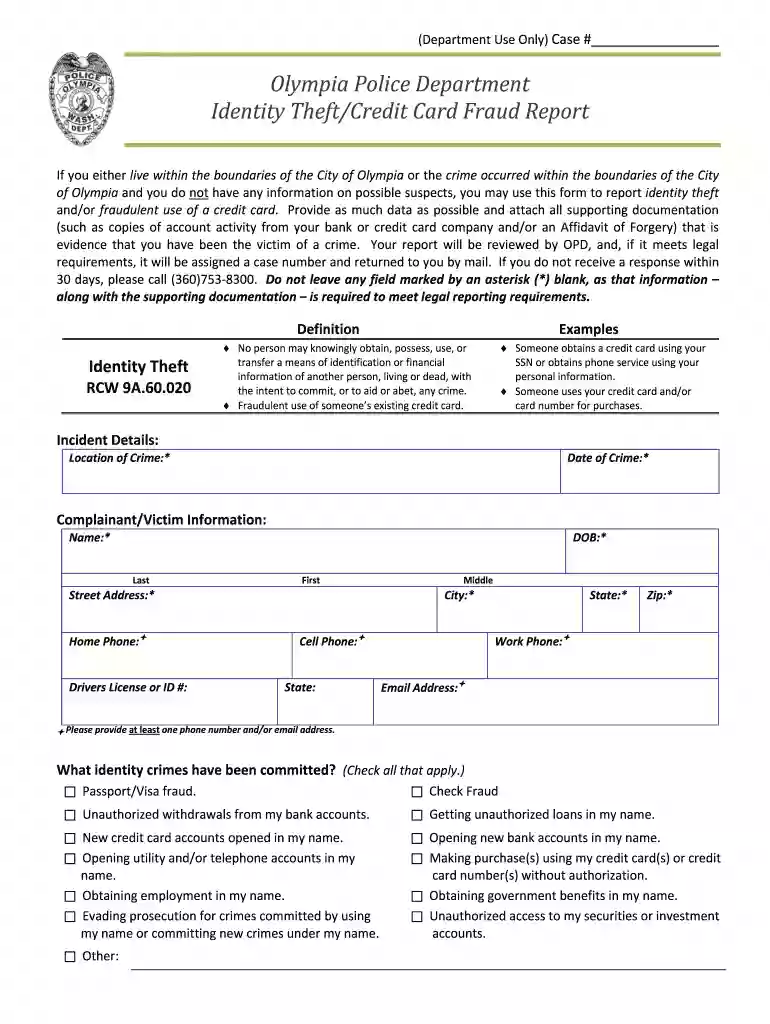
An identity theft police report serves as a formal record created by law enforcement when an individual reports incidents of identity theft. This document outlines essential details surrounding the reported crime, including the victim's personal information, a description of the fraudulent activities conducted using their identity, and any relevant timelines. The report acts as both evidence of the crime and a critical tool for victims seeking to resolve issues related to identity theft, such as disputing fraudulent charges and seeking redress from financial institutions.
Importance of the Police Report
- Documentation: The identity theft police report provides a concrete record that can be used when contesting fraudulent transactions.
- Legal Protection: It can help protect victims legally, providing proof that they reported the crime.
- Insurance Claims: Many insurance providers require a police report in order to process claims related to identity theft or fraud.
- Credit Reporting: Organizations such as credit bureaus may request this report when verifying claims made by the victim.
Key Components of the Report
- Victim Information: Includes full name, address, contact details, and potentially Social Security number or driver's license number.
- Details of the Incident: A narrative explaining how the theft occurred, ranging from stolen credentials to unauthorized transactions.
- Involved Parties: Information on companies or financial institutions affected by the fraudulent activity.
- Law Enforcement Officer Details: Name, badge number, and contact information of the officer handling the case, along with the report number for future reference.
Steps to Complete the Police Report Identity Theft Template in Illinois
Filing a police report for identity theft in Illinois requires specific steps to ensure that all relevant information is documented correctly.
- Gather Personal Information: Collect your identification documents and any relevant financial statements or correspondence that indicate fraudulent behavior.
- Describe the Theft: Prepare a detailed account of how the theft occurred, including dates, times, and names of suspected fraudsters if known.
- Download the Template: Access the police report identity theft template suitable for Illinois. This can often be found on local law enforcement websites or the DocHub platform.
- Complete the Template: Fill in your personal information, a detailed account of the theft, and any supporting documentation you have.
- Submit the Report: Depending on the instructions provided, you may need to submit the report in person at your local police department, online, or by mail.
Detailed Explanation of Each Step
- Step 1: Personal Information: It's essential to include accurate details from your identification documents, as this ensures the police can properly authenticate your identity and case.
- Step 2: Describing the Theft: Write clearly and concisely about the events leading to the theft. For example, if your credit card information was stolen after a data breach at a retailer, include the retailer's name and any notifications received.
- Step 3: Accessing the Template: A well-formatted, accessible template provides a structured way to capture critical information, making it easier for law enforcement to process your case.
- Step 4: Filling Out the Template: Make sure to follow any specific instructions outlined in the template. Attaching copies of bills or statements showcasing unauthorized transactions strengthens your case.
- Step 5: Submission Method: Confirm the preferred submission formats and methods for your local police department to avoid delays in processing your report.
Important Terms Related to Identity Theft Police Report
Understanding key terms associated with an identity theft police report can enhance comprehension of the process involved in reporting such incidents.
Key Definitions
- Identity Theft: The unauthorized use of someone else's personal information to commit fraud or other crimes.
- Fraudulent Transactions: Transactions made without the victim's consent, often linked to stolen credit cards or personal information.
- Fraud Alerts: Notifications placed with credit bureaus that alert lenders to verify identity before extending credit, protecting individuals from further incidents of fraud.
- Victim’s Rights: Legal protections provided to individuals whose identities have been stolen, allowing them to seek remediation and assistance.
Importance of Understanding These Terms
Knowing these terms provides context for the actions you need to take, the protections available under the law, and the potential consequences of the theft. For instance, being aware of fraud alerts can empower victims to safeguard their credit by adding these alerts to their profiles with credit reporting agencies.
State-Specific Rules for Filing Police Reports in Illinois
Filing a police report for identity theft in Illinois involves adhering to certain state regulations and guidelines that may differ from other states.
Unique Requirements in Illinois
- Specific Law Enforcement Agencies: It is often required to report the theft to the municipality where the crime occurred, even if the victim resides elsewhere.
- Documentation Fees: Some departments may charge for the issuance or retrieval of the police report, which is critical for your records and for future disputes with creditors.
- Follow-Up Procedures: Illinois may necessitate that individuals follow up with law enforcement after a set period to update the investigation’s status.
Navigating State-Specific Regulations
Being aware of these specific requirements is vital for effective navigation through the identity theft report process. Adhering to local guidelines not only expedites the process but also ensures the report is accepted and validated by authorities and financial institutions.
Why You Should File a Police Report for Identity Theft
Filing a police report after experiencing identity theft is not just a bureaucratic step; it is a critical action that offers numerous benefits.
Key Benefits
- Formal Record Keeping: Establishing a legal record aids in all subsequent actions you may need to take regarding trauma stemming from identity theft.
- Case Resolution: Law enforcement may investigate the incident, leading to the arrest of perpetrators if evidence permits.
- Financial Protection: A police report can bolster claims or disputes with banks, creditors, or credit bureaus, providing necessary documentation for fraud investigations.
Potential Consequences of Not Reporting
Failure to file a report might hinder recovery efforts and prevent victims from receiving due support from financial institutions. Additionally, it leaves the opportunity for the thief to continue exploiting the stolen identity. Hence, the filing serves both as a protective measure and a proactive step toward recovery.