
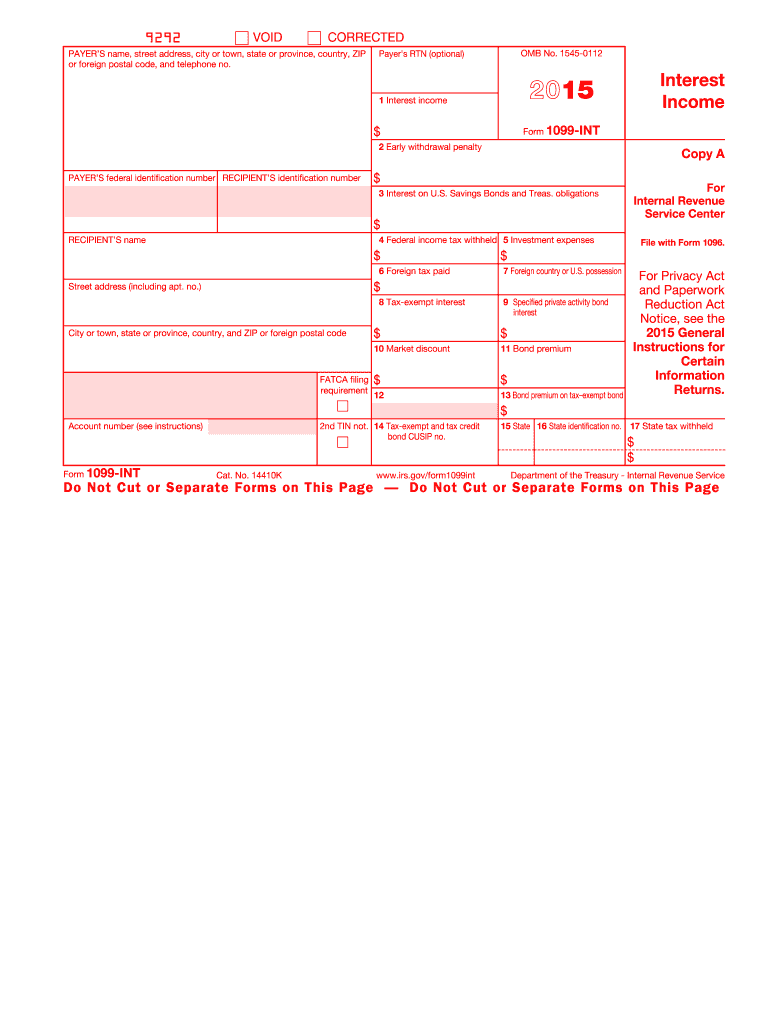







Definition & Meaning of the 1099-INT 2015 Form
The 1099-INT form is issued to taxpayers who have earned interest income during the tax year. Specifically, the 2015 version of this form reports interest income that a taxpayer received from various financial entities such as banks, investment firms, or other financial institutions. This form is crucial for accurately reporting taxable interest income to the IRS and is part of the taxpayer's annual tax return. Different copies of the form are distributed for various purposes: Copy A is submitted to the IRS, while Copies B and C are provided to the recipient and retained by the issuer, respectively.
How to Use the 1099-INT 2015 Form
Understanding how to utilize the 1099-INT form is vital for ensuring compliance with tax regulations. Taxpayers should verify all the details on the form, as discrepancies can lead to issues with the IRS. The form is used to report all interest income, including interest earned on savings accounts, certificates of deposit (CDs), and interest-bearing accounts. Once received, the recipient should include this income on their tax return in the appropriate section, taking note of the specific amounts detailed in each box of the form.
Step-by-Step Usage of the Form
-
Review the Form: Upon receipt, review all information for accuracy.
-
Enter Details in Tax Return: Use the data from the form to report interest income on your federal tax return.
-
Check Copies: Ensure you have received Copies B and C for your records.
-
Record Keeping: Maintain a copy of the form for at least three years for audit purposes.
How to Obtain the 1099-INT 2015 Form
The form is issued by financial institutions to individuals earning a minimum amount of interest income, typically $10 or more. Taxpayers generally receive this form early in the year following the income-earning period, usually by January 31. If a copy is not received by this deadline, the taxpayer should contact the issuer or download an appropriate version via the IRS website for personal records. Financial institutions are obligated to provide this information to both the taxpayer and the IRS.
Steps to Complete the 1099-INT 2015 Form
Though financial institutions generally complete the 1099-INT form, taxpayers may need to fill out personal copies for their tax preparations. Key steps include:
-
Personal Details Verification: Double-check personal information like your Social Security Number (SSN).
-
Report All Interest Income: Ensure all interest income has been reported regardless of the amount.
-
Calculate Total Income: Combine all amounts from multiple 1099-INT forms if applicable.
-
Include on Tax Return: Reference these amounts when filing your annual tax returns.
Key Elements of the 1099-INT 2015 Form
Several components should be given attention within the form, specifically:
- Interest Income: Total interest income earned is reported in Box 1.
- Federal Income Tax Withheld: Any federal taxes withheld from interest income are noted in Box 4.
- Other Elements: There may be additional entries for early withdrawal penalties, foreign taxes paid, and tax-exempt interest.
IRS Guidelines for the 1099-INT 2015 Form
The IRS provides specific guidance regarding the completion and filing of the 1099-INT form. Adhering to these guidelines prevents potential penalties and interest fines. The form’s instructions detail which financial entities are required to file, how taxpayers should report discrepancies, and the electronic filing methods available to mitigate errors.
Filing Deadlines for the 1099-INT 2015 Form
Recognizing the filing deadlines for both the issuer and the recipient is essential for compliance. The form should be sent to taxpayers by January 31. Financial institutions must file Copy A with the IRS by the end of February if using paper, or by the end of March for electronic filing.
Penalties for Non-Compliance
Non-compliance with 1099-INT filing requirements can result in penalties. Issuers who fail to provide the form to the taxpayer by the deadline may incur fines per form. Similarly, taxpayers who neglect to report interest income may face additional taxes, penalties, and interest on unpaid balances. It is critical to address any deficiencies promptly to avoid further complications.
Digital vs. Paper Version of the 1099-INT 2015 Form
The 1099-INT form can be submitted both digitally and on paper. Financial institutions increasingly favor electronic methods due to their ease and efficiency. Taxpayers may also benefit from electronic versions, especially for ease of integration into tax software. Nevertheless, having a physical copy remains beneficial for verifying information and keeping personal records.
Examples and Scenarios for Using the 1099-INT 2015 Form
To better understand usage, consider a retired individual who receives interest from a certificate of deposit. This interest is reported on the 1099-INT form to ensure the IRS recognizes it as taxable income. Alternatively, a student with a savings account may receive minimal interest, still reported via this form, ensuring they remain compliant despite their limited income.




