






Understanding the Headache Log
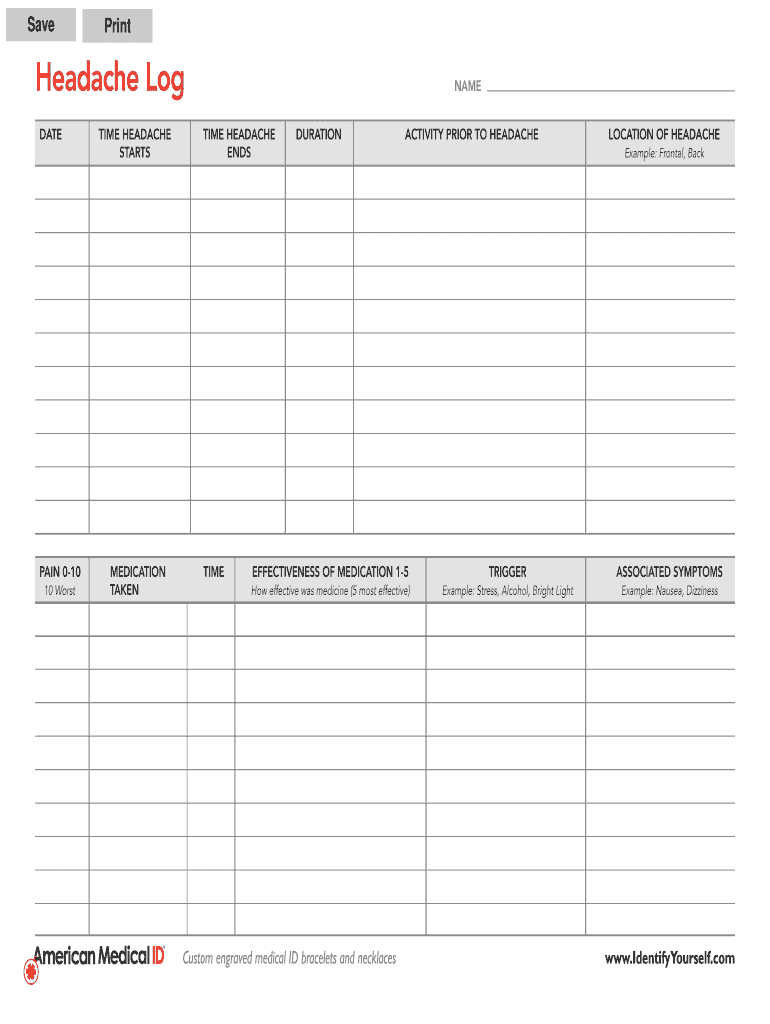
A headache log is a structured tool designed to help individuals track various aspects of their headache experiences. This can include pain levels, duration, triggers, medications taken, and accompanying symptoms. By documenting these details consistently, users can identify patterns and potential triggers, facilitating discussions with healthcare providers for tailored treatment plans.
Key Elements of the Headache Log
- Pain Level: A scale, often ranging from one to ten, indicating the intensity of the headache.
- Duration: The amount of time the headache lasts, helping to discern chronic vs. occasional occurrences.
- Symptoms: Associated symptoms such as nausea or sensitivity to light can provide insight into the type of headache experienced.
- Triggers: Factors that may contribute to headaches, such as stress, certain foods, or weather changes.
- Medications Taken: Keeping a record of over-the-counter or prescribed medications used can help monitor effectiveness and side effects.
How to Use the Headache Log
Using a headache log involves a few key steps:
- Daily Tracking: Record each headache occurrence immediately or soon after it begins. Note relevant details for accuracy.
- Review Patterns: After a set period, review the log to identify recurring triggers, duration, and pain levels. Look for correlations between symptoms and lifestyle factors.
- Consult Healthcare Providers: Share the headache log with healthcare providers during medical appointments for better-informed discussions and treatment options.
Importance of Keeping a Headache Log
- Improved Diagnosis: Accurate documentation aids healthcare professionals in diagnosing specific types of headaches, such as migraines or tension-type headaches.
- Personalized Treatment Plans: A headache log provides concrete evidence to support discussions about treatment options that work best for the individual.
- Awareness: Increased awareness of headache patterns can encourage proactive management, helping individuals make lifestyle adjustments that may reduce the frequency or intensity of headaches.
Examples of Headache Logs
There are various headache log examples available in both printable formats and as mobile applications. Common elements might include:
- Headache Diary Template: A simple format capturing daily pain levels and triggers.
- Migraine Log Template: A more detailed log focused on migraines, specifically tracking symptoms like aura and associated nausea.
- Headache Log PDF: A downloadable version that can be printed for manual entries.
Who Typically Uses the Headache Log?
- Individuals with Chronic Headaches: People suffering from frequent headaches benefit from tracking their experiences.
- Healthcare Providers: Doctors and nurses may recommend headache logs to patients to enhance their understanding of headache patterns.
- Research Professionals: Specialists in headache research may analyze aggregated data from headache logs to identify broader trends and correlations.


Digital vs. Paper Version of the Headache Log
The headache log can be maintained either digitally or in print, each with its benefits:
- Digital Logs: Often available as apps, digital logs can provide reminders to track headaches and easily generate statistic visualizations.
- Paper Logs: Paper formats may appeal to those who prefer writing by hand, allowing for a more personal and reflective logging experience.
Legal Use of the Headache Log
For individuals seeking disability accommodations or other legal permissions related to their headaches, a well-documented headache log can serve as crucial evidence. It highlights the frequency and severity of headaches, supporting claims for medical benefits or workplace accommodations.
Conclusion
In summary, the headache log serves as an essential tool for individuals and healthcare providers alike. By maintaining a detailed record, individuals can better understand their headaches, leading to improved management strategies and enhanced discussions with healthcare professionals.