






Definition and Meaning of the Certificate of Capacity NSW
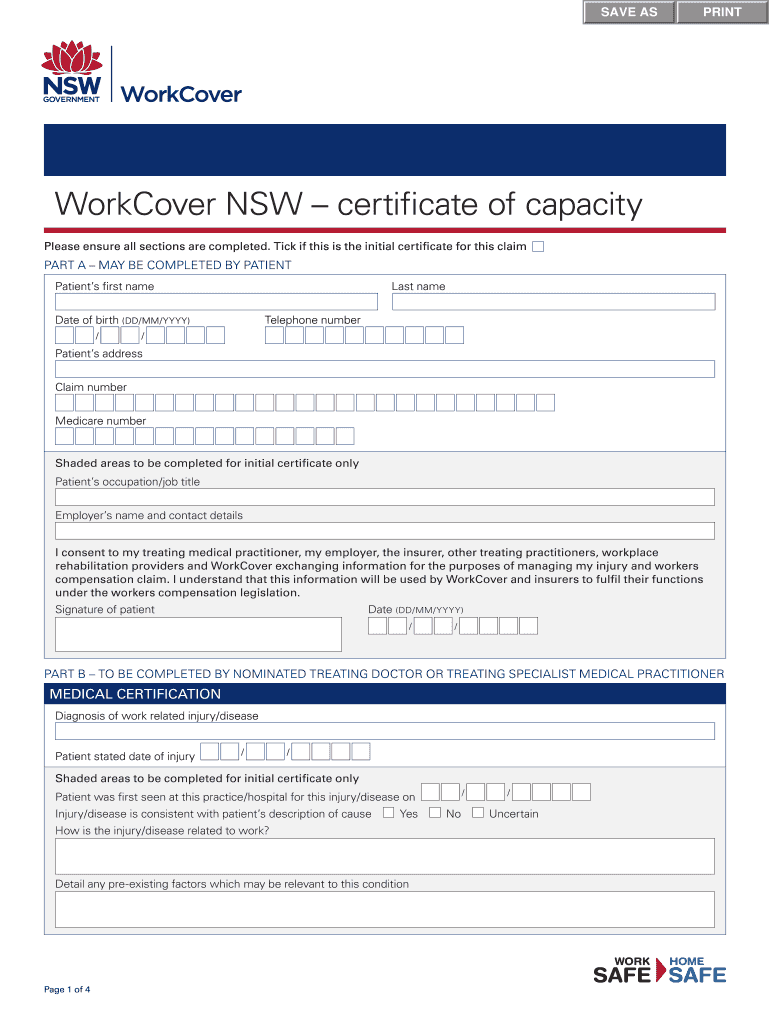
The certificate of capacity in New South Wales (NSW) is a crucial document used within the workers' compensation framework, particularly for managing claims related to work-related injuries and diseases. This document serves as a medical certificate that provides information regarding a worker's ability to participate in work activities. Its format is standardized, ensuring that it includes essential elements such as patient identification, medical certification by a registered healthcare provider, and a worker declaration.
The certificate outlines several key areas:
- Patient Information: Personal details of the injured worker, including their name, contact information, and any relevant identification numbers.
- Medical Assessment: A section where the treating doctor assesses the worker's medical condition, detailing how the injury affects their capacity for work.
- Employment Capacity: Clear indications of the worker’s fitness to return to work, including any necessary modifications to their duties or hours based on their recovery progress.
- Treatment Plans: Recommendations for ongoing treatment to support the worker's return to full capacity.
Understanding the certificate of capacity is essential for both employees and employers as it directly influences the management of workers' compensation claims and overall workplace health.
How to Use the Certificate of Capacity NSW
Using the certificate of capacity effectively involves several steps aimed at facilitating the worker's recovery and integration back into the workplace. The document serves multiple purposes, including aiding in the management of compensation claims and clarifying the worker's employment capabilities.
- Submission with Compensation Claims: Workers should submit the certificate to their employer and the workers' compensation insurer to establish eligibility for benefits.
- Communication Tool: It acts as a communication bridge between healthcare providers, employers, and insurers, ensuring all parties are informed about the worker’s condition and capabilities.
- Workplace Adjustments: Employers can use the information to make necessary adjustments to the workplace, ensuring that the worker has a supportive environment tailored to their recovery.
- Monitoring Recovery: The certificate can be updated periodically, reflecting the worker’s progress, which aids in making decisions about their return to full duties.
Clear, precise use of the certificate helps streamline the recovery process and supports compliance with legal obligations regarding workplace health and safety.
Steps to Complete the Certificate of Capacity NSW
Completing the certificate of capacity entails several steps that ensure the document meets all legal and procedural requirements. The process involves collaboration between the injured worker and their healthcare provider.
- Gather Necessary Information: The worker should compile all relevant personal and medical information that may be required by the healthcare provider.
- Visit a Healthcare Provider: The worker must arrange an appointment with a registered medical practitioner who is qualified to assess their condition.
- Medical Examination: During the consultation, the healthcare provider will evaluate the worker’s injury or illness, considering its impact on their ability to work.
- Complete the Certificate: The healthcare provider fills out the certificate of capacity, detailing the worker's condition and capacity for work, including any recommendations for duties or modifications required for a safe return.
- Submission: Once completed, the worker submits the certificate to their employer and the relevant workers’ compensation insurer to facilitate claims processing.
Following these steps ensures that the certificate of capacity is accurately completed and fulfills its intended purpose in assisting the recovery process.
Important Terms Related to Certificate of Capacity NSW
Understanding the terminology associated with the certificate of capacity is essential for those navigating the workers' compensation landscape. Familiarity with these terms aids in the effective communication among workers, employers, and healthcare providers.
- Capacity: Refers to the worker’s ability to perform work tasks as assessed by their healthcare provider.
- Treating Doctor: A qualified medical professional who is responsible for evaluating the worker’s health status and completing the certificate.
- WorkCover NSW: The government entity responsible for overseeing workers' compensation and workplace safety in New South Wales.
- Claim: A formal request for compensation based on the injury or illness sustained by the worker, supported by the certificate of capacity.
- Injury Management Plan: A structured plan developed to guide the treatment and rehabilitation of the injured worker, often informed by the details in the certificate.
Understanding these terms equips stakeholders to navigate the complexities related to workers' compensation claims effectively.
Examples of Using the Certificate of Capacity NSW
Real-world scenarios illustrate how the certificate of capacity is utilized within the context of workers' compensation claims. These examples showcase the document's practical application in various situations.
-
Case of a Construction Worker: After sustaining a shoulder injury on the job, a construction worker visits their doctor, who completes the certificate of capacity. The worker submits this document to their employer, allowing them to access necessary medical benefits while outlining the need for modified duties, such as lighter tasks that do not strain the injured shoulder.
-
Office Worker with Mental Health Issues: An office worker experiencing anxiety and depression receives a certificate of capacity indicating their reduced capacity for work. The healthcare provider recommends flexible working arrangements. The employer utilizes this information to allow the worker to return to work part-time while continuing therapy.
-
Ongoing Assessment: A worker recovering from surgery receives a certificate that needs periodic updates. Each time they visit their doctor, the healthcare provider assesses their recovery progress, adjusts the certification as necessary, and resubmits it to the employer to ensure compliance with health and safety regulations.
These examples highlight how the certificate functions as a dynamic tool that supports both the worker’s recovery and the employer's responsibilities under NSW workers’ compensation laws.