



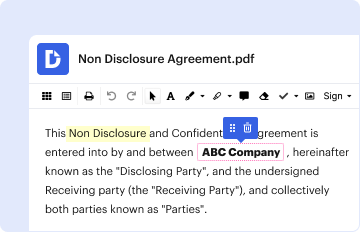
01. Edit your form 1120 s 2018 online
Type text, add images, blackout confidential details, add comments, highlights and more.

Type text, add images, blackout confidential details, add comments, highlights and more.
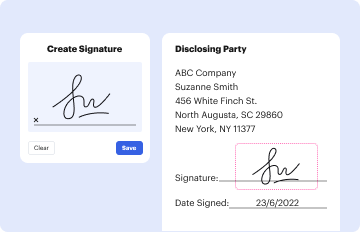
Draw your signature, type it, upload its image, or use your mobile device as a signature pad.
Send online 2018 1120 via email, link, or fax. You can also download it, export it or print it out.
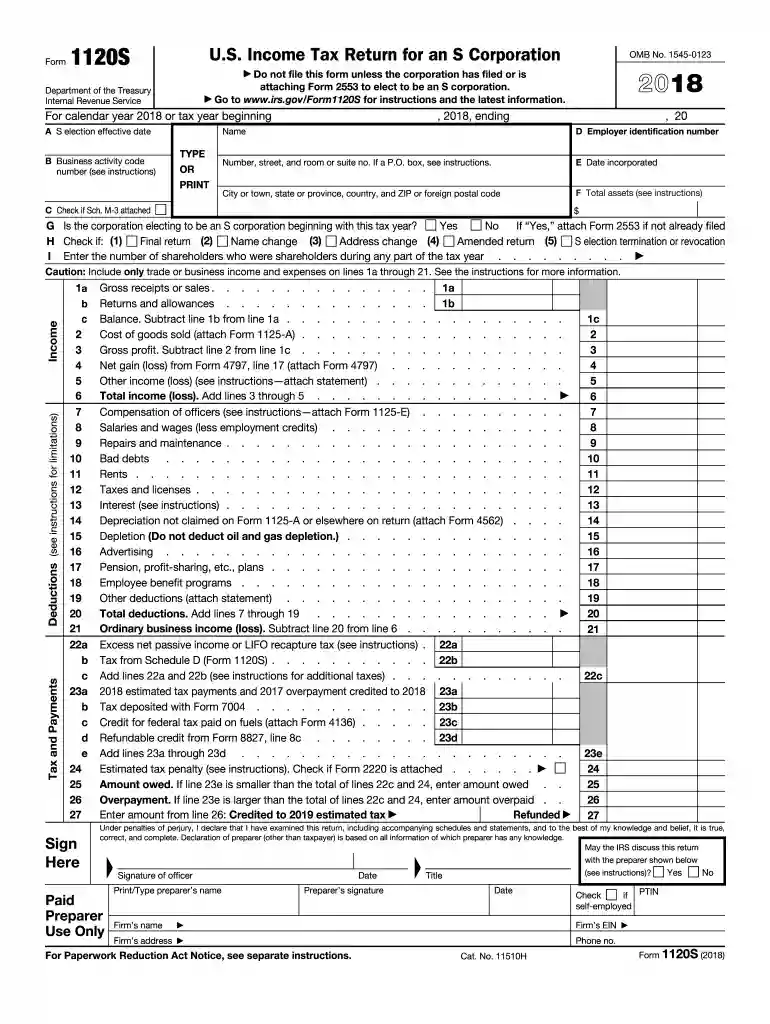
The 2017 Form 1120S is a U.S. Income Tax Return form exclusively for S Corporations. It serves to report the financial outcomes of an S Corporation, detailing income, deductions, and other pertinent financial information. Key to using this form is ensuring your business has elected S Corporation status by filing Form 2553 with the IRS. This establishes the flow-through tax nature of S Corporations, allowing income to pass directly to shareholders without being taxed at the corporate level.
To effectively use the 2S form, it is vital to understand its structure and requirements:
Each section must be completed with precision to ensure compliance with IRS standards.
Filing the 2S form involves multiple steps:
Certain key terms are integral to understanding the 2S Form:
Eligibility for filing the 2S form requires:


For the 2017 tax year, the key filing deadline for Form 1120S is:
Failure to file the 2S form on time or inaccuracies can result in penalties:
While the 2S form can be filed either digitally or via paper, each method has distinct considerations:
The 2S form is fully compatible with leading tax preparation software such as:
These platforms often guide the user through the completion process, reducing the likelihood of errors.
Small to medium-sized businesses that:
These characteristics make the 1120S form ideal for businesses wanting the benefits of limited liability combined with potential tax advantages.
We've got more versions of the form 1120 s 2018 form. Select the right form 1120 s 2018 version from the list and start editing it straight away!
| Versions | Form popularity | Fillable & printable |
|---|---|---|
| 2024 | 4.8 Satisfied (41 Votes) | |
| 2023 | 4.6 Satisfied (60 Votes) | |
| 2022 | 4.1 Satisfied (39 Votes) | |
| 2021 | 4.9 Satisfied (39 Votes) | |
| 2020 | 4.3 Satisfied (174 Votes) | |
| 2019 | 4.2 Satisfied (47 Votes) | |
| 2018 | 4.3 Satisfied (81 Votes) | |
| 2017 | 4.2 Satisfied (110 Votes) | |
| 2016 | 4.4 Satisfied (321 Votes) | |
| 2015 | 4.2 Satisfied (41 Votes) | |
| 2014 | 4 Satisfied (46 Votes) | |
| 2013 | 4.1 Satisfied (47 Votes) | |
| 2012 | 3.7 Satisfied (31 Votes) | |
| 2011 | 4.4 Satisfied (38 Votes) | |
| 2010 | 4 Satisfied (23 Votes) |
At DocHub, your data security is our priority. We follow HIPAA, SOC2, GDPR, and other standards, so you can work on your documents with confidence.





Transcripts are only available for the following returns: Form 1040 series,. Form 1065, Form 1120, Form 1120-A, Form 1120-H, Form 1120-L, and Form 1120S.Read more
G Is the corporation electing to be an S corporation beginning with this tax year? Yes. No. If Yes, attach Form 2553 if not already filed. H Check if: (1).Read more
Mar 1, 2017 The federal income tax is a pay-as-you-go tax. You must pay the tax as you earn or receive in- come during the year. There are two ways to.Read more


