5 2 review and reinforcement 2025

Get Form
5 2 review and reinforcement answer key Preview on Page 1

Here's how it works

01. Edit your 5 2 review and reinforcement answer key online
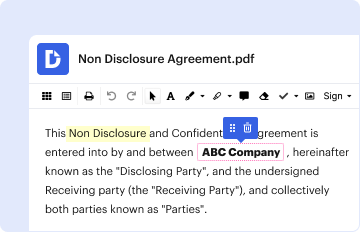
Type text, add images, blackout confidential details, add comments, highlights and more.

02. Sign it in a few clicks
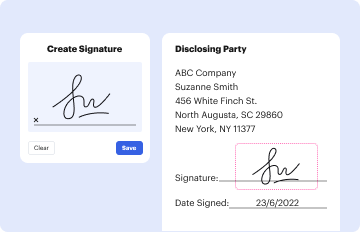
Draw your signature, type it, upload its image, or use your mobile device as a signature pad.

03. Share your form with others
Send 5 2 review and reinforcement via email, link, or fax. You can also download it, export it or print it out.

How to use or fill out 5-2 Review and Reinforcement with our platform

Form edit decoration
9.5
Ease of Setup
DocHub User Ratings on G2
9.0
Ease of Use
DocHub User Ratings on G2
  1. Click ‘Get Form’ to open the 5-2 Review and Reinforcement document in the editor.
  2. Begin by entering your name and date at the top of the form. This personalizes your document and keeps track of submissions.
  3. For the first section, identify the groups of elements on the periodic table. Write the corresponding letter next to each group listed (e.g., carbon family, alkaline earth metals).
  4. In the next part, explain each part of sodium's electron configuration in the provided spaces. Use your knowledge from Section 5-2 to articulate your understanding clearly.
  5. Continue by classifying elements as metal (M), nonmetal (NM), or semimetal (SM) for questions 19 through 23. Ensure accuracy based on periodic table knowledge.
  6. Finally, answer questions about periodic table information and properties distinguishing metals from nonmetals in the designated areas. Provide thorough explanations for clarity.

Start using our platform today to complete your forms online for free!

be ready to get more

Complete this form in 5 minutes or less

Get form

Got questions?

We have answers to the most popular questions from our customers. If you can't find an answer to your question, please contact us.
Contact us
The group one and 2 differ from one another looking at the number of electrons in their outermost orbital. The key distinction between group one and group 2 parts is that all group 1 parts have mismatched electrons in their outermost orbital, whereas group 2 parts have paired electrons in their outermost orbital.
Please note, some elements are capable of having a range of electrical charges, and therefore form different ions. Group I A (1) elements form cations with +1 charge. Group II A (2) elements form cations with +2 charge. Groups III B through II B (3 12) are transition metals.
Group 1A is also known as the alkali metals. Although most metals tend to be very hard, these metals are actually soft and can be easily cut. Group 2A is also called the alkaline earth metals. Once again, because of their similarities in electron configurations, these elements have similar properties to each other.
Each square of the periodic table gives particular information about the atoms of an element. The number at the top of the square is the atomic number, which is the number of protons in the nucleus of an atom of that element. The chemical symbol is an abbreviation for the elements name. It contains one or two letters.
Group 2 elements are located on the left side of the periodic table and are often referred to as alkaline earth metals because they form an alkaline solution with water, are found naturally in the earth, and are metals. This group includes beryllium, magnesium, calcium, strontium, barium, and radium.
be ready to get more

Complete this form in 5 minutes or less

Get form

People also ask

There are two main types of ionic compound with different naming rules for each; Type I: compounds containing cations of main group elements and Type II: compounds containing cations of variable charge (generally transition metals).

5 3 review and reinforcement