






Definition and Meaning of Vestibular Objective Assessment
The Vestibular Objective Assessment refers to a standardized approach to evaluating vestibular function, particularly important for physiotherapists working with patients experiencing dizziness, imbalance, or other vestibular disorders. This assessment typically includes a series of tests and measurements designed to objectively quantify a patient's vestibular function. The goal is to provide a comprehensive understanding of an individual's vestibular health, aiding in diagnosis and treatment planning.
Vestibular assessments may involve various components, such as:
- Oculomotor Tests: Evaluating eye movements and functionality.
- Postural Control Assessments: Measuring balance and stability through dynamic and static tasks.
- Functional Reach Tests: Determining the distance a patient can reach while standing, indicating stability and risk of falls.
- Gait Analysis: Observing the patient's walking patterns for abnormalities.
This structured assessment framework empowers physiotherapists at institutions like Princess Alexandra Hospital to effectively identify vestibular dysfunctions and tailor rehabilitation strategies accordingly.
Key Elements of the Vestibular Objective Assessment
The key elements of the Vestibular Objective Assessment encompass various components that facilitate an informed examination of vestibular function. These include:
- Subjective Patient History: Collecting detailed accounts of the patient's symptoms, onset, and duration, which are fundamental to the assessment.
- Testing Procedures: Implementing specific tests to measure ocular responses, balance, and coordination, including dynamic posturography or videonystagmography (VNG).
- Documentation: Accurately recording findings from both functional tests and patient histories, using templates designed for ease of use in clinical settings.
- Goal Setting: Establishing measurable goals for rehabilitation based on assessment outcomes, ensuring that the treatment aligns with patient needs and abilities.
Integrating these elements allows physiotherapists to conduct thorough evaluations, ultimately enhancing patient care.
Steps to Complete the Vestibular Objective Assessment
To effectively complete the Vestibular Objective Assessment, follow these steps:
- Patient Preparation: Ensure the patient understands the purpose of the assessment and obtains informed consent. Explain the significance of each test involved.
- Gathering Medical History: Collect complete relevant medical history, including existing diagnoses, medications, and previous treatments related to vestibular issues.
- Conducting Objective Tests: Utilize various assessments such as:
- Oculomotor testing for eye function.
- Balance and gait analysis.
- Sensory organization tests assessing reliance on visual and vestibular inputs.
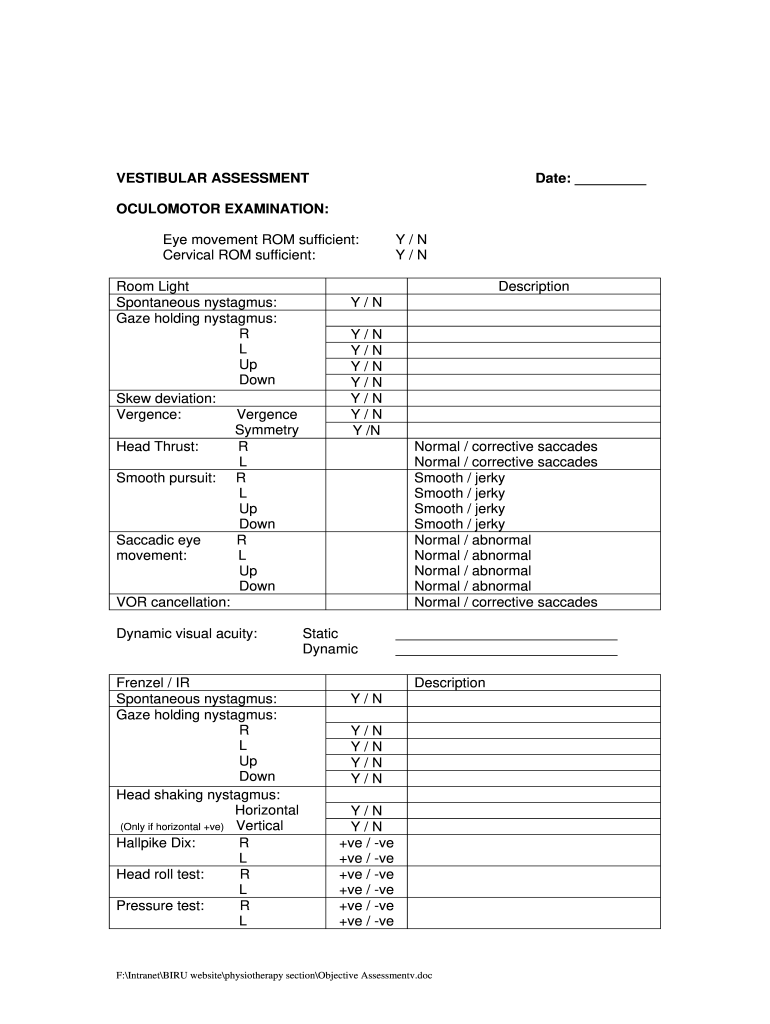
- Documenting Findings: Input information into the BIRU vestibular objective assessment template, ensuring all observations and results are meticulously recorded.
- Interpreting Results: Analyze the gathered data to determine the presence and extent of vestibular dysfunction, informing the subsequent steps in treatment.
- Developing a Treatment Plan: Based on the assessment results, establish a tailored rehabilitation program that addresses the identified deficits.
Following these structured steps ensures a systematic approach to assessing vestibular function, leading to informed treatment decisions.
How to Use the Vestibular Objective Assessment Template
The BIRU vestibular objective assessment template is designed to streamline the evaluation process for physiotherapists. Here’s how to effectively use it:
- Access the Template: Obtain the template via electronic systems, ensuring it is compatible with your document management tools.
- Input Patient Information: Fill in the patient's demographic data, including name, age, and contact information, ensuring each field is complete.
- Conduct the Assessment: Perform the various tests while documenting results in real-time. Use the designated fields for each type of assessment.
- Reflect on Observations: After completing the tests, include any pertinent observations and subjective comments from the patient that could influence treatment decisions.
- Set Goals and Plans: Utilize sections of the template to outline specific rehabilitation goals based on the assessment findings, with clear action points for upcoming sessions.
This systematic usage of the template enhances accuracy and facilitates improved documentation practices in patient care.
Important Terms Related to Vestibular Objective Assessment
Understanding key terminologies associated with the Vestibular Objective Assessment is essential for physiotherapists. Here are some important terms:
- Vestibular System: The sensory system responsible for maintaining balance and spatial orientation through the inner ear's structures.
- Dizziness: A broad term indicating altered spatial perception, which may derive from vestibular dysfunction or other causes.
- Balance Disorders: Conditions that lead to an unstable sense of equilibrium, often related to vestibular system impairments.
- Assessments: Standardized measures used to evaluate vestibular function, often encompassing various tests documented in the assessment template.
- Intervention Strategies: Therapeutic techniques and exercises designed to alleviate symptoms, enhance balance, and improve overall functional ability.
Familiarity with these terms helps physiotherapists communicate effectively and manage patient expectations during the assessment and follow-up processes.
Who Typically Uses the Vestibular Objective Assessment
The Vestibular Objective Assessment is primarily utilized by:
- Physiotherapists: Making extensive use of the assessment to diagnose and treat vestibular disorders in clinical settings.
- Rehabilitation Specialists: Engaging in interdisciplinary collaboration, especially when addressing balance and mobility issues related to vestibular dysfunction.
- Neurologists: Often referring patients to physiotherapy for vestibular assessments as part of broader neurological evaluations.
- Audiologists: Collaborating on vestibular assessments that may relate to auditory functions and vice versa.
- Primary Care Physicians: Initial points of contact for patients presenting with dizziness or balance impairments, who may subsequently refer patients for physiotherapy evaluation.
Understanding the user demographics aids in tailoring the assessment process to fit diverse clinical scenarios and team structures.

Examples of Using the Vestibular Objective Assessment
The application of the Vestibular Objective Assessment can be exemplified through various clinical scenarios:
-
Case Study One: A 60-year-old female presents with recurring dizziness upon standing. The physiotherapist utilizes the assessment template to document subjective responses, perform oculomotor tests, and assess postural stability. Results indicate a bilateral vestibular hypofunction, directing the rehabilitation strategy to focus on vestibular exercises that enhance balance and reduce symptoms.
-
Case Study Two: A young athlete reports a sensation of imbalance post-concussion. Using the assessment template, the physiotherapist completes a series of balance tests and records the findings. The resultant data helps in devising a graduated return-to-sport program emphasizing safe participation based on vestibular recovery.
These examples demonstrate how the template can guide the overall assessment process, leading to appropriate treatment decisions that are based on objective data.