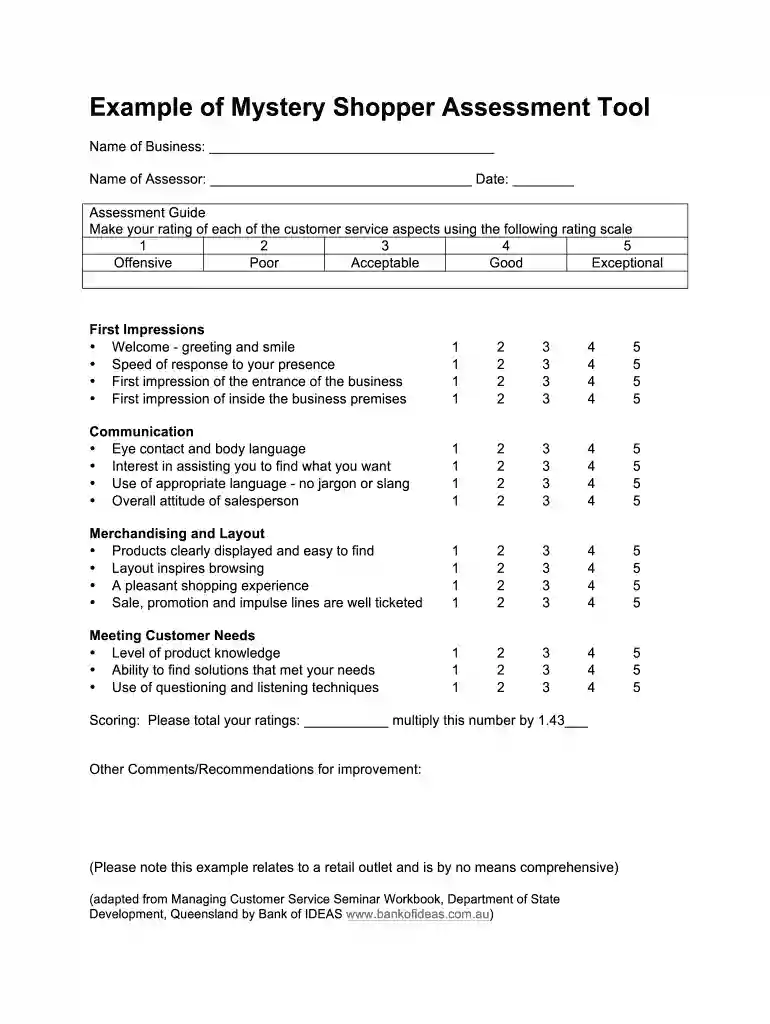
Definition and Meaning of a Mystery Shopper Template
A mystery shopper template serves as a structured tool used to evaluate customer service and operational efficiency within a business. This document outlines specific criteria and questions that assessors use during a mystery shopping visit, helping organizations understand the customer experience. By utilizing standardized measurement criteria, businesses can identify strengths and weaknesses in their service delivery and operational practices.
Key Components of the Template
- Assessment Criteria: These include measurable factors such as staff interactions, store cleanliness, product availability, and adherence to company policies.
- Rating Scale: The template typically incorporates a rating scale (e.g., one to five) to quantify performance in each category, facilitating easier analysis of results.
- Comments Section: This allows mystery shoppers to provide qualitative feedback, offering insights that numbers alone cannot reveal.
How to Use the Mystery Shopper Template Effectively
Using a mystery shopper template effectively involves several steps that ensure thorough evaluation and actionable insights.
- Preparation of the Template: Before using the template, ensure it incorporates the relevant criteria specific to the business and includes all necessary sections like rating scales, comment boxes, and areas for additional notes.
- Training the Mystery Shopper: Individuals conducting the assessment should be thoroughly briefed on what to focus on during their visit, including key behaviors to observe and interactions to initiate.
- Conducting the Assessment: During the visit, mystery shoppers should fill out the template in real-time, paying attention to the established criteria while allowing for flexibility to note unexpected observations.
- Compiling Results: After the assessment is completed, compilers should analyze the collected data to draw conclusions regarding customer service and operational strengths or weaknesses.
- Reporting Findings: Summarizing the findings and presenting them clearly to key stakeholders enables actionable strategies to improve service quality.
Practical Tips
- Include open-ended questions for shoppers to provide insights on unexpected experiences.
- Encourage honest feedback, as this provides more value than just numerical ratings.
Steps to Complete the Mystery Shopper Template
Completing a mystery shopper template requires a systematic approach to ensure all criteria are evaluated comprehensively.
Step-by-Step Process
- Begin the Visit: Start by recording basic information about the location visited, such as date, time, and purpose of the shopping trip.
- Follow the Assessment Criteria: Proceed through each section of the template, assessing and rating each element methodically. Use the rating scale thoughtfully to provide an accurate reflection of experiences.
- Provide Contextual Comments: Use the comments section to elaborate on ratings, focusing on both positive interactions and areas needing improvement. Detail specific experiences that support your ratings, such as staff behavior or store presentation.
- Complete Additional Sections: Fill out any specific sections that pertain to promotional offers, product availability, or compliance with company policies.
- Summarize Key Insights: After completing the template, provide a summary of the overall experience and suggestions for improvement, which can guide the business in enhancing customer service practices.
Important Terms Related to Mystery Shopper Template
Understanding key terms associated with the mystery shopper template can enhance its effective use. Familiarity with these terms assists assessors and businesses in deriving maximum benefits from mystery shopping evaluations.
- Customer Experience (CX): Refers to the overall impression and interaction customers have with a business, which a mystery shopper assesses.
- Net Promoter Score (NPS): A metric tied to customer satisfaction, which can be gauged through mystery shopping reports.
- Compliance Check: This term refers to ensuring staff adherence to company policies and procedures, often assessed through mystery shopper feedback.
By comprehending and utilizing these terms, businesses can better align their strategies for customer service improvement.
Examples of Using the Mystery Shopper Template
Examples provide insight into how different industries apply the mystery shopper template to improve service delivery and enhance customer experience.
Retail Store Example
In a retail environment, a mystery shopper might use the template to evaluate interactions at the cash register, assessing staff friendliness, efficiency, and product knowledge. For instance:
- Observation: The cashier greeted the shopper with a smile and offered assistance with loyalty program enrollment.
- Rating: Given a high score due to positive interaction and customer engagement.
Restaurant Evaluation
For a restaurant, the mystery shopper template could focus on the dining experience, including food quality, service speed, and cleanliness:
- Observation: The server was attentive and provided timely updates.
- Rating: Positive feedback might be reflected in high scores for service, contributing to overall restaurant evaluations.
Business Types That Benefit Most from a Mystery Shopper Template
Certain industries derive significant advantages from implementing a mystery shopper template due to their heavy reliance on customer interactions and service quality.
- Retail Stores: Benefit from feedback on staff performance and product presentation.
- Restaurants: Use mystery shopping to enhance dining experiences and improve service standards.
- Hotels: Employ assessments to ensure guest satisfaction and compliance with service protocols.
- Service Providers: For entities like salons or spas, mystery shoppers can evaluate service delivery and staff behavior.
By tailoring the mystery shopping approach specific to these business types, organizations can drive improvements that lead to higher customer satisfaction.