






Definition and Purpose of the Contract for Sale of Land 2005 Edition
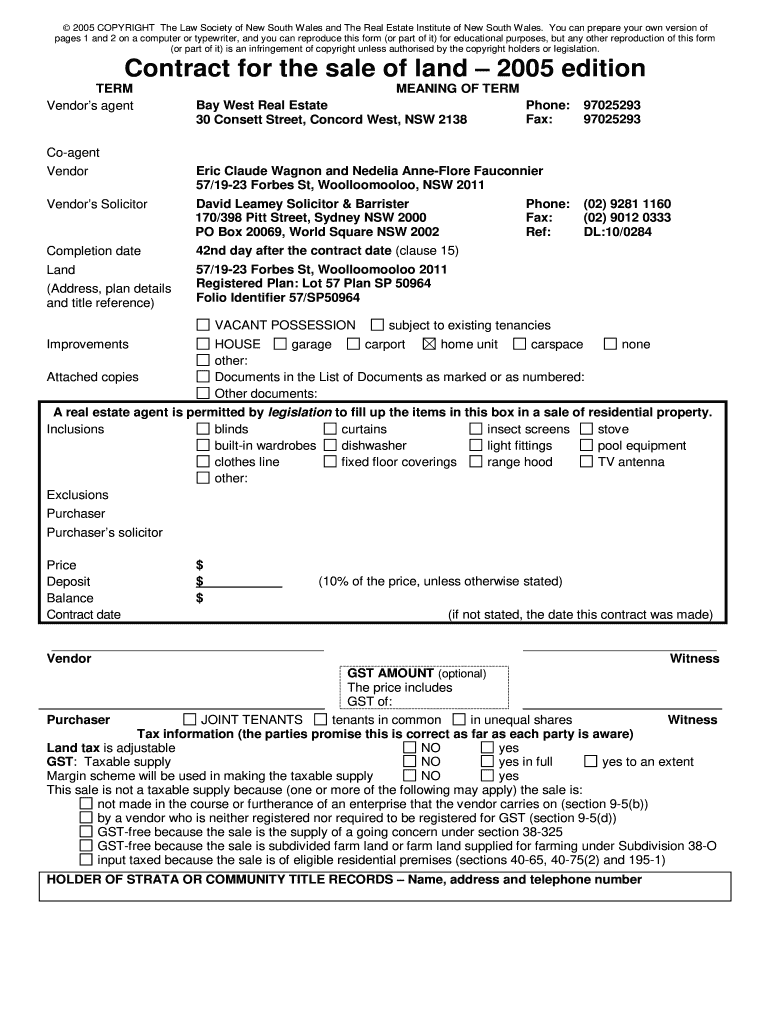
The "Contract for Sale of Land 2005 Edition" in New South Wales (NSW) is a specialized legal framework facilitating property transactions. It sets forth the comprehensive terms and conditions associated with a real estate sale, dictating the rights and obligations of the involved parties, typically the vendor (seller) and the purchaser (buyer).
Key Components of the Contract
- Vendor and Purchaser Details: Full legal names and contact information are required to identify the parties involved in the contract.
- Property Description: A precise description of the property being sold must include the address, official property identifiers, and any pertinent details that convey the property’s nature and boundaries.
- Inclusions and Exclusions: Clearly outlines what is included in the sale—such as buildings, fixtures, and other assets—while also specifying any exclusions.
- Financial Obligations: Details regarding the price of the property, deposit requirements, payment methods, and any applicable taxes, including Goods and Services Tax (GST).
This contract aims to protect both parties by creating a legally binding agreement that minimizes misunderstandings, delineates expectations, and provides a legal framework for resolving disputes.
How to Use the Contract for Sale of Land 2005 Edition
Utilizing the "Contract for Sale of Land 2005 Edition" involves several strategic steps to ensure compliance with legal requirements and to facilitate a smooth transaction.
Steps for Effective Use
- Preparation: Ensure that all necessary details are gathered, including the vendor and purchaser information, property specifics, and financial arrangements.
- Completion of the Contract: Fill out the contract completely, ensuring clarity and accuracy, particularly regarding property inclusions and exclusions.
- Review and Amend: Both parties should review the contract thoroughly, with legal counsel if necessary, to identify any potential issues or misunderstandings.
- Execution: Once all parties agree on the terms, sign the contract. Electronic signatures may be used if compliant with legal regulations.
- Distribution: Provide copies to all parties involved, including their legal representatives, to maintain transparency and confirmation of agreement.
By following these steps, users can maximize compliance and minimize disputes throughout the property transaction process.
Steps to Complete the Contract for Sale of Land 2005 Edition
Completing the "Contract for Sale of Land 2005 Edition" requires meticulous attention to detail to ensure that all relevant information is correctly presented.
Detailed Completion Process
- Fill Out Vendor Information: Include the full name, address, and contact details of the vendor.
- Enter Purchaser Details: Similarly, provide complete information for the purchaser.
- Describe the Property: Ensure an accurate, legal description of the property. This description should match what is on the official title to avoid discrepancies.
- List Inclusions and Exclusions: Specify all items that come with the property, such as appliances or furniture, and denote any items explicitly excluded.
- Outline Financial Terms: State the sale price, deposit amount, payment timelines, and any tax obligations.
- Include Additional Clauses: Consider any unique terms that may be relevant to the transaction, such as conditions subject to finance approval or building inspections.
Accuracy in each of these areas is crucial to prevent future disputes.
Important Terms Related to the Contract for Sale of Land 2005 Edition
Understanding the vital terminology associated with the "Contract for Sale of Land 2005 Edition" enhances comprehension of the implications for involved parties.
Common Terms and Their Meanings
- Vendor: The party selling the property.
- Purchaser: The party buying the property.
- Deposit: A sum of money paid upfront to secure the property, often a percentage of the total sale price.
- Completion Date: The date on which the property transfer takes place and the final payment is made.
- Conveyancing: The legal process of transferring ownership of property from one person to another.
- Cooling-off Period: A legally mandated period during which a buyer can change their mind after signing the contract, typically seven days in NSW.
Familiarity with these terms supports effective communication and understanding throughout the property transaction process.
Legal Use of the Contract for Sale of Land 2005 Edition
The legal standing of the "Contract for Sale of Land 2005 Edition" establishes important frameworks for property transactions in New South Wales.
Legal Framework and Compliance
- Legally Binding: Once signed, the contract is enforceable by law, obligating both parties to adhere to the agreement's terms.
- Statutory Requirements: The contract must comply with relevant laws and statutes governing property sales in NSW, including required disclosures.
- Dispute Resolution: The contract may include clauses specifying processes for dispute resolution, reducing the likelihood of litigation.
- Regulatory Compliance: Both parties must ensure compliance with local real estate regulations to avoid penalties or invalidation of the contract.
Engaging qualified legal counsel during the contract creation and execution phases can ensure these legal parameters are appropriately addressed.