







Definition and Meaning of the Sleep Study Physician Order
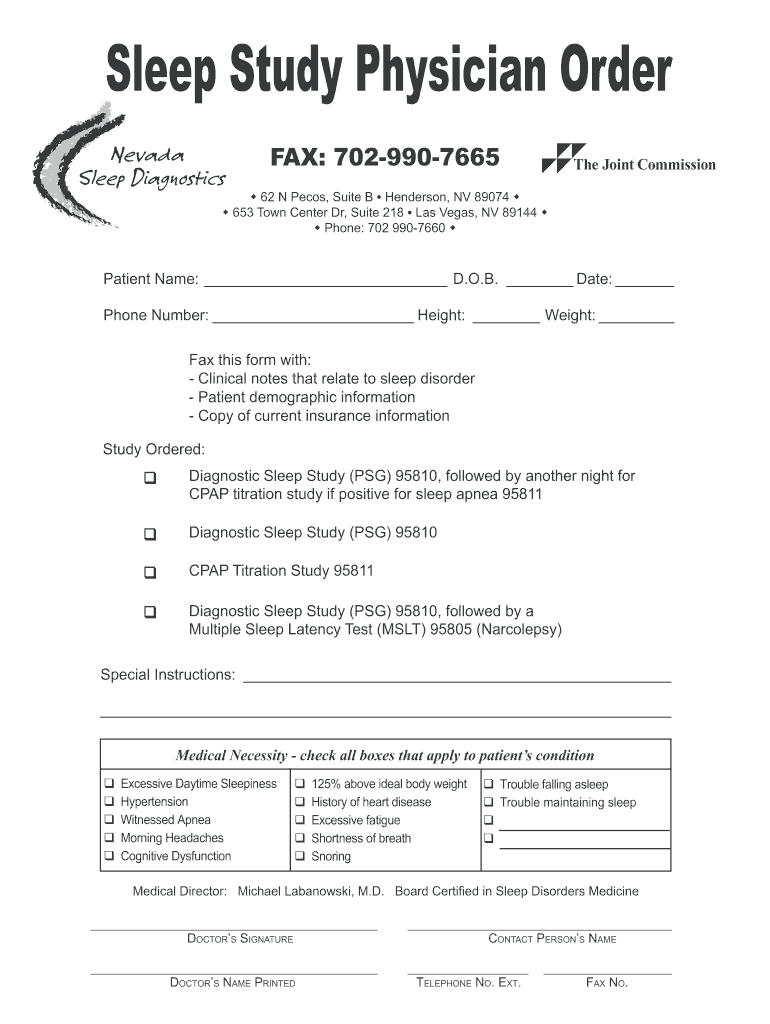
The Sleep Study Physician Order serves as a formal request initiated by a licensed healthcare provider to assess a patient’s sleep patterns and diagnose potential sleep disorders. These orders primarily focus on obtaining insights into conditions like obstructive sleep apnea, insomnia, restless leg syndrome, and narcolepsy, among others. The order includes specific details regarding the patient and the type of sleep studies required.
Components of the Sleep Study Order
- Patient Information: It typically requires essential details such as the patient’s full name, date of birth, and medical history to determine the context for the sleep assessment.
- Type of Sleep Study: Physicians specify whether the request is for a diagnostic sleep study, CPAP titration, or both, allowing for tailored diagnostic techniques catered to the patient’s symptoms.
- Medical Necessity Criteria: The physician must establish medical necessity, often by including relevant symptoms or conditions that justify the need for a sleep study.
Understanding the precise implications of the Sleep Study Physician Order is crucial in ensuring accurate diagnoses and subsequent treatments that significantly improve patient quality of life.
How to Use the Sleep Study Physician Order
Utilizing the Sleep Study Physician Order is a systematic process that begins once a physician identifies the need for a sleep evaluation based on patient symptoms and history.
Steps for Usage
- Patient Evaluation: The healthcare provider conducts an evaluation to determine the necessity for a sleep study.
- Completing the Order: The physician fills out the order form, filling in all relevant patient details, specifying the type of study required, and justifying the medical necessity.
- Submission Process:
- The completed form should be submitted to the sleep center or testing facility where the study will occur.
- Ensure that all necessary information and documentation accompany the order, as incomplete forms may delay scheduling.
Additional Considerations
- Patients should retain a copy of the physician order for personal records.
- Ensure timely submission to facilitate scheduling of the sleep study, as delays can lead to prolonged symptoms for patients.
By following these steps, healthcare providers can effectively utilize the Sleep Study Physician Order for accurate and timely assessments.
Steps to Complete the Sleep Study Physician Order
Completing a Sleep Study Physician Order involves a series of detailed tasks that healthcare providers must execute meticulously to ensure patient safety and accurate diagnosis.
Detailed Steps
- Gather Patient Information:
- Collect patient identification and insurance details.
- Document previous sleep assessments or treatments.
- Assess Symptoms:
- Review the patient's reported symptoms related to sleep, such as snoring, excessive daytime sleepiness, or difficulty falling asleep.
- Select Appropriate Study Type:
- Determine the needed study type based on symptoms. Options include:
- Polysomnography: Comprehensive overnight study for diagnosing sleep disorders.
- CPAP Titration Study: For patients already diagnosed with sleep apnea needing treatment evaluation.
- Determine the needed study type based on symptoms. Options include:
- Document Medical Necessity:
- Clearly articulate the symptoms and rationale for the sleep study request.
- Sign and Date the Order:
- The physician must sign and date the physician order, ensuring that it meets regulatory requirements.
By following each step, healthcare providers can ensure that the Sleep Study Physician Order is completed thoroughly, reducing the risk of errors that could impact patient diagnosis and treatment.
Who Typically Uses the Sleep Study Physician Order
The Sleep Study Physician Order is utilized by various healthcare professionals involved in diagnosing and treating sleep disorders.


Primary Users Include:
- Primary Care Physicians: They often initiate the process by identifying patients with potential sleep-related issues.
- Sleep Specialists: These physicians provide further evaluation and management, often working directly with sleep centers.
- Pulmonologists: Specialists in respiratory conditions frequently leverage sleep studies to assess patients for sleep apnea.
- Psychiatrists and Psychologists: Mental health professionals may also use sleep studies if they suspect sleep disturbances affect their patients' mental health.
Usage Context
These professionals utilize the order to facilitate comprehensive evaluations to support their clinical decisions and enhance patient care in managing sleep-related disorders. Ensuring that the order is precise and comprehensive not only aids in diagnosis but also enhances the chances for effective treatment.
Key Elements of the Sleep Study Physician Order
A comprehensive Sleep Study Physician Order comprises several critical components that ensure effective patient evaluation and accurate diagnosis of sleep disorders.
Critical Elements Include:
- Patient Identification Section: Essential for linking the order to the correct patient, this part should have identifying details, such as name, date of birth, and demographic information.
- Clinical Evaluation Notes: This section includes relevant clinical observations made by the physician, showcasing the medical examination findings that justify conducting a sleep study.
- Type of Study Ordered: Clear indication of whether a diagnostic sleep study, CPAP titration, or follow-up is required should be outlined.
- Signature and Contact Information: The physician's signature legitimizes the order while contact details allow the sleep center to follow up as necessary.
- Date of Order: This ensures accurate record-keeping and helps prioritize scheduling, particularly in urgent cases.
Understanding these elements helps streamline the process, ensuring clarity for the receiving sleep center and aiding in patient diagnosis.
Legal Use of the Sleep Study Physician Order
The legal aspects surrounding the Sleep Study Physician Order are crucial to ensuring compliance with healthcare regulations and protecting patient rights.
Legal Considerations
- Compliance with HIPAA: Protecting patient privacy and ensuring that all health information shared through the order complies with the Health Insurance Portability and Accountability Act is essential.
- Legitimate Medical Necessity: Healthcare providers must document and justify the necessity of the sleep study to avoid legal complications and ensure reimbursement from insurance providers.
- Proper Documentation: The Sleep Study Physician Order must be accurately filled out, maintaining all necessary details to avoid potential disputes regarding patient care decisions.
- State Medical Board Regulations: Providers should stay informed about specific state laws and guidelines governing sleep studies and physician orders to ensure compliance.
Adhering to these legal considerations ensures that the Sleep Study Physician Order is not only effective in facilitating patient care but also meets all necessary legal and ethical standards.




