




Definition & Meaning
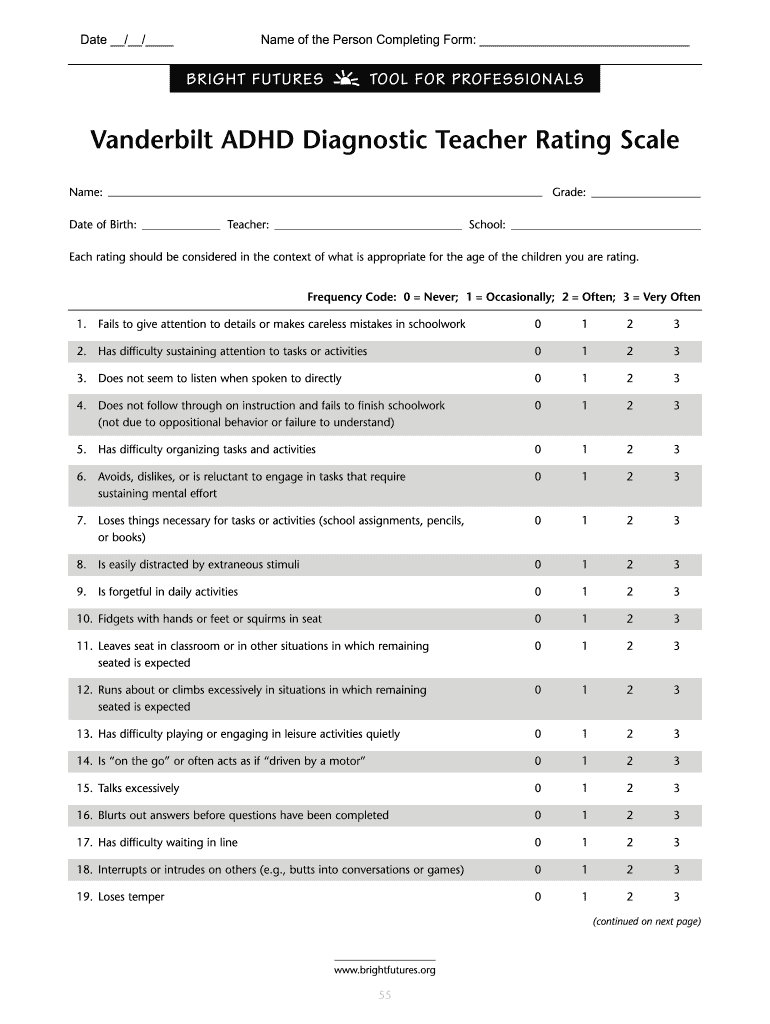
The Vanderbilt ADHD Diagnostic Teacher Rating Scale is a standardized tool used by educators to assess behaviors associated with attention-deficit/hyperactivity disorder (ADHD) in children. This scale assists in identifying potential ADHD symptoms and evaluating a student's academic and behavioral performance within the classroom. The scale includes specific questions asking teachers to rate the frequency of various behaviors exhibited by students, such as inattention, hyperactivity, impulsivity, and emotional challenges. The responses help inform both diagnosis and intervention strategies.
How to Use the Vanderbilt ADHD Diagnostic Teacher Rating Scale
Using the Vanderbilt ADHD Diagnostic Teacher Rating Scale involves a systematic approach. Educators should first familiarize themselves with the scale, which includes questions covering a range of behaviors typically associated with ADHD. Here is a step-by-step breakdown of how to effectively use the scale:
- Preparation: Before administering the rating scale, ensure you understand ADHD symptoms and their implications on student learning and behavior.
- Administration: Distribute the rating scale to teachers for each student being assessed. It's crucial that teachers provide observations reflecting the student's behavior in various settings.
- Completion: Teachers should rate the frequency of specified behaviors over the past month, providing an accurate snapshot of each student's behavioral patterns.
- Collection and Review: Once completed, gather the rating scales and review the results. Compare responses across different teachers to ensure a comprehensive understanding of the student's behavior.
- Analysis: Calculate scores based on teacher ratings, as outlined in the scale guidelines, to determine if the student meets criteria for potential ADHD.
- Follow-up: Use the findings to guide further discussions with parents, special education staff, or school psychologists to address any concerns.
Key Elements of the Vanderbilt ADHD Diagnostic Teacher Rating Scale
Understanding the core components of the Vanderbilt ADHD Diagnostic Teacher Rating Scale is essential for effective use. The key elements include:
- Behavioral Indicators: The scale includes specific items that measure various symptoms of ADHD such as inattentiveness, hyperactivity, and impulsivity. Teachers are asked to assess how often a student exhibits these behaviors.
- Rating Scale: Each behavior is rated on a frequency scale (e.g., never, occasionally, often) to standardize responses and facilitate scoring.
- Contextual Considerations: The scale allows for observations to be made in multiple settings, ensuring that the behavior is not context-dependent.
- Scoring Guidelines: Clear benchmarks are provided for interpreting scores, which assist in determining whether further assessment is needed.
- Multifaceted Evaluation: The scale encourages a holistic view of the child's performance, incorporating academic, social, and emotional dimensions.
Steps to Complete the Vanderbilt ADHD Diagnostic Teacher Rating Scale
Completing the Vanderbilt ADHD Diagnostic Teacher Rating Scale involves a structured process to ensure accurate and reliable data collection. Below are the steps involved:
- Access the Form: Obtain the Vanderbilt ADHD Diagnostic Teacher Rating Scale, available in both digital and printable formats.
- Distribute the Scale: Share the form with the relevant educators who have consistent interactions with the student being evaluated.
- Clarify Instructions: Provide clear instructions to the teachers regarding the completion of the scale, including the importance of honesty and objectivity in their responses.
- Gather Data: After teachers complete the forms, collect the scales for analysis.
- Score the Responses: Utilize the provided scoring criteria to evaluate each teacher's ratings, making note of significant patterns in the responses.
- Compile Findings: Summarize the scores in relation to ADHD diagnostic criteria to determine if further assessment is warranted.
Examples of Using the Vanderbilt ADHD Diagnostic Teacher Rating Scale
Practical applications of the Vanderbilt ADHD Diagnostic Teacher Rating Scale can enhance understanding and support within educational settings. Here are several examples illustrating its use:
- Case Study One: A teacher rates a student highly for impulsive behavior during group activities. This information, combined with feedback from other teachers, prompts a referral for further evaluation by the school psychologist.
- Case Study Two: A student's scores indicate high levels of inattention during academic tasks, leading the educational team to implement targeted interventions, such as structured breaks and behavior modification strategies.
- Case Study Three: In a scenario where multiple teachers complete the scale for a student, significant discrepancies arise in their ratings. This variation prompts a deeper discussion among staff to understand the different contexts in which behaviors occur.
Who Typically Uses the Vanderbilt ADHD Diagnostic Teacher Rating Scale
The primary users of the Vanderbilt ADHD Diagnostic Teacher Rating Scale include:
- Educators: Classroom teachers are the main users, providing vital behavioral insights based on daily interactions with students.
- School Psychologists: They utilize the data gathered through the scale to further assess potential ADHD and create treatment plans.
- Special Education Staff: Those involved in special education can incorporate the scale findings into individualized education plans (IEPs).
- Parents: Often encouraged to engage with the scale to obtain a comprehensive view of their child's behavior both at home and in school, which fosters collaboration between teachers and families.
This collaborative approach enhances the efficacy of interventions and supports for students potentially affected by ADHD.