




01. Edit your creditable coverage letter online
Type text, add images, blackout confidential details, add comments, highlights and more.

Type text, add images, blackout confidential details, add comments, highlights and more.

Draw your signature, type it, upload its image, or use your mobile device as a signature pad.

Send letter of creditable coverage via email, link, or fax. You can also download it, export it or print it out.
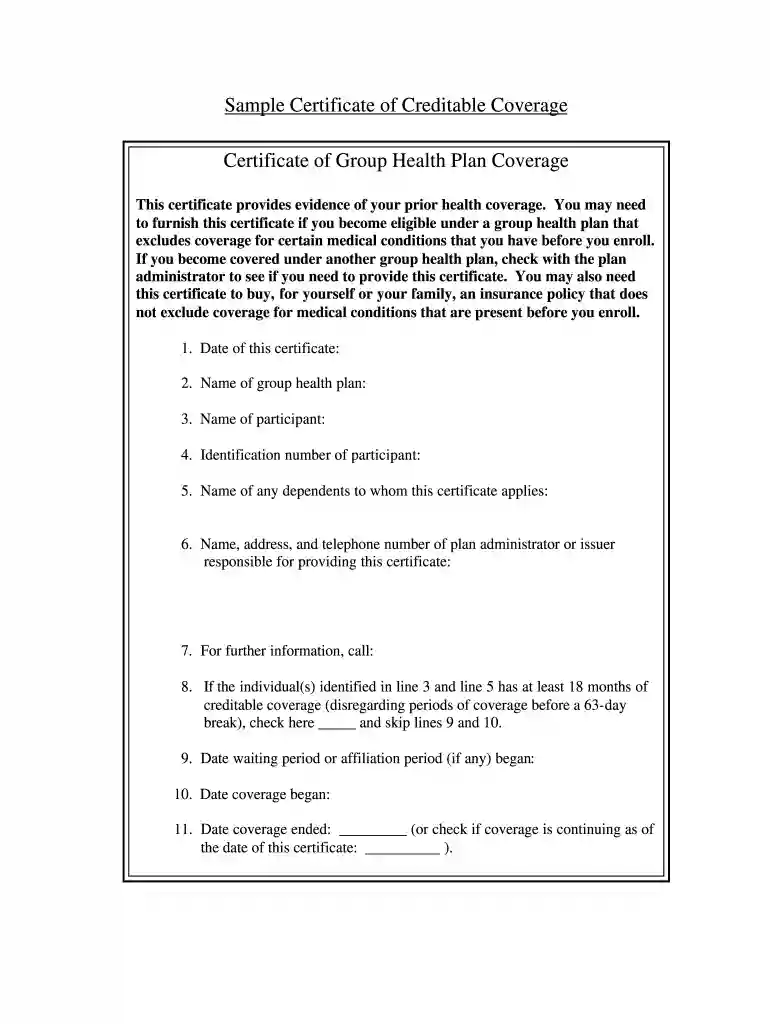
The certificate of creditable coverage form serves as official documentation indicating an individual's prior health insurance coverage. This document is particularly essential for those who may transition to a new group health plan. It can prove advantageous by potentially exempting individuals from penalties associated with pre-existing conditions. This form typically includes vital information relevant to both the insured individual and their prior health insurance provider.
This certificate is comprised of several significant elements that collectively detail the prior coverage an individual held. Understanding these components is crucial when navigating health insurance options. The main features include:
To acquire a certificate of creditable coverage, individuals should follow a straightforward process. Typically, this process includes:
The importance of this certificate cannot be overstated, particularly when enrolling in new health plans. Its implications include:
The certificate of creditable coverage must meet specific legal standards to ensure it holds value during enrollment processes. Understanding these requirements is crucial:
Having a template or example on hand can simplify the process of understanding this form. Common variants include:
The application of the certificate of creditable coverage extends beyond mere documentation. Examples include:
Navigating state-specific regulations surrounding this coverage can be complex. Each state may have distinct requirements, including:
The certificate of creditable coverage form is a crucial document that serves multiple functions within the health insurance framework. By understanding how to obtain, utilize, and maintain this certificate, individuals can facilitate their healthcare transitions effectively.
At DocHub, your data security is our priority. We follow HIPAA, SOC2, GDPR, and other standards, so you can work on your documents with confidence.
Medicare requires individuals enrolled in Medicare plans to have creditable coverage for prescription drugs. The required information below explains allRead more
Mar 31, 2022 The Beneficiary Certificates shall be issued in registered form only and the ownership of each. Beneficiary Certificate shall be establishedRead more


