




01. Edit your record of conversation template free online
Type text, add images, blackout confidential details, add comments, highlights and more.

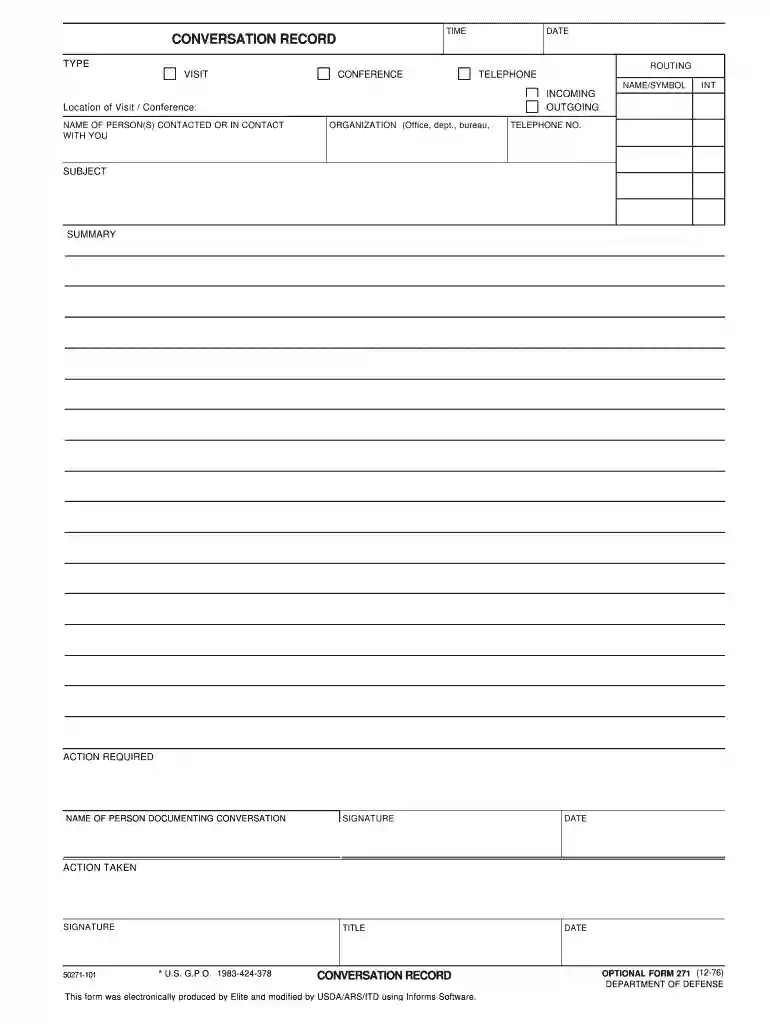
Type text, add images, blackout confidential details, add comments, highlights and more.

Draw your signature, type it, upload its image, or use your mobile device as a signature pad.

Send record of conversation template word via email, link, or fax. You can also download it, export it or print it out.
A record of conversation template is a structured document used to capture important details of conversations, typically in professional settings. Its primary function is to provide a formal and accurate account of discussions held between two or more parties, such as employees and supervisors or clients and service providers. This template generally includes fields for essential information, including:
This tool is particularly beneficial in maintaining a clear, organized history of employee interactions, reinforcing accountability, and serving as records for future reference.
The effective use of a record of conversation template can streamline the documentation process. Here’s how to utilize it efficiently:
Select the Appropriate Template: Choose a version relevant to your specific needs, such as a formal employee conversation documentation template or a more general conversation record fillable version.
Fill in Communication Details:
Summarize Key Points:
Outline Follow-Up Actions:
Finalize and Share:
Having a detailed and accurate record is essential for references in performance evaluations, ensuring compliance with company policies, and safeguarding against misunderstandings.
Completing a record of conversation template involves a systematic approach to ensure nothing is omitted. Follow these detailed steps:
Start with Basic Information:
Determine the Format of Communication:
Detail the Subject and Summary:
Identify Required Actions:
Conclusion and Documentation Validation:
By adhering to these steps, businesses can enhance their communication practices and ensure all professional dialogues are accurately documented.
Understanding the essential components of a record of conversation template is crucial for creating an effective document. Here are the key elements to include:
These elements work collectively to create a comprehensive account of professional interactions, facilitating better communication and fostering effective workplace relationships.
The record of conversation template is employed by various professionals across different sectors. Key users typically include:
These diverse applications highlight the template's versatility in ensuring accurate information flow and accountability.


The legal implications of using a record of conversation template are significant in maintaining formal records of communications. Understanding compliance requirements ensures that these documents serve their intended legal purposes.
By understanding these aspects, organizations can better safeguard their processes and ensure that their records serve to protect both employees and the organization itself.
Real-world scenarios can illustrate the practical application of a record of conversation template. Here are a few examples:
Performance Review Documentation:
Disciplinary Meeting Records:
Client Consultation Sessions:
Healthcare Consultations:
These examples illustrate how the template serves as a vital tool in various fields to document important discussions formally and accurately, thus enhancing accountability and clear communication.
We've got more versions of the record of conversation template free form. Select the right record of conversation template free version from the list and start editing it straight away!
| Versions | Form popularity | Fillable & printable |
|---|---|---|
| 1976 | 4.9 Satisfied (51 Votes) |
At DocHub, your data security is our priority. We follow HIPAA, SOC2, GDPR, and other standards, so you can work on your documents with confidence.
CSE Human Resources| Record of Discussion Form. Last Revised: 1/20/23. Page | 1. Record of Discussion Form. Date: . Time: . Meeting Between:.Read more
The following is a summary of a telephone conversation that occurred with Mr. Evans who was the pilot/owner of the accident airplane.Read more


