




Definition & Meaning
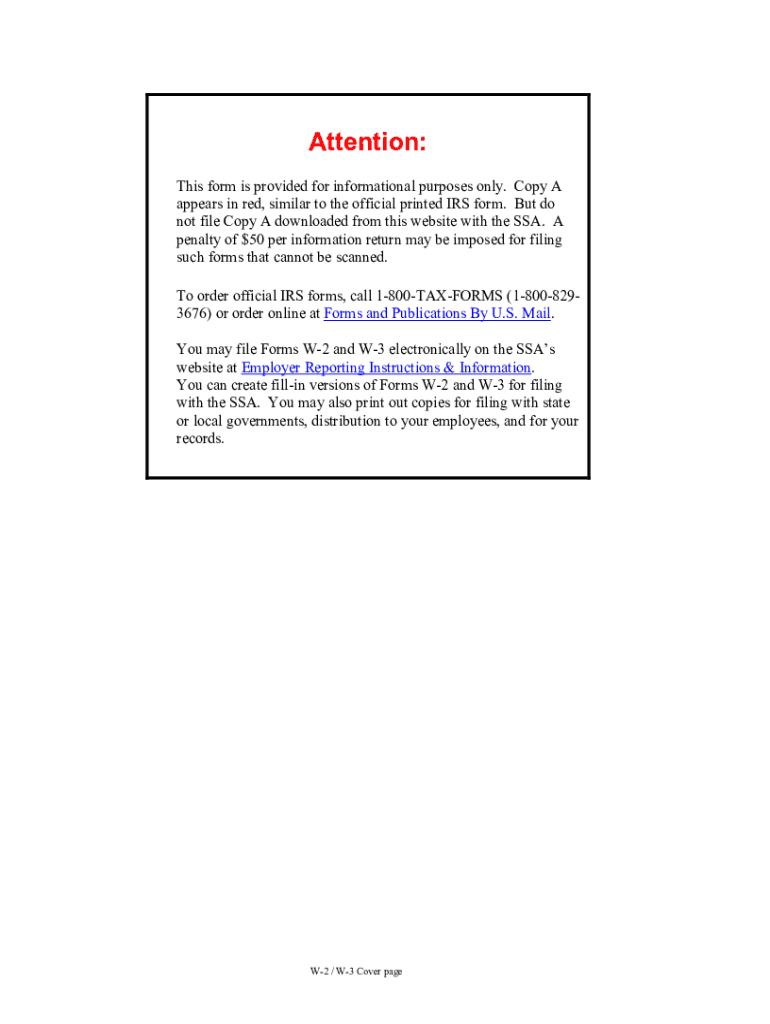
The 2005 Form W-2, Wage and Tax Statement, is a crucial document used by employers in the U.S. to report wages and tax deductions for their employees. Essential for taxpayers, this form outlines the income earned over the year and the taxes withheld, making it vital for the accurate filing of annual tax returns. Form W-2 serves as an official record of an individual's earnings and deductions, and it is issued each year to ensure compliance with tax regulations.
How to Obtain the 2005 Form W-2
Employees receive the 2005 Form W-2 from their employers by the end of January 2006, usually delivered via mail or electronically. In case the form is misplaced or not received, employees should contact their employer's payroll department for a duplicate. For electronic records, many employers provide access through online payroll portals, offering convenient options for viewing and downloading the document. If these attempts fail, reaching out to the IRS for support is advisable.
Steps to Complete the 2005 Form W-2
Completing the 2005 Form W-2 involves several crucial steps to ensure accuracy and compliance:
- Employee Information: Verify that all personal information, including the name, address, and Social Security Number, is correct.
- Earnings & Withholdings: Confirm the reported wages, tips, and other compensation match your records. Double-check withholding amounts for federal income, Social Security, and Medicare taxes.
- Additional Income: If applicable, review sections reporting any other income such as tips or noncash payments.
- State & Local Taxes: Ensure details about state and local taxes are accurate for relevant jurisdictions.
Accurate completion of the form helps prevent discrepancies in tax filings, reducing the risk of audits.
Legal Use of the 2005 Form W-2
The 2005 Form W-2's primary legal purpose is to report earned wages and withheld taxes to both the employee and the IRS. Employers are legally mandated to furnish this form to employees and file it with the Social Security Administration (SSA). Failure to comply with these requirements can lead to penalties. Employees, however, should not attach Form W-2 copies to their tax submissions; rather, they should retain them for their records when filing electronically or utilize physical copies for mail submissions.
Key Elements of the 2005 Form W-2
Key elements of the 2005 Form W-2 include:
- Box 1: Wages, tips, and other compensation.
- Box 2: Federal income tax withheld from paychecks.
- Box 3-6: Social Security wages and tax withholdings.
- Box 7-8: Social Security tips and allocated tips.
- Box 12: Details on deferred compensation and benefits programs.
Each box requires specific information to be filled by the employer to ensure precise reporting of an employee’s income and deductions.
Filing Deadlines / Important Dates
Compliance with filing deadlines is crucial. Employers must furnish the 2005 Form W-2 to employees by January 31, 2006. The SSA filing deadline is February 28, 2006, for paper forms, and March 31, 2006, for electronic submissions. These deadlines ensure timely processing of tax returns by the IRS and help in the determination of any refunds or additional taxes owed.
Penalties for Non-Compliance
Non-compliance with Form W-2 regulations can lead to penalties for employers. Failing to provide forms to employees by the deadline or submitting incorrect forms can incur fines. Penalties increase if errors are not corrected promptly. This underscores the importance of adhering strictly to filing requirements and cross-verifying all data shared on Form W-2 for precision and accuracy.
IRS Guidelines
The IRS provides detailed guidelines regarding the preparation and submission of the 2005 Form W-2. Employers must adhere to these instructions to ensure the form reflects accurate information about wages and taxes. Guidelines specify how to handle common issues like reporting tips or managing multiple state tax situations, ensuring all information is reported correctly to avoid future discrepancies with tax filings.
State-Specific Rules for the 2005 Form W-2
State-specific regulations affect how the 2005 Form W-2 must be completed and filed. While federal requirements are uniform, states may have distinct rules regarding state income taxes. Employers must report state and local tax withholdings accurately, bearing in mind those states that follow different deadlines or have unique requirements for electronic filing. Ignoring these variations can result in filing inaccuracies and potential penalties.
Software Compatibility
Many tax software platforms, including TurboTax and QuickBooks, offer compatibility with Form W-2 including the 2005 version, facilitating the import and handling of tax data electronically. Employees and employers can leverage these tools to simplify the tax preparation process, verify the completeness and correctness of information, and safeguard against errors, thereby streamlining the completion and submission of tax returns in a timely manner.