




01. Edit your employer statement online
Type text, add images, blackout confidential details, add comments, highlights and more.

Type text, add images, blackout confidential details, add comments, highlights and more.

Draw your signature, type it, upload its image, or use your mobile device as a signature pad.

Send employer statement template via email, link, or fax. You can also download it, export it or print it out.
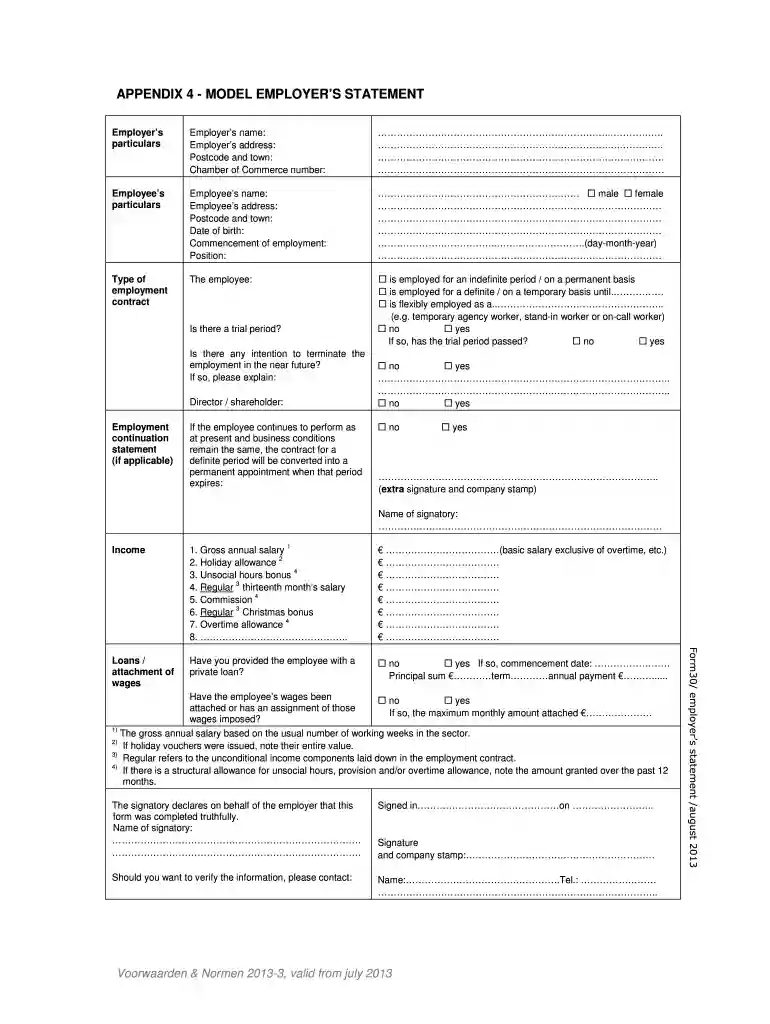
An employer's statement is an official declaration made by an employer outlining specific details related to an employee's employment. This document serves multiple purposes, including verifying employment status, confirming job roles, and disclosing compensation information. It can be essential for various situations, such as applying for loans, leases, or government assistance programs.
Typically, an employer's statement includes:
The statement acts as a credible source that supports the employee's claims regarding their employment and income, often required for financial institutions or government agencies assessing eligibility for services or benefits.
When drafting an employer's statement, certain essential components must be included to ensure clarity and efficacy. The document should be formatted clearly and highlight critical information relevant to the employee’s employment status.
Key components typically found in an employer's statement include:
These components establish the document’s integrity and assure its recipients that the provided information is accurate and verifiable.
An employer's statement plays a key role in delineating an employee's financial standing, as it provides detailed insights into earnings and compensations. This information is crucial when evaluating an employee's financial capacity for loans, mortgages, or rental agreements.
Accurate financial representation within the employer's statement aids financial institutions and service providers in assessing potential risks when initiating agreements involving monetary trust.
Employer statements are versatile tools utilized in various scenarios. They are particularly valuable for employees navigating financial decisions or verifying their employment status. Here are some common use cases:
Each usage scenario underscores the document's importance in various aspects of professional and personal life.
In drafting an employer's statement, adhering to a clear format can enhance readability and professionalism. Below is an outline to structure the document effectively:
Company Letterhead
Date
Recipient Information
Subject Line
Body of the Statement
Signature
Following a clear and consistent structure ensures the document is easily interpretable for its various users, fulfilling its purpose seamlessly.
Understanding the legal implications of an employer's statement is essential for both employers and employees. This document should adhere to legal standards surrounding employment verification and financial disclosure to avoid potential pitfalls.
Awareness of these legal considerations protects both parties involved and cultivates trust in the employer-employee relationship.
We've got more versions of the employer statement form. Select the right employer statement version from the list and start editing it straight away!
At DocHub, your data security is our priority. We follow HIPAA, SOC2, GDPR, and other standards, so you can work on your documents with confidence.
Sep 5, 2015 A comprehensive examination of an organisations policies and practices to identify and permit removal of systemic and attitudinal barriers to employment
To determine Average Weekly Wage, the Board needs the gross weekly earnings for the 52 weekly periods immediately preceding the date of the injury/ illness.
Employer (Taxpayer) ID No. (EIN) or Public Employer Social Security No. Printed Name and Title of Person Completing this form. Telephone No. of Person


