







Definition and Purpose of the J193 Form
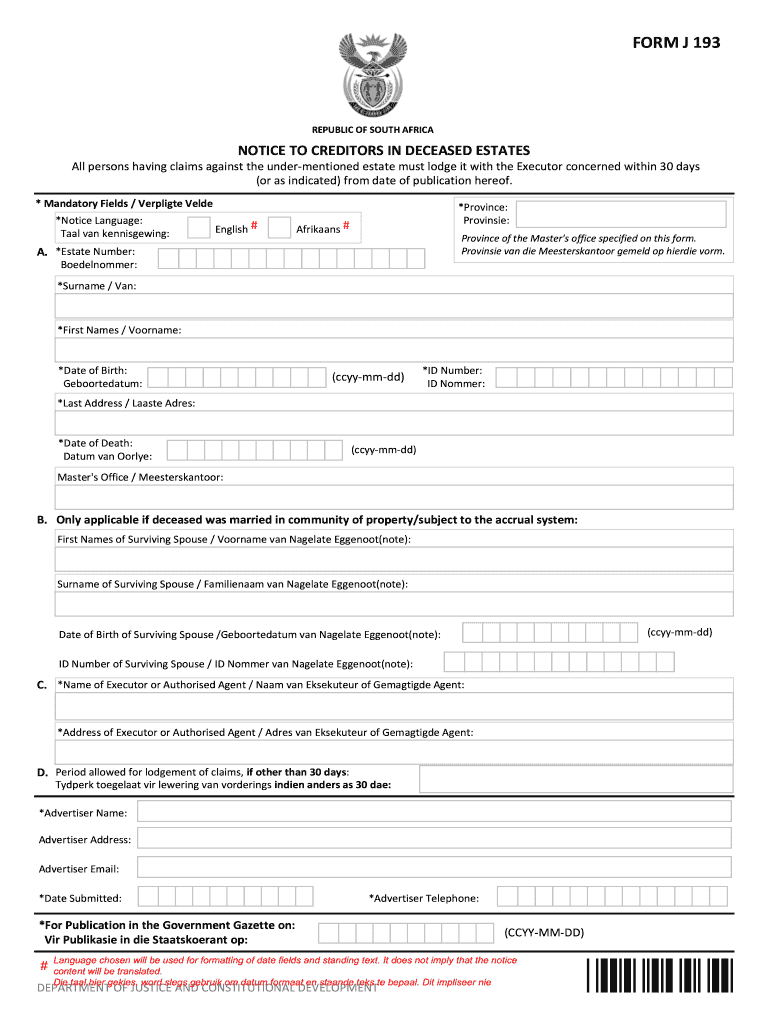
The J193 form is a legal document used for notifying creditors about a deceased estate. This is particularly important in the context of estate administration, as it provides a structured approach to informing creditors of the passing and addressing outstanding debts. The primary purpose of the J193 form is to facilitate the orderly processing of claims against the deceased's estate, ensuring all claims are submitted within a specified timeframe.
Specifics of the J193 form include:
- Mandatory Submission: It is required that a notice to creditors is published within a specific time frame following the death of the individual.
- Public Notice: The form is often published in a government gazette to reach all potential creditors.
- Completeness: The document typically necessitates detailed information about the deceased, including personal details, information about surviving spouses, and executor details.
Understanding the J193 form is crucial for executors who manage estates, as it outlines the legal obligations they must fulfill and helps protect the interests of the estate against unforeseen claims.
Key Elements Required in the J193 Form
When filling out the J193 form, several essential elements must be included to ensure the notice is valid and complete. The following components are typically required:
- Executor Information: The full name and contact details of the executor must be prominently displayed, as they are responsible for managing the estate and responding to claims.
- Decedent's Information: Comprehensive details about the deceased, including their full name, date of birth, and date of death.
- Publication Details: Indication of the date and platform for publication in the government gazette, which serves to notify creditors of the deceased's passing.
- Claim Submission Deadline: It is vital to specify the deadline for creditors to submit their claims, generally set between 30 to 60 days after publication.
- Recognition of Claims: A statement assuring that all validated claims will be settled from the estate assets, clarifying the executor's responsibilities regarding any liabilities.
Inclusion of each element is crucial for the effectiveness of the notice, helping to prompt timely action from creditors.
Steps to Complete the J193 Form
Filling out the J193 form involves several critical steps to ensure compliance with legal requirements. Executors should approach this task methodically:
- Gather Necessary Information: Collect personal details about the deceased, including their full name, date of birth, and death, along with the executor’s details.
- Draft the Document: Write out the J193 form, incorporating all requisite elements such as deadlines for claims.
- Verify Accuracy: Review the completed form for correctness, ensuring all information is accurate and up to date.
- Publication: Arrange for publication in the designated government gazette. This step must occur within the legal timeframe to properly notify creditors.
- Monitor Claims: After publication, stay vigilant for incoming claims from creditors and document their submission dates to ensure compliance.
Adhering to these steps ensures that executors fulfill their obligations efficiently while minimizing the risk of legal challenges from creditors in the future.
Legal Considerations Regarding the J193 Form
Using the J193 form involves navigating several legal considerations. Executors must ensure they comply with both state and federal regulations governing estate management. Important legal aspects include:
- Timeliness: Failure to submit the J193 form within the prescribed timeframe can lead to complications in settling the estate and may expose the executor to liability.
- Legally Binding Notice: The publication in a government gazette provides legal backing for the notice, ensuring that it meets the requirements for notifying potential creditors.
- Confidentiality of Information: Executors must handle personal information with care, ensuring compliance with privacy laws when dealing with sensitive data related to the deceased.
- Record Keeping: Maintain thorough documentation of all claims received, as a clear audit trail may be required should disputes arise regarding the estate.
These legal considerations help protect both the executor and the estate, reinforcing the importance of adhering to the proper processes when utilizing the J193 form.
Importance of Filing the J193 Form in Estate Administration
Filing a J193 form is an integral part of estate administration and functions to safeguard both the executor's and the estate's interests. The key reasons for filing include:
- Clarity for Creditors: It provides a clear process for creditors to submit their claims, ensuring they are informed of the estate's status.
- Protection from Unforeseen Claims: By notifying creditors, executors can limit the liability of the estate, as claims must be submitted during the specified period.
- Facilitation of Distribution: Completing the J193 form streamlines the claims process, allowing executors to distribute the estate more efficiently once all claims have been settled.
- Legal Compliance: Filing the J193 form ensures that the executor complies with state laws, which can significantly reduce the risk of legal challenges later on.
Overall, the filing of the J193 form is a foundational step that supports the efficient and lawful management of a deceased person's estate.
Variants and Related Forms for the J193
In estate administration, understanding the variants and related forms is essential for accurate and compliant handling of affairs. Some forms closely associated with the J193 form include:
- Form J187: Often used in similar contexts for specific types of notifications regarding estates, this form may have differences in its application and requirements.
- Government Gazette Forms: Each state may have specific requirements regarding the format and content of forms used for public notices related to deceased estates.
Being aware of these related forms allows executors to navigate the complexities of legal documentation effectively, ensuring they choose the correct form according to their specific scenario. This knowledge is beneficial for maintaining compliance and minimizing potential issues with claims against the estate.




