






Definition and Meaning of Layoff Notice
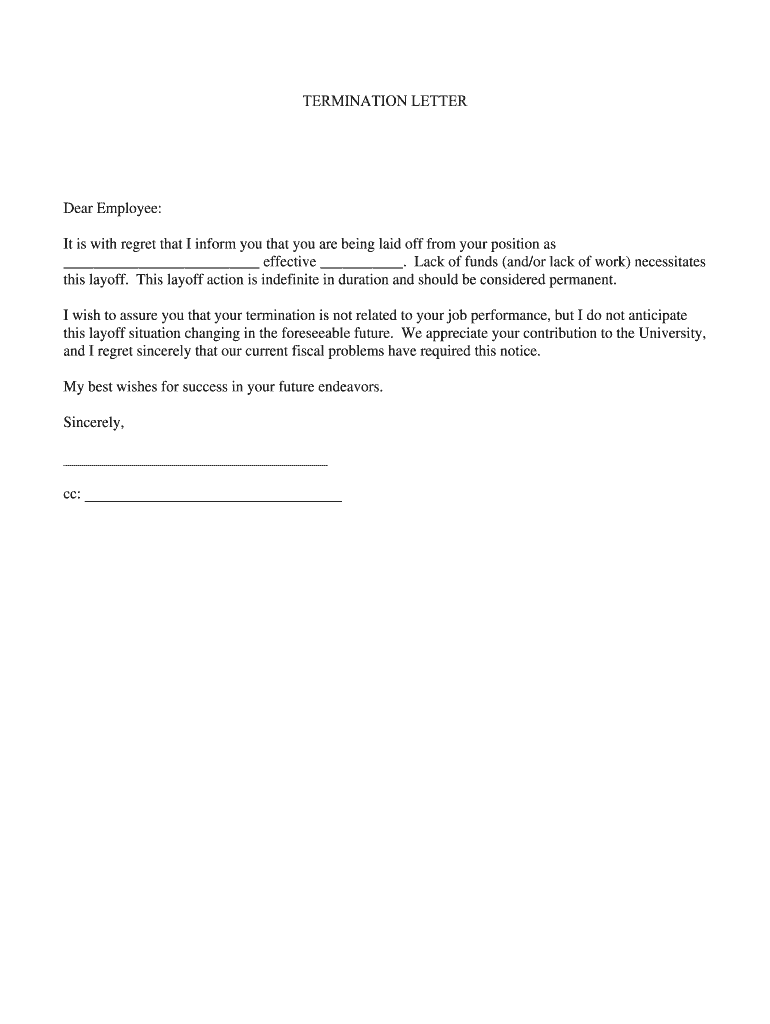
A layoff notice, particularly the statement "It is with regret that I inform you that you are being laid off from your position as," serves as an official communication to employees regarding the termination of their employment due to circumstances such as lack of work or funding. This type of letter is not a reflection of the employee’s performance but rather a business decision often influenced by external factors like economic downturns, organizational restructuring, or budget cuts. Understanding the emotional and professional implications of a layoff notice is crucial for both employers and employees, as it affects job security, financial stability, and overall morale.
Key Components of a Layoff Notice
-
Gratitude and Acknowledgment: It is important for the sender to express appreciation for the employee's contributions to the organization. This acknowledgment reinforces the positive aspects of the employee's time at the company, which can help mitigate the emotional impact of the layoff.
-
Reasoning: Clearly stating the reason for the layoff is essential. The communication should articulate that the decision is based on business needs and not on employee performance. This helps eliminate any ambiguities that could lead to misunderstandings or negative feelings about the employee's work.
-
Final Details: The notice should outline the next steps regarding final paychecks, benefits, and any other administrative requirements. Providing this information empowers the employee to manage their transition more effectively.
Steps to Issue a Layoff Notice
Issuing a layoff notice requires careful consideration and procedural steps to ensure the process is handled with sensitivity and professionalism.
-
Consult Legal and HR Guidelines: Before drafting the notice, consult with legal and human resources departments to ensure compliance with applicable laws and company policies regarding layoffs.
-
Prepare the Notification Document: Draft a formal layoff notice, incorporating the elements of gratitude, reasoning, and final details. Ensure the language is clear and empathetic.
-
Schedule a Meeting: Arrange for a private meeting with the affected employee to deliver the news personally. This approach is more respectful and allows for immediate dialogue.
-
Deliver the Message: During the meeting, read the notice aloud, providing context and allowing the employee to ask questions or express concerns.
-
Follow Up: Provide resources for job placement assistance and remind the employee of their rights concerning unemployment benefits. Maintain open lines of communication for any further inquiries regarding the layoff process.
Examples of Layoff Notices
Creating an effective layoff notice involves tailoring the message to suit specific circumstances and the company’s culture. Sample scenarios include:
-
Example One: General Layoff Due to Economic Conditions
"It is with regret that I inform you that you are being laid off from your position as Marketing Specialist due to the current economic conditions that have impacted our business operations. We appreciate your hard work and dedication during your time with us." -
Example Two: Temporary Layoff Notice
"It is with regret that I inform you that you are being temporarily laid off from your position as Sales Associate due to a lack of work. We value your contributions and hope to bring you back when our business stabilizes." -
Example Three: Permanent Layoff Notice
"It is with regret that I inform you that you are being laid off from your position as Project Manager effective immediately, as we have made the difficult decision to eliminate this role due to restructuring. Thank you for your dedicated service."
Legal Considerations When Issuing a Layoff Notice
When issuing a layoff notice, there are several legal aspects to consider to protect both the employer and the employee.
-
Compliance with Employment Laws: Ensure adherence to local, state, and federal employment laws that govern layoffs, including the Worker Adjustment and Retraining Notification (WARN) Act, which may require advance notice for larger layoffs.
-
Documentation: Maintain records of the decision-making process leading to the layoff to demonstrate compliance and fairness in the selection process.
-
Severance and Benefits: Clarify any options for severance pay or benefits continuation, as well as employee eligibility for unemployment insurance. Employers should also know the implications of these actions on overall liabilities.
Resources for Affected Employees
Providing resources to support employees during their transition can help ease the impact of a layoff. Employers may consider:
-
Career Counseling Services: Offering access to career counselors who can assist with resume writing, interview preparation, and job searches.
-
Unemployment Benefits Information: Providing clear instructions on how to apply for unemployment benefits, along with deadlines and necessary documentation.
-
Networking Opportunities: Facilitating connections to professional networking groups or job fairs to help employees find new employment opportunities.
Employers and employees alike benefit from a clear, compassionate approach to the layoff process that acknowledges the human element involved.